
Reviewed · BOTANIC GARDENS & GREEN ESCAPES
Nature Tour
Crocodile eyes and quiet mangroves—on a schedule. A private guided morning at Sungei Buloh Wetland Reserve turns Singapore’s wetlands into something you can actually read: habitats, food chains, and why the place matters. I especially love the way the guide brings the reserve to life, like James Chan-style field spotting and conservation talk, and I also love the mangrove boardwalk plus mudflat stops where you’re not just looking—you’re learning what you’re seeing. One possible drawback: this isn’t a slow, casual stroll. It’s more structured and educational, so if you only want a laid-back walk, you might find it a bit more “guided” than “wandering.”
You’ll start at Sungei Buloh (meet at 301 Neo Tiew Cres) and keep things efficient with a roughly 2-hour route that focuses on key wetland habitats. The admission ticket is free, and you get the personal attention of a private group (up to 4), which is a nice value if you’re traveling with friends or family. Good weather helps—wetlands are great when nature’s feeling cooperative, and your timing matters most if birds are your top goal.
In This Review
- Quick Takeaways
- Where Sungei Buloh Really Shines: Wetlands With Many “Rooms”
- Your 9:00 am Start at 301 Neo Tiew Cres
- How the 2-Hour Walk Works (And Why It’s Worth It)
- Habitat Tour Stop: Mangroves, Boardwalk Views, and Tiny Creatures
- Secondary Rain Forest and Coastal Trails: The Shift From Mud to Green
- Marshes and Mudflats: Where Birds Have Reasons to Show Up
- Birdwatching Timing: Sep–Mar, With Nov–Dec as Prime
- Wildlife You Might Spot: Crocodiles and Otters (With Realistic Expectations)
- Conservation Angle: Why the Guide’s Talk Feels Practical
- The Guide Factor: James Chan and the Value of Local Field Eyes
- Price and Value: $71.70 Per Group Up to 4 (Admission Free)
- Who This Tour Is Best For (And When to Skip It)
- Quick Planning Tips for a Smooth Wetland Morning
- Should You Book This Sungei Buloh Private Nature Tour?
- FAQ
- Where does the tour start?
- What time does the tour begin?
- How long is the guided tour?
- How much does the tour cost?
- Is this a private tour?
- When is the best time for migratory birds?
- Is the tour weather dependent?
Quick Takeaways
- Private group (up to 4) for a more personal wetland walk
- Meet at Sungei Buloh Wetland Reserve, 9:00 am, and return to the same spot
- Key habitats in a short route: mangroves, marshes, mudflats, secondary rain forest, and coastal trails
- Birdwatching season matters: September–March, with the strongest stretch in November–December
- Spotting focus includes fiddler crabs, mudskippers, estuarine crocodiles, and smooth-coated otters (if luck and conditions cooperate)
- Local guide-led conservation awareness rather than just photo stops
Where Sungei Buloh Really Shines: Wetlands With Many “Rooms”
Sungei Buloh Wetland Reserve is one of those places where Singapore’s nature feels both close and surprisingly wild. In a short morning, you move through different habitat “rooms” that each support different plants and animals. That’s the core value of a guided tour here: you learn how the wetlands work, not just what’s sitting on the surface.
The route is designed around what you’d otherwise miss if you wandered alone. Wetlands look simple at first glance—water, mud, trees. Then you start noticing patterns: where marsh plants grow, how mudflats expose feeding areas, why mangrove roots matter for small creatures, and how trails give you viewpoints without trampling sensitive areas.
Your 9:00 am Start at 301 Neo Tiew Cres
Plan to arrive near the meeting point at Sungei Buloh Wetland Reserve, 301 Neo Tiew Cres, Singapore 718925. The tour starts at 9:00 am, and it ends back at the meeting point—simple and easy to manage, especially if you have other plans later in the day.
A mobile ticket keeps things straightforward. You won’t be chasing paper. Since the tour depends on good weather, I like to think of this as a morning you protect on your calendar. If rain rolls in, you’ll want a backup date option in mind.
One more practical note: this is near public transportation. That’s helpful if you’re mixing nature time with the rest of your Singapore itinerary.
More green hours, orchids to ridge lines
How the 2-Hour Walk Works (And Why It’s Worth It)
This private tour is about 2 hours of guided time. That length is important. Long nature walks can be great, but they also drag when you’re tired or when you’re trying to fit nature into a full city trip. Two hours is enough to hit multiple habitats, get explanations at the right moments, and still feel like you accomplished something real.
Because it’s private, the guide can tailor the pace. If birdwatching is your priority, you’ll likely get more attention to spotting and scanning. If your group is more family-focused, the tone can shift to keep kids interested without making the content feel watered down.
Habitat Tour Stop: Mangroves, Boardwalk Views, and Tiny Creatures
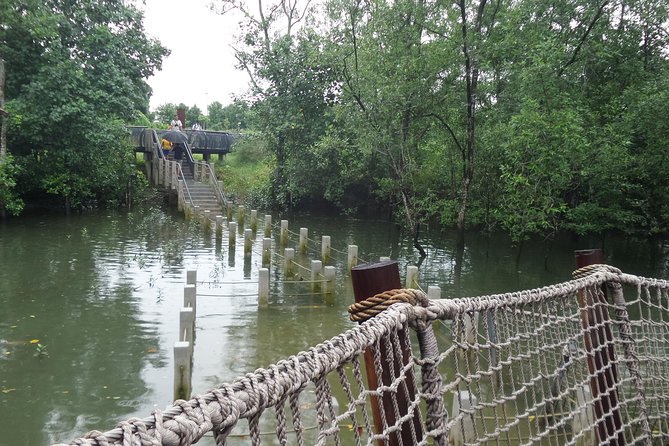
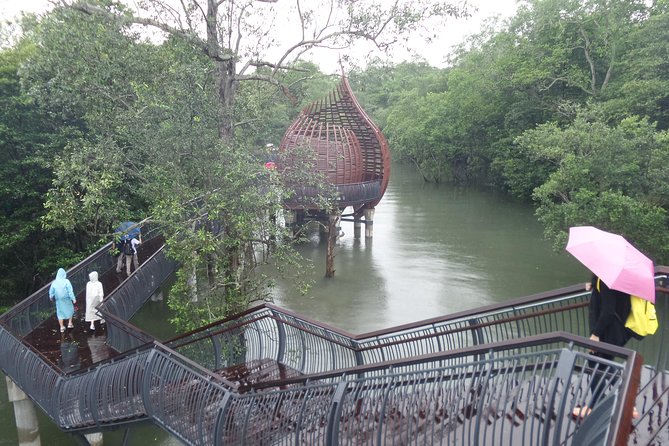
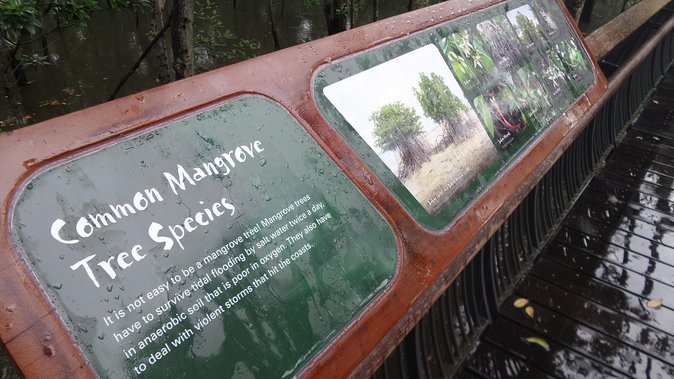
The tour centers on Sungei Buloh itself, moving through the wetlands with an education-first approach. One big highlight is the mangrove area and the boardwalk experience. Mangroves aren’t just scenery—they’re nurseries and shelters. The guide helps you understand what the roots and muddy edges are doing for wildlife.
This is also where small creatures steal the show. On mudflat-like sections, you may spot fiddler crabs and mudskippers. You may not see every species every time (wetlands don’t guarantee sightings), but the guide’s job is to help you find likely spots and interpret what you’re seeing once you’re there.
If you enjoy “hands-on looking”—not touching, just observing carefully—this part lands well. It turns a boardwalk into a living lab.
Secondary Rain Forest and Coastal Trails: The Shift From Mud to Green
After the wetter areas, you get sections described as secondary rain forest and coastal trails. That change of scenery matters. It keeps your attention sharp and also broadens the range of animals you can encounter, since different species use different cover and feeding zones.
Secondary forest areas can feel more enclosed than open mudflats. That often means the guide’s spotting skill becomes more valuable. Even without seeing rare animals, you’ll likely learn more about the layers—what grows where, and how water and shade interact.
Coastal trails help you connect the reserve to the larger shoreline system. You’re not just in a park; you’re in an ecosystem built for tides, seasonal movements, and migration.
- Lion City Bike Tour of Singapore★ 5.0 · 6,211 reviews
- Singapore: Gardens by the Bay Bundle Entry Ticket★ 4.3 · 3,726 reviews
- Singapore: Big Bus Hop-On Hop-Off Tour by Open-Top Bus★ 4.5 · 3,261 reviews
- Singapore: Lion City Highlights Bike Tour★ 4.9 · 2,010 reviews
Marshes and Mudflats: Where Birds Have Reasons to Show Up
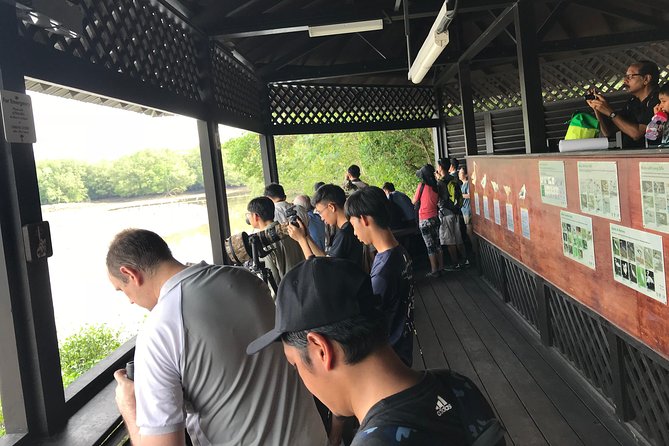
Marshes and mudflats are the “work zones” of the wetland. Birds use these areas because food is there, and visibility is often better than in dense vegetation. The mudflat logic is simple: exposed ground plus nutrients and invertebrates equals feeding opportunities.
This is why a guide helps so much. If you don’t know what to scan for—or what body positions suggest—everything can look like “just birds in a wetland.” With guidance, you start noticing behavior: pausing, probing, stepping around water edges, and timing movements with what’s happening around them.
Even if birdwatching isn’t your main interest, marshes and mudflats are where the reserve feels most alive.
Birdwatching Timing: Sep–Mar, With Nov–Dec as Prime
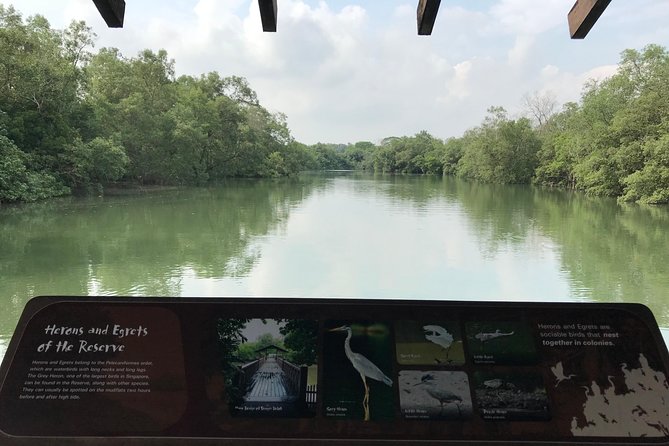
Migratory bird season runs from September to March, and the peak time for many species is November and December. That’s a huge planning tip, because bird activity isn’t constant across the year.
If your travel dates fall in late fall or early winter (Nov–Dec), I’d treat this tour as a top nature priority. If you go outside peak season, you can still enjoy the wetlands and wildlife, but expect bird counts to be more variable.
Also, morning timing often helps. Birds can be more active earlier, and the route is built for that calm, observant time of day.
Wildlife You Might Spot: Crocodiles and Otters (With Realistic Expectations)
This tour is set up to look for a range of animals, including estuarine crocodiles and smooth-coated otters, plus other wildlife like birds and small creatures. A guide’s presence matters here because you’re navigating habitats where animals can be hard to see unless you’re scanning the right lines.
That said, don’t treat wildlife spotting as guaranteed. Wetlands are living systems with movement, weather effects, and animal behavior that changes by the day. What the guide can do reliably is increase your chances and help you understand what you’re seeing when you do spot something.
If you see crocodiles or otters, you’ll want to keep your distance and follow guide instructions. The point isn’t to chase a view. It’s to observe the reserve responsibly—especially for sensitive habitats.
Conservation Angle: Why the Guide’s Talk Feels Practical
A major theme is environmental conservation awareness—learning why this reserve exists and how habitat protection supports biodiversity. The tour doesn’t feel like generic classroom talk. It’s tied to what you’re walking past right now.
You’ll likely hear explanations that connect habitat features to survival. Why certain areas matter for nesting or feeding. Why mangroves and mudflats shouldn’t be treated like background scenery. And why protected areas are essential even in a high-density city.
From the guide style highlighted in past participants, the conservation focus is a big part of what makes this tour memorable. I like it because it adds meaning. You leave with more than photos—you leave with context.
The Guide Factor: James Chan and the Value of Local Field Eyes
The tour is provided by Lion City Guides, and many people highlight guide James Chan. In plain terms, what you’re paying for is field skill: knowing where to look, how to read habitat cues, and how to explain what you’re seeing in human language.
A good wetland guide does two jobs at once. First, they help you locate animals or at least the conditions that attract them. Second, they help you interpret behavior—so your brain stops treating wildlife as random sightings and starts seeing patterns.
If you’ve ever wandered through nature and felt like you were missing the point, this kind of guide-led approach fixes that.
Price and Value: $71.70 Per Group Up to 4 (Admission Free)
Let’s do the math. The tour costs $71.70 per group, for up to 4 people. Admission ticket is free. With four people sharing, you’re effectively paying about $17.93 per person. If it’s just two of you, it’s about $35.85 per person.
So value depends on your group size. With a small crew, this becomes a surprisingly affordable nature experience for Singapore. Even as a couple, you’re getting private attention in a short window, which is hard to match with standard group tours.
The other value piece is time. In a city trip, two hours can be easier to protect than half a day. You get meaningful wildlife and learning without needing to build a whole day around one activity.
Who This Tour Is Best For (And When to Skip It)
This tour is ideal for:
- Bird watchers and nature lovers who want help spotting and interpreting what’s around them
- Families who want something structured but still fun, especially when the guide keeps the walk engaging
- Small groups (up to 4) who can share the cost and prefer a private pace
I’d think twice if you want:
- Only a relaxing, self-guided wander with no “learning agenda”
- A long hiking-style day with big distances and lots of time on your own
Based on the way guides tend to teach here—education plus careful observation—this feels like the best fit when you’re curious and you like asking questions.
Quick Planning Tips for a Smooth Wetland Morning
Bring what you’d bring for an outdoor walk in Singapore’s humidity: comfortable shoes, water, and sun protection. The wetlands can mean wet ground and slick surfaces, so choose footwear that won’t make every step feel like a negotiation.
Since good weather matters, I’d keep an eye on forecasts for your morning. If conditions are bad, you’ll likely need to adjust. Also, start on time at 9:00 am so you don’t rush the experience.
Finally, if you’re traveling for birds, aim for November–December when you can. If your dates fall in Sep–Mar but not peak months, still go—the wetlands themselves are worth your time, and the guide’s spotting skill makes a difference.
Should You Book This Sungei Buloh Private Nature Tour?
If you’re looking for an efficient, high-impact nature experience in Singapore, I’d book this. Two hours is a smart commitment, and private guiding means you spend less time guessing and more time understanding. The added conservation awareness also gives the experience weight beyond casual sightseeing.
I’d also book it if you’re traveling with up to three other people and want to split the group cost. At $71.70 per group with free admission, it’s one of the more budget-friendly ways to get true expert help in a protected habitat.
Skip it only if you truly want a low-effort stroll. This is a guided walk where learning is part of the point, including careful attention to habitats and wildlife behavior.
FAQ
Where does the tour start?
The tour starts at Sungei Buloh Wetland Reserve, 301 Neo Tiew Cres, Singapore 718925, and it ends back at the meeting point.
What time does the tour begin?
The start time is 9:00 am.
How long is the guided tour?
The duration is about 2 hours.
How much does the tour cost?
It costs $71.70 per group (up to 4 people). Admission ticket is free.
Is this a private tour?
Yes. It’s a private tour/activity, so only your group participates.
When is the best time for migratory birds?
Migratory bird season is September to March, with the best time for most migratory birds in November and December.
Is the tour weather dependent?
Yes. The experience requires good weather. If it’s canceled due to poor weather, you’ll be offered a different date or a full refund.
The Green Side of the Red Dot




Fresh Reviews from the Little Red Dot
- Night Safari Tickets with Tram Ride
★ 4.5 · 3 reviews - Singapore: Architecture and Food Tour with Tastings
★ 5.0 · 3 reviews - Singapore Private Full-Day Sightseeing Tour
★ 5.0 · 3 reviews - Private Chinatown Heritage Tour with Best 8 Local Tastings
★ 5.0 · 3 reviews
Botanic Gardens & Green Escapes, compared.
 ★ 5.0Scentopia Orchid Perfume Making (100ml) at Sentosa, SingaporeFrom $65916 reviews
 ★ 4.7National Orchid Garden Entry TicketsFrom $8453 reviews
 ★ 4.7National Orchid Garden AdmissionFrom $7133 reviews
 ★ 5.0Private Half Day Singapore City Tour with Botanical Orchid GardenFrom $140117 reviews
 ★ 5.0National Orchid Garden Admission TicketFrom $763 reviews
 ★ 5.0Singapore Cycling Tour – Rail Corridor, Civic District, & Food!From $9613 reviews
 ★ 4.4Scent Crafting Workshop with Rainforest OrchidsFrom $6711 reviews
 ★ 5.0Botanic Gardens & Tiong Bahru Walking Tour with BreakfastFrom $4911 reviews
Browse the lists this tour appears in