
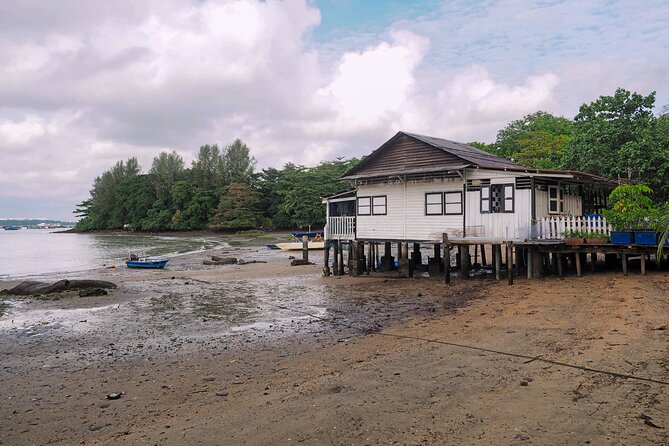
Reviewed · PULAU UBIN & SOUTHERN ISLAND TRIPS
Pulau Ubin. Last Village in Singapore
Singapore goes quiet in four hours. On Pulau Ubin, you trade glass towers for wetlands, village footpaths, and the kind of daily life that still runs on well water and wood stoves, reached by bumboat from the mainland.
I love the small-group pace (max 7) because Keith can actually answer questions as you walk. I also love the hands-on village stops, from fruit orchards to a kampong house visit that makes the island feel real. The one catch: the terrain is uneven, and if you want a bicycle you’ll be paying extra since rental isn’t included.
In This Review
- Key points to know before you go
- Crossing to Pulau Ubin: Bumboat first, city noise later
- Chek Jawa Wetlands: Mangroves and habitat you can actually see
- Orchard time: Learning fruits by getting close
- Kampong house visit: Household life, not museum life
- Village centre walk plus disused quarries and mangrove edges
- Keith and the guide style: patient, interactive, and hands-on
- Price and value: what $92.55 gets you (and what it doesn’t)
- What to bring for a comfortable island morning
- Who should book Pulau Ubin and who might skip it
- Should you book? My practical take
- FAQ
- How long is the Pulau Ubin tour?
- What does the tour cost?
- What time does the tour start, and where does it end?
- How many people are in the group?
- Is the bumboat ride included?
- What’s included in the price?
- Is bicycle rental included?
- What kind of fitness level do I need?
- Is there free cancellation?
Key points to know before you go
- Max 7 people means you get real back-and-forth with the guide, not just a slideshow stroll
- Chek Jawa Wetlands is the big nature anchor, with mangroves and habitat you can see up close
- Fruit orchard time focuses on what villagers grow, and it’s more interesting when you can ask questions
- Kampong house visit shows how village life worked, including the everyday rhythms of household tasks
- Bumboat tickets are included so you’re not juggling transport for the island crossing
Crossing to Pulau Ubin: Bumboat first, city noise later
This half-day starts like a mini reset. You meet at Changi Point Ferry Terminal, and you’re back there at the end, so you don’t have to plan a second transport puzzle. The start time is 8:30 am, which I like. Morning light tends to make nature walks easier on the eyes and calmer in the heat.
The crossing is part of the fun, not just logistics. Your tour includes two-way bumboat tickets, so you glide from mainland to island without extra tickets or extra steps. Once you land on Pulau Ubin, it’s obvious why people say it feels like an older Singapore. You’re not stuck in a theme-park version of village life. You’re on an island where wetlands, orchards, and communities sit side by side.
Group size matters here. With a cap of 7, you’ll move at a human pace. If you stop to look at something small (a bird, fruit, plant life), the group won’t stream past you while you’re still trying to focus your camera.
Chek Jawa Wetlands: Mangroves and habitat you can actually see
One of the best parts of this experience is that it starts with nature before it turns into village culture. You’ll explore the habitat around Chek Jawa Wetlands, and that sets the tone: slow down, look around, and notice how many living things share the same space.
What I like about a wetlands-focused start is it changes your brain. In the city, you watch where you’re walking. On Pulau Ubin, you’re also watching the edges of paths and the transition zones—wetland to mangrove to village land. It’s a good reminder that Singapore isn’t only concrete and skylines.
There’s also a practical benefit. If you begin with nature, you’re warmed up (physically and mentally) for the rest of the island. And because your guide is there the whole time, you’re not left guessing what you’re looking at.
More boats out to Ubin and the southern isles
Orchard time: Learning fruits by getting close
After wetlands, the tour shifts gears to the way villagers live off the land. You’ll tour a fruit orchard and learn about the types of fruits grown by the villagers. This is the section that surprised me in a good way, because orchards can sound like a gentle walk on paper—but a good guide turns it into a real education.
You’ll also get a chance to notice differences you’d miss if you were just passing through. Fruit here isn’t abstract. It has texture, smell, and seasonality. In the experiences I’ve heard from other groups, Keith has pointed out things like the spikiness of durian and the scale of jackfruit so you can tell what’s what in a practical way, not just a trivia way.
If you care about doing more than sightseeing, this stop scratches that itch. It connects the landscape to human choices: what people planted, what they harvested, and how that shows up in village life.
Kampong house visit: Household life, not museum life
Next comes the kampong house visit, and this is where Pulau Ubin stops feeling like a nature outing and starts feeling like a living place. You’ll see how life was like in a traditional village household and get a window into day-to-day activities that don’t belong in a city apartment.
The tour also ties the village back to the big theme of the island: simple systems that still work. In this setting, you’ll understand what it means when the tour describes water coming from wells and stoves running on wood. Even if you’ve heard those ideas before, seeing the environment where they fit makes it stick.
I like this stop because it’s guided. Without context, a house can look like a building. With a local guide, it turns into a story of routines: where people spent time, what they did at home, and why certain tools and spaces mattered.
Village centre walk plus disused quarries and mangrove edges
The middle-to-late part of the tour keeps you moving through the village area and surrounding natural spaces. You’ll explore the village centre and watch everyday local activities as the day unfolds at human speed. You’ll also get a sense of the island’s working land, including disused quarries and mangrove areas.
These parts work best when you accept the pace. This isn’t a sprint. It’s a walk where you’re meant to look around and take in how the village sits within the ecosystems. The quarries add contrast: you’re not only in “pretty nature mode.” You’re seeing how the island has been shaped over time and how nature and land use overlap.
If you want more freedom later, there’s an option to explore by bicycle. Just know that bicycle rental is not included. So if cycling is your plan, budget for that extra cost and expect you’ll be sharing the island roads/paths with slower-moving foot traffic.
- Lion City Bike Tour of Singapore★ 5.0 · 6,211 reviews
- Singapore: Gardens by the Bay Bundle Entry Ticket★ 4.3 · 3,726 reviews
- Singapore: Big Bus Hop-On Hop-Off Tour by Open-Top Bus★ 4.5 · 3,261 reviews
- Singapore: Lion City Highlights Bike Tour★ 4.9 · 2,010 reviews
Keith and the guide style: patient, interactive, and hands-on
A tour like this lives or dies by the guide. You’ll be with an English-speaking local guide, and the name that comes up most often is Keith. From what people describe, he’s the type who stays patient when questions pile up, and he helps you notice things you’d otherwise miss.
One of the strongest things I’ve heard is wildlife spotting tied to calm teaching. Groups mention Keith pointing out birds and sharing what to look for, including sightings like an eagle-type bird (often identified as a brahminy kite) and an oriental pied hornbill. The point isn’t just that you might see wildlife. The point is that you’ll learn how to look for it.
Keith also sounds like the guide who handles the small logistical anxieties too—things like getting to the meeting point smoothly. If you’re visiting Singapore and you’re still getting your bearings with MRT and bus connections, that kind of helpful guidance matters.
There’s also a quiet community note in the way he supports local life. Some groups mention being encouraged to purchase fruit like jackfruit from the island community. That’s not about charity vibes; it’s about understanding the island economy as something people rely on year-round.
Price and value: what $92.55 gets you (and what it doesn’t)
At $92.55 per person for a group tour capped at 7, you’re paying for more than a walk. You’re paying for (1) the included two-way bumboat ride and (2) a guided, structured half-day with a local.
That combination is why the price makes sense in this case. Ferry-only travel would still cost money, and a self-guided visit would leave you without the interpretive layer—why the wetlands matter, what fruit types are grown and when, and what daily village household life looked like.
Your tour duration is about 4 hours, which is a sweet spot in Singapore. You get a real chunk of island time without committing your entire day. And because the format is a small group, you’re more likely to ask questions and get specific answers rather than hearing a generic talk.
What’s not included is worth noting: bicycle rental is extra. So if you picture yourself zooming around on wheels, factor that in.
Also, this experience sells in advance, averaging about 31 days. If you’re traveling during busier periods, booking earlier is the safest bet.
What to bring for a comfortable island morning
The tour requires moderate physical fitness. That likely means a good mix of walking and time outdoors, plus the possibility of hills or uneven ground if you choose to bike.
Here’s what I’d plan for:
- Comfortable shoes you don’t mind getting a little dusty
- Sun protection and water (it starts early, but you’ll still be outside)
- Bug protection, especially around wetland areas
- If you’re biking, bring a strategy for the extra rental cost and wear clothes that let you move easily
If you’re sensitive to early starts, set your expectations. An 8:30 am meeting is a real morning. But it also means you get your Pulau Ubin time before the day fully heats up.
Who should book Pulau Ubin and who might skip it
This tour is a great fit if you want a Singapore experience that feels grounded. It’s for people who like nature, don’t mind walking at a steady pace, and enjoy culture when it’s not packaged as a performance.
You’ll probably love it if:
- You’re curious about how village life works in a small island community
- You like guided observation (especially around wetlands and orchards)
- You want small-group interaction instead of a big crowd
You might think twice if you:
- Want a fully relaxed, low-movement outing with no uneven paths
- Strongly prefer cycling, but don’t want to pay for bicycle rental
Should you book? My practical take
If you’re choosing between another city tour and Pulau Ubin, I’d lean Pulau Ubin. The included bumboat ride plus the guided stops make it feel like a complete island morning, not an expensive bus ride with a quick photo stop. The max 7 format and the way Keith can explain what you’re seeing are big advantages.
Book it if you can handle a moderate walking experience and you like learning while you move through wetlands and village spaces. Skip it only if you want zero outdoor walking or if the extra bicycle rental cost would throw off your budget.
FAQ
How long is the Pulau Ubin tour?
It runs for about 4 hours.
What does the tour cost?
The price is $92.55 per person.
What time does the tour start, and where does it end?
It starts at 8:30 am at Changi Point Ferry Terminal and ends back at the meeting point.
How many people are in the group?
The tour caps the group size at a maximum of 7 travelers.
Is the bumboat ride included?
Yes. The tour includes two-way bumboat tickets from the mainland.
What’s included in the price?
The included items are boat fare to and from Pulau Ubin and a passionate English-speaking local guide.
Is bicycle rental included?
No. Bicycle rental on Pulau Ubin is not included.
What kind of fitness level do I need?
You should have a moderate physical fitness level.
Is there free cancellation?
Yes. You can cancel for free up to 24 hours in advance for a full refund.
Islands Off the Island



Fresh Reviews from the Little Red Dot
- Night Safari Tickets with Tram Ride
★ 4.5 · 3 reviews - Singapore: Architecture and Food Tour with Tastings
★ 5.0 · 3 reviews - Singapore Private Full-Day Sightseeing Tour
★ 5.0 · 3 reviews - Private Chinatown Heritage Tour with Best 8 Local Tastings
★ 5.0 · 3 reviews
Pulau Ubin & Southern Island Trips, compared.
 ★ 5.0Let’s Go Kelong Boat Tour at Pulau UbinFrom $109696 reviews
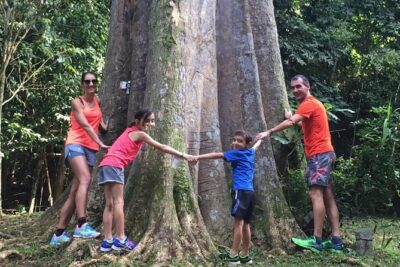 ★ 5.0Private Pulau Ubin Bike TourFrom $95149 reviews
 ★ 5.0Kayak Sailing in Singapore, Mangrove, Kelong & Pulau Ubin, Seafood Meal IncludedFrom $120102 reviews
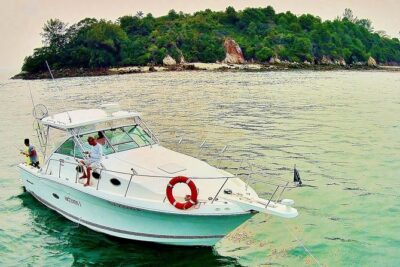 ★ 5.0Join-in Catch and Cook Fishing Trip at Southern Islands SingaporeFrom $12052 reviews
 ★ 5.0Singapore Southern Islands Speedboat Guided TourFrom $3636 reviews
 ★ 4.4Southern Island Speedboat TourFrom $3124 reviews
★ 4.8Singapore Southern Islands Speedboat Guided TourFrom $3519 reviews
★ 4.4Southern Island Speedboat TourFrom $3124 reviews
★ 4.8Singapore Southern Islands Speedboat Guided TourFrom $3519 reviews
 ★ 5.0YachtCruiseSG Kusu Island Speedboat Heritage TourFrom $9518 reviews
Browse the lists this tour appears in