
Reviewed · SENTOSA DAYS & CABLE CAR RIDES
Singapore – Albatross Speedboat Adventures Cruising in Sentosa
Speed hits fast when you’re out on open water. This 60-minute Albatross speedboat loop around Sentosa gives you Sentosa-to-city skyline views plus guided island stories you can actually see from the boat.
I like that it stays practical: bottled water is included, and the ride is short enough to fit neatly into a Singapore day. One catch is that the cruise has clear safety limits (including a height/age/weight guidance), so it’s not a fit for everyone.
If you’re booking with kids, read the seat rules carefully. Children under 8 must sit in the middle row between adults, wear the provided life jacket, and a parent must sign a waiver; older kids have supervision and seating guidance too. The activity also isn’t recommended for people over 130 kg, elderly individuals, or expectant mothers.
In This Review
- Key Things I’d Bet Money You’ll Notice
- Entering the Ride: What 60 Minutes Looks Like from the Water
- Where to Start: S.E.A. Aquarium, Dockside Admission, and Getting Seated
- The Southern Islands Circuit: What You See in Order, and Why Each Stop Matters
- Sentosa, Then Out to the Southern Islands
- Long Ya Men (Dragon’s Tooth Gate): A History Stop You Can Point At
- Lazarus Island: White Sand, a C-Shaped Lagoon, and Quieter Anchoring
- Kusu Island: Temple, Shrines, Pilgrimage Season, and Why It’s Named This Way
- St John’s Island: Raffles to Quarantine to Later Uses
- Sisters Islands: Minah, Linah, and the Storm Legend
- Tekukor Island (Pulau Tekukor): Rare Permission and the Giant Clam Angle
- The Crew, the Commentary, and the Small Comfort Wins
- Price and Value: Is $35.85 for a 1-Hour Speedboat Actually Fair?
- Who This Cruise Suits Best (And Who Should Skip It)
- Booking and Timing: How to Plan Your Day Around the Cruise
- Should You Book Albatross Speedboat Adventures in Sentosa?
- FAQ
- How long is the Albatross speedboat cruise around Sentosa?
- Where do I meet and where does the cruise end?
- What is included in the ticket price?
- Is lunch or alcohol included?
- Are service animals allowed?
- What are the child requirements for the cruise?
- Who is the cruise not recommended for?
- Is the booking refundable or changeable?
Key Things I’d Bet Money You’ll Notice
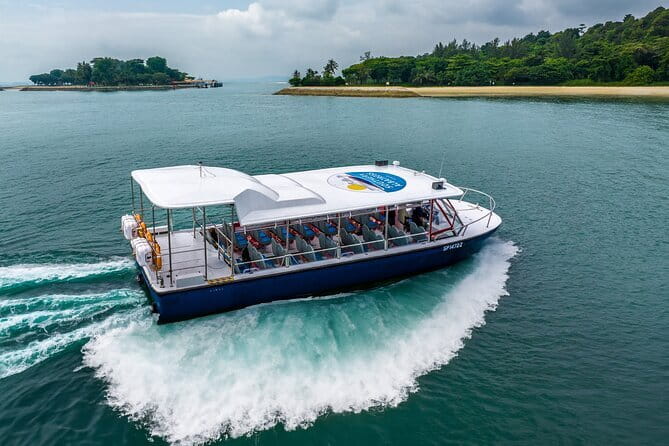
- High-speed run for a full view of the coastline without losing the hour of your day
- Island-by-island commentary that turns names like Lazarus and Kusu into places you can picture
- Bottled water plus dockside admission included, so you’re not doing surprise add-ons
- Family-friendly structure with a clear child seating and life-jacket approach
- Friendly crew and photo help that makes the whole thing feel organized, not chaotic
Entering the Ride: What 60 Minutes Looks Like from the Water
This is a straight-ahead experience: you meet at S.E.A. Aquarium on Sentosa, board the Royal Albatross, and spend about one hour cruising around the Southern Islands before returning to the same spot. The timing matters. In Singapore, that kind of short window is gold because you can do the speedboat without letting the day sprawl.
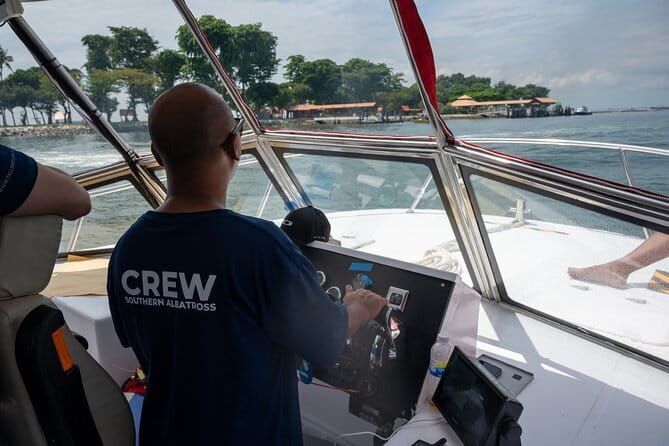
What makes this work well for most people is the mix of motion and scenery. You’re out at sea at speed, so your perspective flips quickly: Sentosa stops looking like a resort map and starts looking like a shoreline you can trace in real time. The city skyline by the water is also the kind of view that feels different than photos from land—more layered, more “how far did we really go?”
Also, the boat experience is built to be comfortable enough for a short outing. The included bottled water helps, and in the same spirit, you may get a small onboard prep kit (raincoat and wipe show up in the provided feedback). That’s not a luxury detail—it’s the difference between a nice ride and a soggy one when weather turns.
Where to Start: S.E.A. Aquarium, Dockside Admission, and Getting Seated
Your meeting point and ticket redemption are both at S.E.A. Aquarium, 8 Sentosa Gateway, Sentosa Island, Singapore 098269. The activity ends back at that same starting point, so you don’t have to plan transportation from a different island or pier.
A couple details that help you get through the first 10 minutes smoothly:
- Group size is capped at 50, so you should have a workable flow for boarding and seating.
- Service animals are allowed, which is useful if you need to travel with one.
- You’re told you’ll receive confirmation at booking time, and the cruise runs as a standard ticketed activity.
Seating rules are especially important if you’re bringing children. The under-8 guidance is specific: middle row between adults, provided life jacket, plus a signed waiver by a parent. That means you should plan your family seating before you assume it will be handled at random.
The main practical drawback here is also simple: if you fall under the not recommended categories (over 130 kg, expectant mothers, elderly individuals, or children under 8), this cruise isn’t the one to force. You’ll be happier finding an option that matches your safety needs.
Sentosa keeps going after the cable car docks
The Southern Islands Circuit: What You See in Order, and Why Each Stop Matters
This cruise is designed like a moving highlights reel. You don’t just pass islands—you get a story and a point of view for each one.
Sentosa, Then Out to the Southern Islands
Starting from Sentosa, you begin with a view that quickly turns “vacation mode” into “coastline mode.” You’ll see Sentosa from the sea rather than from attractions or beaches. That’s when the skyline view becomes more than background—it becomes part of the framing.
Sentosa itself is the busy anchor in the Southern Islands group, and that matters because it gives you contrast. Once you leave the Sentosa area, the vibe shifts toward calmer water and more remote island scenery.
Long Ya Men (Dragon’s Tooth Gate): A History Stop You Can Point At
One of the more interesting parts of this trip is the story around Long Ya Men, literally known as Dragon’s Tooth Gate in Chinese. The account connected to Wang Dayuan is used to explain how earlier travelers described Singapore and nearby waters, including what’s linked to the Old Singapore Strait and the area around Blakang Mati.
Why this matters for you: it’s the kind of commentary that turns a “we passed something” moment into “I get what that feature is.” The mention of Batu Belayar Sail Rock being associated with the Dragon’s teeth concept—and the idea that some of these features were later removed during British fort construction and navigation changes—helps you connect the dots between geography and development.
If you’re the type who likes history but hates lectures, this is a good compromise: the guide ties it to things you can actually see from the boat.
Other evenings under sail off the marina
- Royal Albatross – Weeknight Buffet Dinner + Free-flow Wine & Beer★ 4.5 · 164 reviews
- Singapore: Albatross Speedboat Adventures Ticket★ 4.4 · 22 reviews
- Singapore Sunset and Moring Cruise On A Luxury Catamaran★ 5.0 · 19 reviews
- Marina Bay Sands Yacht Cruise★ 4.4 · 12 reviews
Lazarus Island: White Sand, a C-Shaped Lagoon, and Quieter Anchoring
Next comes Lazarus Island, once known by the Malay name Pulau Sakijang Pelepah. The big story here is that it held prison confinement sheds in the late 19th century, with the sheds later abandoned after a daring escape.
Today, the focus is on the coastline: clean white sandy beach around a C-shaped lagoon. That “best kept secrets” feeling is exactly why this stop works on a speedboat. It’s not just pretty scenery—it’s the idea that the Southern Islands still feel like places you don’t rush through.
Also, Lazarus is described as one of the few Southern Islands spots where private yachts and boats can anchor. That tells you the water here isn’t only scenic—it’s usable and calmer enough to support boating.
Kusu Island: Temple, Shrines, Pilgrimage Season, and Why It’s Named This Way
Then you reach Kusu Island, a place defined by religion and tradition. It’s home to a Chinese temple and three Malay keramat (shrines), and it draws thousands of pilgrims every year, especially in the ninth lunar month between September and October.
The name story is also useful: Kusu means tortoise or turtle in Hokkien dialect. If you like understanding names before you see them, this one gives you that small “aha” moment early.
From a practical point of view, the tour commentary adds scale. The island’s area changed over time: it was about 1.2 hectares around 1975, then landfill and reclamation expanded it to 8.5 hectares by joining it with another coral outcrop. It also served as a burial site for immigrants who died during quarantine on St John’s and Lazarus.
So while this stop is stunning in concept, it’s also a reminder that Singapore’s islands have held very human stories—far beyond postcard beaches.
St John’s Island: Raffles to Quarantine to Later Uses
St John’s Island is one of the most dramatic stories on the route because the island function changed repeatedly over time. It started as a penal settlement, and early on Stamford Raffles is noted as anchoring off the island on 28 January 1819, before heading to mainland Singapore.
Later, the island tied into public health and quarantine. It served as a report boat station for the marine department until a cholera epidemic in 1873 caused 448 deaths. After that, St John’s is described as hosting a floating police station, a hospital, and a quarantine burial ground at Peak Island, dealing with over 1300 cholera-infected Chinese coolies.
And it kept changing. After mass immigration slowed, the island held political detainees and secret society ringleaders; later it became a drug rehabilitation center. By 1975, it became a holiday camp site for schools and students.
This stop is powerful because it answers a question you might not ask on land: why are these islands part of Singapore’s story at all? From the boat, you don’t need to imagine the buildings—the guide gives you the sequence, and you can keep it in your head like a timeline.
Sisters Islands: Minah, Linah, and the Storm Legend
South of Singapore, you’ll pass the Sisters Islands: Pulau Subar Darat (Little Sister) and Pulau Subar Laut (Big Sister). The legend says two sisters—Minah and Linah—made a vow to marry two brothers so they could live together. When no brothers arrived, a pirate chief tried to force Linah into marriage. In trying to escape, the sisters drowned during a storm. The islands are said to have formed where they perished, and villagers named them Sisters Islands in their memory.
The practical value of this stop: it’s a break from heavy history, and it gives you a mental “map label” for what you’re seeing. Even if you don’t remember every detail, the legend helps you picture the shape and the naming logic.
Tekukor Island (Pulau Tekukor): Rare Permission and the Giant Clam Angle
Finally, the route includes Tekukor Island, also known as Pulau Tekukor, which is rarely visited due to needing special permission. The info provided notes that authorization was secured recently to search for giant clams, which gives this stop a real sense of access and specificity.
Historically, Tekukor served as an ammunition dump until the 1980s. It’s described as having rocky cliffs, a long intertidal zone on one side, and reefs around its perimeter. The name “Tekukor” translates to turtle dove or spotted neck dove, so you’re also getting a bird-name translation that adds texture to a place you might otherwise never hear about.
This is the kind of stop that makes the speedboat feel more than a loop. You’re not just seeing what’s famous—you’re hearing why a place is hard to reach and what people were hoping to find there.
The Crew, the Commentary, and the Small Comfort Wins
The cruise works because it’s run like a tour, not a free-for-all. In the included feedback, the staff come across as friendly and helpful, and they’re proactive about small moments—like taking a picture for your group. That kind of practical service matters more than it seems, especially on boats where everyone’s trying to hold their phone and keep their balance.
The commentary also seems to hit the sweet spot: the route passes multiple islands and features, and the guidance connects names with visible geography. You’re getting enough history to feel grounded, but not so much that you’re stuck listening while you want to look out at the water.
One comfort detail to plan for: there’s a mention of a wee bag with water, raincoat, and wipe. That suggests the operator anticipates real weather on the sea and helps you stay functional. If you’re sensitive to getting wet or you hate sticky sunscreen-and-sweat feelings, this is worth remembering.
Price and Value: Is $35.85 for a 1-Hour Speedboat Actually Fair?
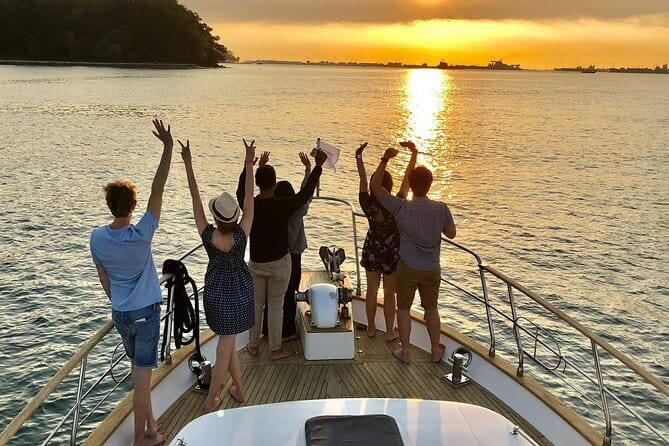
At $35.85 per person, this isn’t a “once-in-a-decade” extravagance. It’s priced like a solid add-on that still feels like something real.
Here’s what you’re paying for, in plain terms:
- About one hour of high-speed cruising (not a long, slow sightseeing day)
- Access that includes all fees and taxes
- Bottled water
- Royal Albatross dockside admission (with terms applying)
What you’re not paying for is also clear: lunch and alcoholic beverages are not included. If you want food, eat before or plan afterward. If you want drinks, budget separately.
Value-wise, the biggest reason this feels worth it is that the tour mixes the thrill factor with guided interpretation. A short speedboat without stories can feel shallow. A short speedboat with well-paced island explanations gives you a richer “I learned something” feeling while still delivering the adrenaline.
Who This Cruise Suits Best (And Who Should Skip It)
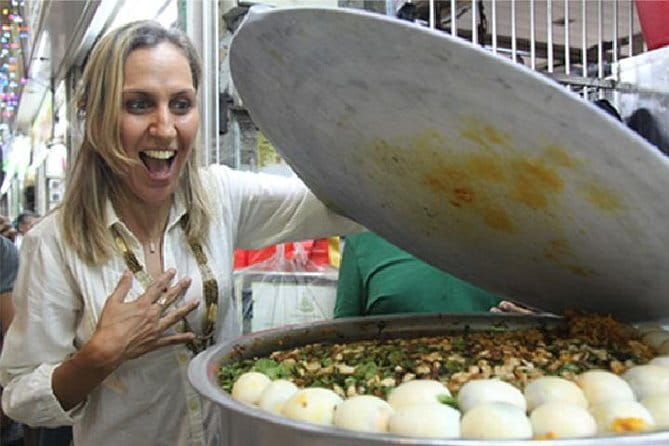
This is built for a mix of people. The overview points to families and thrill seekers, and the operating info backs up that structure with clear child seating and life jacket rules.
It’s a good fit if:
- You want a fast, memorable water view of Sentosa and the Southern Islands
- You like having a guide connect place names to what you’re seeing
- You’re okay with a 1-hour commitment rather than a half-day tour
It’s not a fit if:
- You’re over 130 kilograms (286 pounds)
- You’re traveling with children under 8 years old
- You’re elderly or an expectant mother (explicitly listed as not recommended)
If you’re in those groups, I’d treat the boat as a “nice idea” rather than a “try it anyway” plan. The rules are there for a reason.
Booking and Timing: How to Plan Your Day Around the Cruise
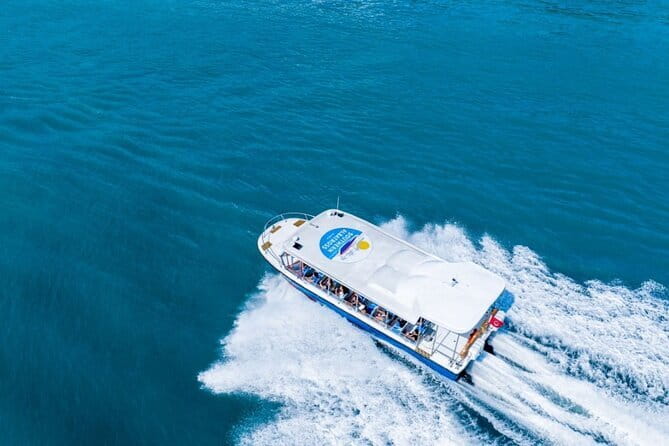
This is typically booked about 5 days in advance, which suggests it can fill depending on your travel dates. If you’re traveling during busier periods, don’t leave it to the last minute.
Also plan your day around the meeting point: since the cruise starts and ends at S.E.A. Aquarium, it’s easy to chain with other Sentosa activities. The short duration is the real scheduling superpower here.
One more planning note: confirmation is received at booking time, and the cruise runs with a maximum of 50 travelers. That usually means you’re not fighting huge crowds on the water, which keeps the experience feeling controlled.
If you’re the type who needs flexibility, keep in mind the activity is non-refundable and cannot be changed for any reason. That makes choosing your time slot extra important.
Should You Book Albatross Speedboat Adventures in Sentosa?
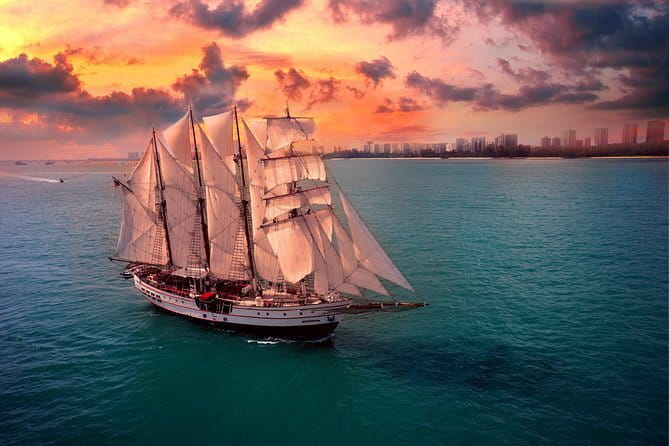
Book it if you want a high-speed, water-level view of Sentosa and the Southern Islands, plus a guide who ties the scenery to real island stories. The one-hour format is especially good if you’re managing heat and energy and you don’t want your day to turn into logistics.
Skip it (or choose something else) if the safety guidance doesn’t match you or your family. And if your schedule is uncertain, remember this option is non-refundable and not changeable.
Overall, this is the kind of tour that earns its place in a Singapore itinerary: short, scenic, and packed with place names you’ll actually understand when you look at the water.
FAQ
How long is the Albatross speedboat cruise around Sentosa?
It runs for about 1 hour (approx.).
Where do I meet and where does the cruise end?
You meet at S.E.A. Aquarium, 8 Sentosa Gateway, Sentosa Island, Singapore 098269, and it ends back at the same meeting point.
What is included in the ticket price?
The price includes all fees and taxes, bottled water, and Royal Albatross dockside admission (terms apply).
Is lunch or alcohol included?
No. Lunch and alcoholic beverages are not included.
Are service animals allowed?
Yes, service animals are allowed.
What are the child requirements for the cruise?
Children under 8 must sit in the middle row between adults, wear the provided life jacket, and a parent must sign a waiver. Children between 8 and 12 are recommended to sit in the middle row between adults and must be supervised at a ratio of at least 1 adult to 2 children.
Who is the cruise not recommended for?
It is not recommended for individuals over 130 kg (286 lb), children under 8, elderly individuals, and expectant mothers.
Is the booking refundable or changeable?
No. The experience is non-refundable and cannot be changed for any reason.
Dinner with the Skyline Astern


Sentosa, Ride by Ride


Fresh Reviews from the Little Red Dot
- Night Safari Tickets with Tram Ride
★ 4.5 · 3 reviews - Singapore: Architecture and Food Tour with Tastings
★ 5.0 · 3 reviews - Singapore Private Full-Day Sightseeing Tour
★ 5.0 · 3 reviews - Private Chinatown Heritage Tour with Best 8 Local Tastings
★ 5.0 · 3 reviews
Sentosa Days & Cable Car Rides, compared.
 ★ 4.5Sentosa Cable Car Sky Pass TicketFrom $241,449 reviews
 ★ 5.0Scentopia Orchid Perfume Making (100ml) at Sentosa, SingaporeFrom $65916 reviews
 ★ 4.3Sentosa Cable Car Sky PassFrom $23570 reviews
 ★ 5.0Kayak Fishing in Singapore, Sentosa, East Coast: Day, Sunset & Night AdventuresFrom $120411 reviews
 ★ 4.3Sentosa Wings of Time Fireworks Symphony TicketFrom $16321 reviews
 ★ 4.6Skyline Luge Sentosa Entry TicketFrom $27190 reviews
 ★ 3.5Sentosa Cable Car Sky Pass Roundtrip TicketFrom $2694 reviews
 ★ 4.5Harry Potter Visions of Magic at Sentosa TicketFrom $4678 reviews
Browse the lists this tour appears in