
Singapore Zoo is one of the easiest great days in Singapore. You get near-natural animal habitats plus a guided tram ride with audio commentary, so you can see a lot without burning out.
I love how the zoo is built for real viewing: elevated platforms, underwater galleries, and glass observatories give you angles you don’t get at typical roadside zoos.
One thing to plan for: it’s a big park, and tram stops aren’t right next to each other, so you’ll still walk a fair amount (comfy shoes help).
In This Review
- Quick hits before you buy
- What makes Singapore Zoo feel special: habitat design and viewing options
- Your one-day game plan: tram first, then follow the walking flow
- Global habitats you’ll actually notice: orangutans, tigers, hippos, and more
- Shows, feedings, and keeper talks: when the day gets extra alive
- Kidz World and the water play setup: a great break, not just a side feature
- Food, shade, and rest stops: how to avoid the midday slump
- Getting there smoothly: MRT + bus basics and easy return options
- Price and value: does $38 make sense for one day?
- Comfort and timing: what to wear and when to arrive
- Should you book the Singapore Zoo ticket with tram ride?
- FAQ
- What is included with the Singapore Zoo ticket?
- What are the opening hours for the Singapore Zoo?
- What are Kidz World hours?
- Is there an audio guide, and what language is it in?
- Is the ticket refundable?
- Are children eligible for a child ticket?
- How long does a visit typically take?
Quick hits before you buy
- Free-ranging orangutan habitat is a standout you can feel good about, not just peek at behind bars
- Tram ride with English audio helps you get your bearings fast and saves your legs
- Underwater and glass viewing lets you watch animals in ways that feel closer to nature
- Water play breaks (including Kidz World and the water-themed setup) make this easier with kids
- Shaded paths can make the walk much more comfortable in Singapore heat
- Daily shows and feedings add energy to your route, even if you don’t know the schedule yet
What makes Singapore Zoo feel special: habitat design and viewing options
Singapore Zoo has a reputation for being beautiful, but the real magic is practical. Animals aren’t just placed in cages. They’re in habitats that feel designed for how people actually watch wildlife: from above, from glass, and even below water level.
You’ll see animals separated from you by moats and wooden fencing, which sounds simple until you’re standing there and realizing how much cleaner the experience feels. There’s less of that harsh, “facility” feeling. More of a “walk through a wildlife area” vibe.
The viewing setup is a major reason this zoo works so well in one day. You can look down from elevated platforms, move through areas with underwater galleries, and use spots with glass observatories. Even when the animals aren’t doing a dramatic performance, you’re usually still getting a good view.
And yes, it helps that the zoo has a strong “global habitats” concept. You’re not just collecting animal names—you’re moving through different zones that make the animals feel like part of ecosystems.
Your one-day game plan: tram first, then follow the walking flow
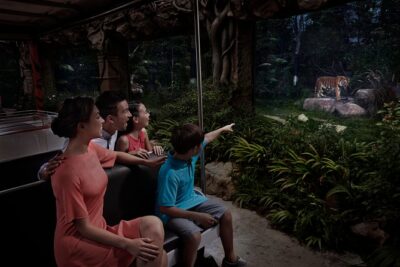
Your ticket covers a 1-day admission and includes a guided tram ride with audio commentary (English). That’s a helpful combination. The tram gives you context and rest, and the walking is where you’ll slow down and enjoy the animals.
Here’s the rhythm that works best:
- Start with the tram ride to learn the layout and pick your must-sees. It’s also a good way to spot where the best viewing areas are.
- After the tram, choose a walking loop rather than zigzagging. The park is easy to navigate in a sort of figure-8 style flow, so you can keep moving without constantly checking your bearings.
- Plan a “refresh break” midday. Singapore heat can be sneaky. Use shaded paths, pause for a drink, and catch a show or feeding when it fits.
The tram is great, but don’t treat it like teleportation. Tram stops can be farther apart than you’d expect, so you’ll still do walking between viewpoints. That’s normal here because the zoo is large and designed for immersion-like viewing—just in a practical, walkable way.
If you’re visiting with kids, the tram helps, but bring or rent a stroller. The park is big enough that you’ll want an easy option for tired legs.
More Mandai hours, trams and aviaries included
Global habitats you’ll actually notice: orangutans, tigers, hippos, and more
Singapore Zoo is known for variety, and it delivers in a way that’s easy to understand during a single day. You’re looking at over 2,800 animals across more than 300 species, including mammals, birds, and reptiles.
What makes this feel “worth it” isn’t only the quantity. It’s that many exhibits are staged so you can see behavior, not just bodies. Look for animals that are active during your route—many of the experiences people rave about are when the animals decide to cooperate.
Some of the most memorable examples you can plan around:
- White tiger: often a star because it’s striking and you tend to see it well from the viewing areas
- Asian elephant: the elephant show is a must if you catch it during your visit window
- Pygmy hippo: a fun contrast to the larger animals and sometimes easier to spot if you’re patient
- Free-ranging orangutan habitat: this is the one you’ll remember even if you don’t know much about orangutans going in
- Otter, sun bear, proboscis monkey: solid “wow” species that keep the day from feeling repetitive
One of the quiet strengths of the zoo is that it mixes “big headline animals” with under-the-radar stars. If you only chase the famous ones, you can still end up with a great day. But if you give yourself time to wander between viewing points, you’ll get those extra surprises.
Shows, feedings, and keeper talks: when the day gets extra alive
A zoo that’s only about wandering can feel flat. Singapore Zoo doesn’t do that. It builds in multiple chances to catch animals doing something on a schedule.
Expect shows and feedings across the day. The elephant show gets special mention again and again because it’s entertaining and engaging, and it’s also where you see elephants as individual personalities rather than props.
You may also catch keeper talks, which tend to be especially useful if you like learning what you’re looking at. Even short talks help you interpret behavior—what you should notice, what’s normal, and what isn’t.
Practical tip: don’t try to over-plan the timetable from outside sources. Instead, walk, check what’s next when you arrive, and let your route shift. In a place this big, being flexible saves energy and reduces stress.
And if you’re traveling with kids, shows and feedings are the easiest way to keep everyone interested without constantly saying, Where are we going next?
Kidz World and the water play setup: a great break, not just a side feature
If you’re traveling with children, Kidz World is part of the reason the zoo is such a popular family day. Hours are 9:00 AM to 6:00 PM, separate from the main zoo’s 8:30 AM to 6:00 PM schedule.
The water play options matter too. There’s a wet-play area, plus a waterpark component with a tropical-animal-themed slide and spray shack. In real terms: it turns the day into something more than “watch animals, sit in the sun, repeat.”
Bring swimwear if you plan to use it. Also, if your kids are little, you’ll appreciate stroller help because the zoo is spacious and you’ll be moving between zones.
Even if you don’t have kids, the water play can still be a useful strategy. It’s a chance to cool off and reset your mood mid-afternoon.
Food, shade, and rest stops: how to avoid the midday slump
You’ll find plenty of places to grab food and drinks inside the zoo, including bistros, cafes, and restaurants. You’ll also see smaller spots for quick purchases along the way—good for cold drinks when the sun feels relentless.
Shade is a big plus. Many paths are naturally covered by trees, and this makes the walking easier. It’s still Singapore, so you’ll want a water plan. Sip often, not just when you feel thirsty.
One real-world tip: seating can be tricky at certain eateries. If you see a good spot, take it. Waiting for “maybe better seats” can turn into a snack that feels like a marathon.
Also keep expectations realistic on value. Some food areas can be pricey, so I treat meals as a “choose your priority” situation. If you’re hungry for a sit-down lunch, pick a place and go. If you just want fuel, do smaller purchases more often.
Getting there smoothly: MRT + bus basics and easy return options
Singapore Zoo is not hard to reach, especially if you plan a simple route.
One commonly used approach:
- Take the MRT to Khatib, then take a short bus ride that drops you near the zoo
Another:
- Take the MRT to Marsiling on the NS line, cross via an overbridge to the bus stop, and use the 926 bus (it runs frequently and drops right at the zoo)
What matters most is that the bus connection is straightforward, and you don’t have to wrestle with complicated transfers.
For the return trip, I suggest thinking about timing more than luck. If you’re leaving right after peak time, taxis can be easier to find than waiting for app-based pickup surges. (One visitor noted using a metered taxi rather than Uber for the return and found it cost-effective.)
If you’re coming from a hotel, check your route the day before with Google Maps or Apple Maps, and save the bus stop name. It cuts confusion fast when you’re tired.
Price and value: does $38 make sense for one day?
At $38 per person, the Singapore Zoo ticket isn’t the cheapest day in Singapore. It is, however, a strong value if you care about two things: variety of animals and a viewing experience that’s built for how people look.
Here’s why it tends to feel worth it:
- You’re paying for a full-day park that’s large enough to justify a full day
- You get tram help with guided audio, which improves how efficiently you can see the zoo
- The habitat design means you’re not just looking at “animal vs. visitor.” You’re seeing behavior and environment
- The schedule elements—shows, feedings, and keeper talks—add structure to your day
If you only want one quick look at a few animals, this ticket might feel expensive. But if your goal is to spend the day outdoors, learn a few things, and enjoy multiple animal types in good spaces, it’s one of the better allocations of a day-trip budget in Singapore.
Also, with last admission around 5:30 PM (and the zoo closing at 6:00 PM), you’ll want to enter earlier rather than later so you’re not rushing through the best areas.
Comfort and timing: what to wear and when to arrive
This is a “walk a lot” attraction. Even with the tram, you’ll cover serious ground across a large property. Wear comfortable shoes.
Weather can shift, and you might encounter light rain. Pack a small umbrella or a light rain jacket. It’s the kind of place where rain can slow you down, but it won’t totally ruin the day.
Arrive with time. Opening is 8:30 AM to 6:00 PM daily, with last admission at 5:30 PM. That early start gives you two advantages: fewer crowds and more chances to see animals that are active earlier in the day.
If you’re planning Kidz World too, note it runs from 9:00 AM to 6:00 PM. That means you’ll likely want to do Kidz World later once the main zoo highlights are covered or mixed in as a break.
Should you book the Singapore Zoo ticket with tram ride?
Book it if you want:
- A one-day, high-value zoo with real habitat viewing
- The added convenience of a guided tram ride with English audio
- A family-friendly day plan with water play and kids zones
- Strong “headline” exhibits like the white tiger, plus the orangutan habitat experience
Skip it (or reconsider timing) if you hate walking and want a very short visit. The tram helps, but you’ll still do plenty of walking because the zoo is designed as a full-day environment.
If you’re deciding between this and a bare admission, I’d lean toward booking this one for the audio tram. It’s a smart way to get your bearings and turn your day into a smoother route from the start.
FAQ
What is included with the Singapore Zoo ticket?
Your ticket includes 1-day admission and a guided tram ride with audio commentary in English.
What are the opening hours for the Singapore Zoo?
The Singapore Zoo is open 8:30 AM to 6:00 PM daily, with the last admission at 5:30 PM.
What are Kidz World hours?
Kidz World is open 9:00 AM to 6:00 PM.
Is there an audio guide, and what language is it in?
Yes, the tram ride includes an audio guide, and it’s available in English.
Is the ticket refundable?
This activity is non-refundable.
Are children eligible for a child ticket?
Yes. Children between 3 and 12 years old are eligible for a child ticket.
How long does a visit typically take?
This experience is listed as 1 day admission, so you should plan a full-day visit to see the zoo properly.
Tickets People Pre-Book Here

Mandai After This One
Fresh Reviews from the Little Red Dot
- Singapore Zoo: Entrance Ticket with Tram Ride
★ 4.4 · 199 reviews
Mandai Wildlife & Night Safari, compared.
 ★ 4.0Morning at the Zoo with 1-way Transfer (Free & Easy)From $871,882 reviews
 ★ 4.0Night Safari Tour with TransferFrom $1011,260 reviews
 ★ 4.4Singapore Zoo: 1-Day Entrance E-TicketFrom $39528 reviews
 ★ 3.5Night Safari with Buffet Dinner with hotel pick-upFrom $138181 reviews
 ★ 4.3River Wonders Entry TicketFrom $35173 reviews
 ★ 4.2Night Safari Singapore Entry Ticket + Tram RideFrom $45138 reviews
Morning Zoo Ticket with Hotel PickupFrom $86127 reviews
 ★ 3.0Night Safari Ticket Including Tram RideFrom $48126 reviews
Browse the lists this tour appears in