
Reviewed · SINGAPORE CYCLING & BIKE TOURS
Trails Of Tan Ah Huat : Singapore 1920s. A storytelling guided bicycle tour!
A story ride through old Singapore. This guided bicycle loop turns central streets into scenes from the 1920s, with Tan Ah Huat as your thread through Kampong Gelam, Chinatown, and the Singapore River area.
I love the easy, flat riding and that the group stays small (max 10), so you can actually keep up without feeling rushed. I also love the way guides like Yap, Alfie, and Simon weave the landmarks into a moving story, using short moments of video-style storytelling to make places feel connected.
One thing to think about: this is a bike tour first. If you’re not comfortable cycling or you want long, stop-and-stare wandering time, you may find the pace too active, and the tour runs best in good weather.
In This Review
- Key things to look forward to
- A 1920s story ride that changes how you read Singapore
- Price and value: what $79.89 buys you for 4 hours
- Meeting at 462 Crawford Ln and making the morning easy
- Stop-by-stop: from Kampong Gelam to Sago Street
- Why the guides matter: Yap, Alfie, and Simon’s style
- Who should book this bike tour (and who should think twice)
- Should you book Trails Of Tan Ah Huat?
- FAQ
- How long is the Trails Of Tan Ah Huat bike tour?
- What does the price include?
- Where does the tour start, and where does it end?
- Is hotel pickup included?
- Is the cycling route difficult?
- Is the tour affected by weather?
Key things to look forward to
- A 1920s character story that guides you street by street, not just landmark to landmark
- Small group size (up to 10), which keeps the ride more personal and easier to follow
- Flat, easy route with the freedom to ride at a pace that suits you
- A coffee-shop break where you sample Tan Ah Huat’s favorite coffee and snack
- Multiple Singapore River and Chinatown stops, giving you a tight “best of central” feel in about 4 hours
A 1920s story ride that changes how you read Singapore
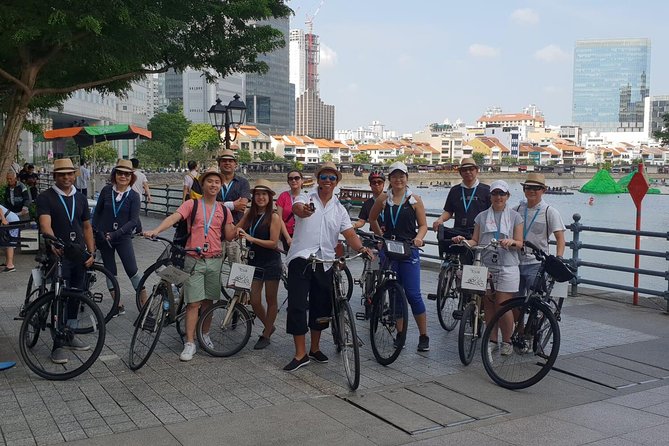
This tour is built around one idea: you don’t just look at old buildings. You see them through the eyes of a fictional character, Tan Ah Huat, and the people he meets. That storytelling approach makes the city feel like a place with memory, not just photos on a phone.
What helps most is the way the route links different neighborhoods into one narrative. You start in the Muslim Settlement area of Kampong Gelam, then shift toward the river’s arrivals and trade zones, and finally end in Chinatown streets known for big character moments—tea, coolies, crowded corners, and even the darker turns of fate.
The tone stays playful but never skips the practical context. When you stop, you get a reason for being there. And when you pedal again, you carry that context forward to the next scene.
Price and value: what $79.89 buys you for 4 hours
At $79.89 per person for about 4 hours, you’re paying for more than a bike rental. You’re getting a licensed guide, the bicycle, bottled water, and locker access for your bags. You’re also getting time built around story beats, plus a stop at a coffee shop for a drink and snack.
Here’s the value logic I like: cycling gives you movement and viewpoints, while a guide handles the “what am I looking at?” part. Without that, you’d likely spend extra time hunting for explanations on your own. With a small group, it also tends to feel less like a bus tour and more like a guided walk, just on two wheels.
If you’re already planning to bike central Singapore anyway, this can be a solid deal. If you only want a casual, no-effort stroll, you may not use the bike angle enough to justify the price.
More saddle time on the park connectors
Meeting at 462 Crawford Ln and making the morning easy
You start at 462 Crawford Ln, Singapore 190462 at 9:00 am, and the tour ends back at the meeting point. There’s no hotel pickup, but the good news is that taxis are described as inexpensive and safe, and the meeting area is in the city center near most hotels. The tour is also near public transportation.
Bring your own common sense like you would for any city bike ride: show up a few minutes early, arrive with enough time to park your stuff and get comfortable on the bicycle, and wear something you can pedal in.
They provide bottled water, but I still recommend you dress for the Singapore morning you’re actually getting. This experience is marked as weather-dependent, so if it’s poor weather, they’ll offer a different date or a full refund.
Stop-by-stop: from Kampong Gelam to Sago Street
What makes this route satisfying is that each stop answers a specific question tied to Tan Ah Huat’s story. Some stops focus on community and arrival. Others focus on trade, transport, and the day-to-day rhythm of the city.
Kampong Gelam (Muslim Settlement)
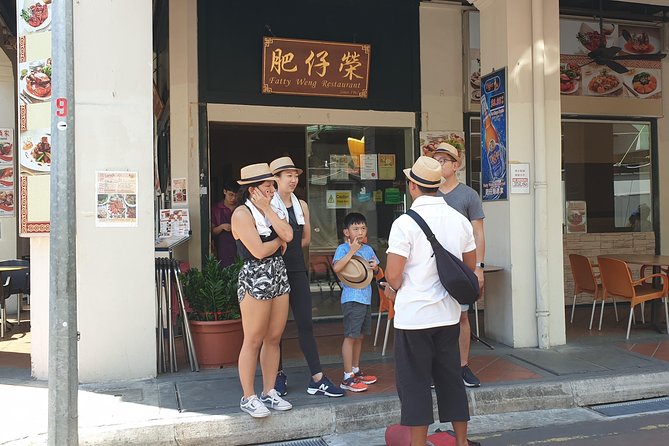
You start by asking what Tan Ah Huat was doing in the Muslim Settlement and who he met. This isn’t just a neighborhood introduction. It’s a character-based entry point into 1920s Singapore, so you begin with people and connections, not just streets.
Right after this, you’ll also learn about where the shoreline used to be before massive land reclamation. That’s a neat way to understand why the city looks the way it does today: parts of Singapore’s “edges” have changed over time.
Raffles Hotel Arcade
Next comes the Raffles Hotel Arcade, framed as an upmarket hotel from Tan Ah Huat’s era. The story focus here is what he saw and who he met, which helps the location feel specific instead of generic.
If you like seeing how luxury spaces were positioned alongside immigrant movement and trade, this stop does a nice job of balancing the tone. It’s a reminder that the 1920s weren’t only about hardship; they were also about ambition and opportunity.
Queen Elizabeth Walk at the Singapore River
At the mouth of the Singapore River, the tour leans into arrival stories. You’ll learn about how Chinese immigrants came to Singapore and why this river mattered to them.
This is one of those sections where the route placement does real work. Standing near the river while the story explains the connection helps the history feel physical—like the city’s geography is part of the plot.
Cavenagh Bridge
Then you’re at Cavenagh Bridge, where the story centers on why Tan Ah Huat loved and hated this river. This is less about one factual detail and more about emotion: how the same place can be opportunity and pressure at the same time.
You also get a glimpse of the river’s “majestic history” through his perspective. For me, that perspective shift is the point. It turns a bridge into a character moment rather than a photo stop.
Shop-houses as Godowns, and the life of coolies
A short ride later, the story turns toward trading activities. You’ll hear about the days when shop-houses were Godowns, setting the stage for commerce. Then you’ll learn about the life of coolies through Tan Ah Huat’s eyes.
This is where the tour feels grounded. Instead of focusing only on famous sites, it pays attention to the working machinery of the city. Even if you’ve been to Singapore before, this angle gives you something you can’t easily get from a quick self-guided pass.
Read Bridge (Malacca Bridge)
At Read Bridge, the tour frames it as one of Tan Ah Huat’s favorite hangouts. You’ll hear what he was doing there and why it’s especially a place for lots of people in the evening.
The value here is the cause-and-effect storytelling: a location becomes a social habit, not just a landmark. If you enjoy learning how people actually used spaces, this stop will make you look at the area differently on the next day you walk by.
Pek Sin Choon Pte Ltd and Nanyang Tea
Then you’ll learn about the history of Nanyang Tea and how the heritage business has transformed since Tan Ah Huat’s days. This is a strong stop for anyone who likes food and commerce history, because tea isn’t treated as a background detail—it’s a thread.
You’ll also get a sense of continuity and change: the business may shift over time, but the story keeps the past connected to the present.
Jinrikisha Station
Next comes the Jinrikisha Station, and the focus is transportation needs in the past. You’ll learn the importance of this building for moving people in Singapore’s earlier rhythm.
Even without heavy technical detail, the “why this existed” angle helps you understand how city movement shapes daily life. It’s a good break from pure storytelling and brings you back to practical city function.
Chinese Theatre and a token of love
Another stop brings you to the iconic Chinese Theatre. You’ll hear how it was known as a greatest token of love by a philanthropist to his wife, along with Tan Ah Huat’s encounter here.
This is one of those moments where the tour adds emotion to a building you might otherwise just clock as architecture. The story gives you a reason to care about the structure itself.
Singapore Centre: the coffee-shop moment
You then move into Singapore Centre for a very human topic: coffee shops for Chinese communities. The story explains why these places mattered back in Tan Ah Huat’s days.
This is also your sampling stop. You’ll get to sample Ah Huat’s favorite coffee and snack, which breaks up the ride and gives you a taste of the social side of the narrative—coffee not as a ritual, but as a meeting point.
Trengganu Street (Chinatown secrets)
In Chinatown, the tour focuses on Trengganu Street and its dark secrets, and how Tan Ah Huat’s twist of fate landed him there. This stop plays with contrast: familiar street scenes mixed with story tension.
If you like tours that don’t feel like a straight line from nice to nicer, this is a good turn. It keeps the tour from becoming only pleasant nostalgia.
Sago Street (Street of the Dead)
The final stretch lands you at Sago Street, described as the Street of the Dead during Tan Ah Huat’s days. You’ll learn about what fate had planned out for him.
This ending works because it gives the story a heavier emotional note. You finish with the sense that streets hold different meanings depending on time, community, and what people believed about life and death.
Why the guides matter: Yap, Alfie, and Simon’s style
This tour’s real engine is the guide. Reviews highlight that the storytelling is easy to follow and packed with meaning, and your guide will explain the history through the character’s experiences rather than turning it into a lecture.
I like that the guides (including Yap, Alfie, and Simon) are described as informative, engaging, and easy to understand. If you learn best when a guide connects the dots for you, this format is your friend.
Also, one of the best practical touches: you don’t just get a story while riding. There are storytelling moments that use videos at different parts of the bicycle tour. That kind of reset can help if you get distracted by moving through traffic and need a clear “listen now” cue.
- Lion City Bike Tour of Singapore★ 5.0 · 6,211 reviews
- Singapore: Gardens by the Bay Bundle Entry Ticket★ 4.3 · 3,726 reviews
- Singapore: Big Bus Hop-On Hop-Off Tour by Open-Top Bus★ 4.5 · 3,261 reviews
- Singapore: Lion City Highlights Bike Tour★ 4.9 · 2,010 reviews
Who should book this bike tour (and who should think twice)
This experience fits best if:
- You want to see central Singapore fast but still learn something real
- You enjoy guided storytelling more than solo wandering
- You’re comfortable riding a bicycle for about 4 hours
- You like a small group experience (max 10) where you can ask questions
It might not be for you if you strongly prefer slow sightseeing with lots of stops, because the tour is designed as an active bike route. Also, because it depends on good weather, you’ll want to be flexible if conditions aren’t ideal.
Should you book Trails Of Tan Ah Huat?
If you want Singapore that feels story-driven and human—tea shops, transport buildings, trade spaces, river life, and Chinatown streets with mood—this tour is a strong pick. The character-led approach turns iconic areas into a connected narrative, and the small group size helps it stay personal.
I’d book it if you’re the kind of person who likes learning while moving, and you’re happy to cycle at an easy pace. I’d skip it if you want a purely sightseeing-by-foot day or if cycling just isn’t your thing.
If your calendar allows, it’s also a smart way to get a quick read on central neighborhoods in half a day, especially since it runs out of a central meeting point and ends right where it starts.
FAQ
How long is the Trails Of Tan Ah Huat bike tour?
It’s about 4 hours.
What does the price include?
The price includes bicycle use, a licensed guide, bottled water, and lockers for your bags during the tour.
Where does the tour start, and where does it end?
It starts at 462 Crawford Ln, Singapore 190462 at 9:00 am, and it ends back at the same meeting point.
Is hotel pickup included?
No. There is no hotel pickup, and the meeting area is in the city area near most hotels.
Is the cycling route difficult?
The route is described as flat and easy, and most people can participate as long as they’re able to ride a bicycle.
Is the tour affected by weather?
Yes. The tour requires good weather, and if it’s canceled due to poor weather, you’ll be offered a different date or a full refund.
Two Wheels, Full Island

Fresh Reviews from the Little Red Dot
- Night Safari Tickets with Tram Ride
★ 4.5 · 3 reviews - Singapore: Architecture and Food Tour with Tastings
★ 5.0 · 3 reviews - Singapore Private Full-Day Sightseeing Tour
★ 5.0 · 3 reviews - Private Chinatown Heritage Tour with Best 8 Local Tastings
★ 5.0 · 3 reviews
Singapore Cycling & Bike Tours, compared.
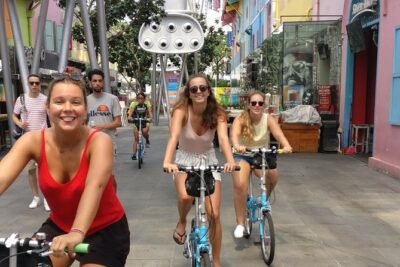 ★ 5.0Lion City Bike Tour of SingaporeFrom $686,211 reviews
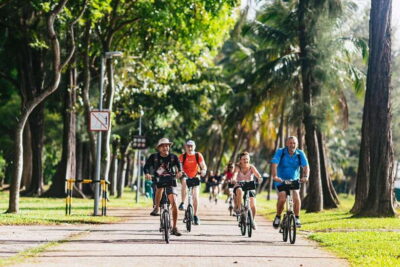 ★ 4.9Lion City Highlights Bike TourFrom $672,010 reviews
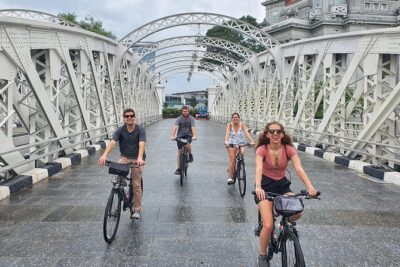 ★ 5.0Historical Singapore Bike Tour on Full-Sized BicyclesFrom $641,421 reviews
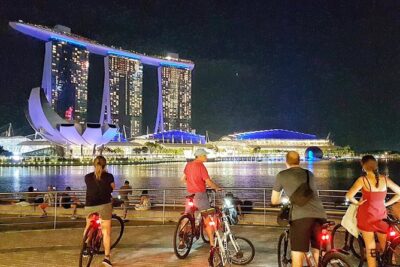 ★ 5.0Marina Bay Night Cycling TourFrom $48577 reviews
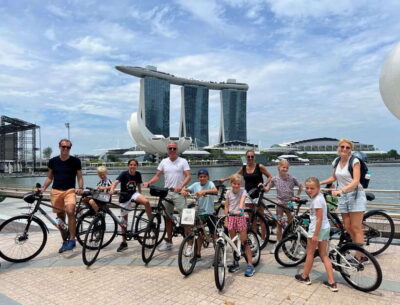 ★ 4.8Historical Half-Day Bike TourFrom $63399 reviews
Singapore Food & Bike Tour – KatongFrom $96289 reviews
★ 4.8Historical Half-Day Bike TourFrom $63399 reviews
Singapore Food & Bike Tour – KatongFrom $96289 reviews
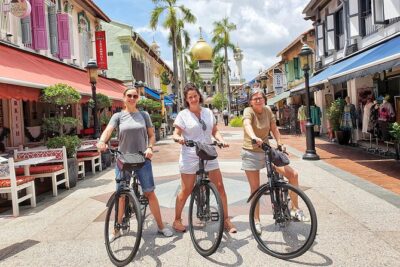 ★ 5.0Singapore Bike and Bites Food TourFrom $80258 reviews
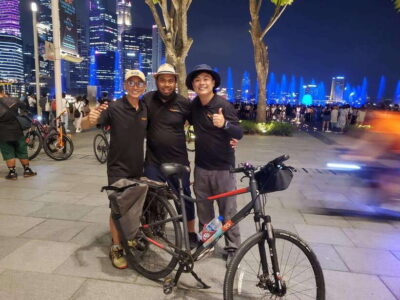 ★ 4.8Marina Bay Night Tour by BicycleFrom $47181 reviews
Browse the lists this tour appears in