

Reviewed · LITTLE INDIA & KAMPONG GLAM TOURS
Singapore Street Food and Ethnic Quarters Kick Scooter Tour
Street food tastes better when you move fast.
This kick scooter evening tour turns Singapore’s ethnic quarters into an easy, balanced route, so you’re not just eating—you’re also picking up context as you roll past places like Little India temples and Catholic landmarks. I like the 7 vegetarian-friendly tastings (including the famous dosai cone), and I like that the route is built to help you get oriented fast across multiple neighborhoods. The main consideration is the scooter itself: if you’re nervous about balance, you may feel a bit wobbly at the start before you get the hang of it.
You’ll cover a lot in about 3 hours 30 minutes, starting at 5:00 pm, when the streets feel more like a living city than a museum. With a small group (maximum 15) and a mobile ticket, it’s simple to show up and keep moving without complicated logistics. You’ll also want an empty stomach—the tastings add up quickly.
The price is $55.43 per person, which is decent value for a structured evening that combines food, short cultural stops, and a scooter ride with a guide. You should book ahead because this one is commonly reserved about 20 days in advance. If you’re traveling with kids or heavy luggage, keep in mind the age and weight limits.
In This Review
- Key things I think you’ll enjoy most
- Rolling through Little India and Temple Stops in One Smooth Flow
- What to watch for here
- The Food Map: 7 Vegetarian-Friendly Tastings You’ll Actually Want to Order Again
- The best strategy for enjoying the food
- Little India to Kampong Glam: Why This Tour Feels Like Singapore, Not a Postcard
- Albert Mall’s Hawker Center Stop: Your Real “Singapore Meal” Moment
- Old European Town, Chijmes, and Raffles Arcade: The Catholic-and-Classic Side
- A practical note
- Haji Lane, Bugis, and the Stories Behind Selegie and Bussorah Street
- Kick Scooter Reality Check: Balance, Comfort, and Who This Tour Suits Best
- Best fit
- Value and Timing: Is $55.43 a Smart Deal?
- Should You Book This Singapore Street Food and Ethnic Quarters Kick Scooter Tour?
- FAQ
- How long is the Singapore Street Food and Ethnic Quarters Kick Scooter Tour?
- How many street food/drink items are included, and are they vegetarian-friendly?
- What time does the tour start, and where does it end?
- Is there a minimum or maximum group size?
- Are there any age or weight limits?
- What happens if the weather is poor or I need to cancel?
Key things I think you’ll enjoy most
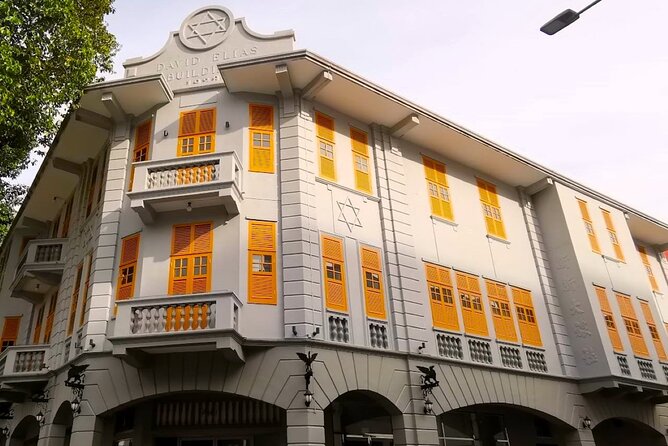
- A scooter route that stitches together 6-plus neighborhoods without long waits or slow transitions
- 7 vegetarian-friendly food-and-drink tastings, including the dosai cone and black glutinous rice dessert
- Religious landmarks across multiple faiths, from Kali and Vishnu temples to Kuan Yin fortune-telling stops
- Iconic photo stops like Albert Mall’s Chinatown-era vibe and Haji Lane’s night mood
- Short, practical temple and street segments that keep energy up during the food crawl
- A guide who manages the pace and the eating, with Ms Ping specifically noted as careful and friendly
Rolling through Little India and Temple Stops in One Smooth Flow
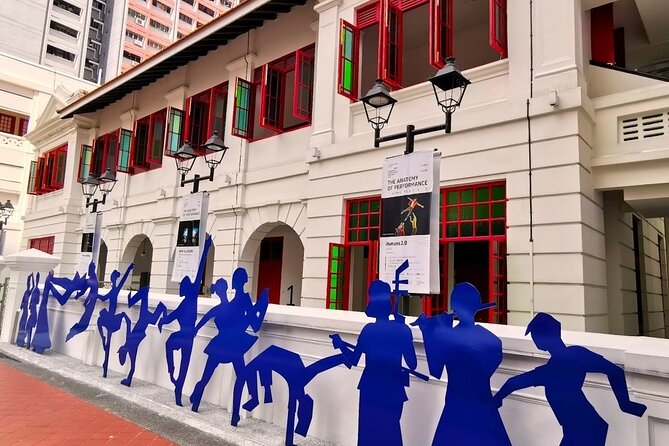
This tour works because it treats Singapore like a series of close-by scenes instead of distant points on a map. You start in Little India, then keep rolling into areas tied to Hindu, Chinese, Jewish, and Catholic community life. Even the non-food parts have a point: each stop helps explain why this city looks the way it does.
A good place to begin is the House of Tan Teng Niah, a brightly painted Chinese villa built in 1900 by a Chinese merchant for his wife. The tour notes it’s the only Chinese villa left standing in Little India today, which instantly gives it weight: you’re looking at something rare, not just something old. From there, the route shifts into Hindu worship with Sri Veeramakaliamman Temple, dedicated to Goddess Kali and established in 1855.
Next comes a very Singapore kind of contrast: you’re looking at sacred spaces, then heading straight toward food that’s deeply tied to daily life. That pacing matters. When you snack between cultural stops, the whole evening stays light and fun instead of turning into a sightseeing slog.
What to watch for here
Scooters are the wildcard. You’ll want to wear comfortable shoes and be ready for some learning at the start—especially if you’re used to walking. Once you get the motion right, the scooter becomes the advantage: it lets you cover ground without constantly navigating on your own.
From Tekka to the Sultan Mosque, more quarter time
The Food Map: 7 Vegetarian-Friendly Tastings You’ll Actually Want to Order Again
This is a tasting tour first, and the list is built around classic hawker-center comfort foods plus one showstopper. You’ll get 7 different types of street food/drink, and they’re all vegetarian-friendly, which makes the planning easier if you eat this way at home.
Here’s the food lineup and what it’s doing for the experience:
- Giant dosai cone (Komala Vilas Restaurant): This is the headline. A dosai cone is exactly the kind of fun street concept Singapore does well—portable, crispy, and made to be eaten while you’re still on the move.
- Masala tea: This helps reset your palate and keeps the pace steady between savory bites.
- Popiah (Chinese spring roll): Soft, crunchy, and usually packed with flavor. It’s the kind of thing you’ll notice more if you pay attention to texture.
- Chwee kway: Steamed rice pudding topped with radish and sambal. If you like a sweet-salty balance with a spicy edge, this is a key stop.
- Muah chee: Glutinous rice morsels coated with nuts and sugar. It’s the dessert-leaning transition that keeps the tour from feeling like one long savory line.
- Bubur pulut hitam: Black glutinous rice with coconut cream dessert. Creamy, spoonable, and comforting—good when the sweetness from the muah chee has already primed you.
- Pisang goreng (Kampong Glam): Malay-style banana fritters. This is your final “street snack” moment, and it signals a shift from one cultural zone to another.
The smart thing: the foods aren’t random. They represent different ethnic neighborhoods, so each bite feels like it belongs to the district you’re seeing.
The best strategy for enjoying the food
Go hungry, then slow down just enough to taste each item instead of treating it like a checklist. The guide can help you choose and pace it, but you’ll get more satisfaction if you’re present for the flavors and textures.
Little India to Kampong Glam: Why This Tour Feels Like Singapore, Not a Postcard
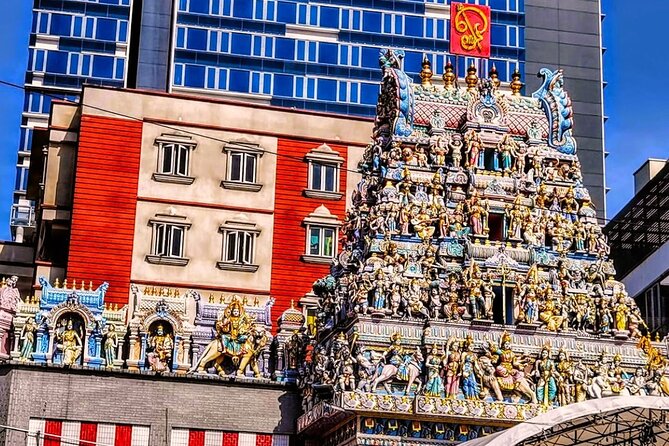
Between the food stops, you get a series of quick cultural scenes that make the evening feel “lived in.” You’ll pass Campbell Lane, which the tour frames around traditional Indian trades—things like sweetmeat stores and flower shops. Even if you don’t buy anything, the street texture matters. It’s the sort of place where you can tell commerce and culture are tightly linked.
As you continue, you also get religious landmarks in a way that’s practical rather than intimidating. You visit Sri Krishnan Temple, dedicated to Lord Vishnu and built in 1870. The tour notes something unusual: it’s probably the only Hindu temple where Buddhist and Taoist followers worship as well. That’s the kind of detail that helps you understand Singapore’s real-world blend of beliefs.
Then there’s Kuan Yin Thong Hood Cho Temple, dedicated to the Goddess of Mercy and built in 1884, known for fortune telling accuracy and for being one of the busiest temples in Singapore. You get the sense that people here don’t treat religion like sightseeing. They use it.
By the time you reach Kampong Glam, the atmosphere shifts again. Pisang goreng is a great choice for this part of the route because it’s street food with a cultural signature, and you’re also passing Sultan Mosque, originally built in 1824 and named after Sultan Hussein Shah, tied to the early treaty history with the British.
Still hungry? The hawker trail keeps going
- Small Group: Michelin and Local Hawker Food Tour with 9 tastings★ 5.0 · 1,890 reviews
- Small Group: Singapore Street Food & Night Tour with 9 tastings★ 5.0 · 1,240 reviews
- The Award-Winning PRIVATE Food Tour: 10 Tastings of 3 Cultures★ 4.5 · 1,017 reviews
- Singapore: Chinese, Indian & Arabic Quarters, Culture & Food Tour★ 5.0 · 789 reviews
Albert Mall’s Hawker Center Stop: Your Real “Singapore Meal” Moment
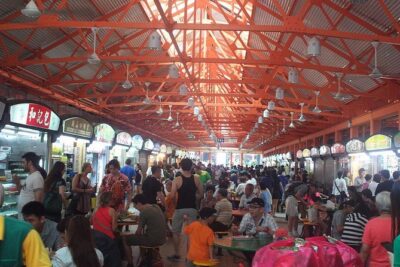
One of the most useful parts of this tour is the Albert Mall segment, where the tour positions the area as Today’s Chinatown and sets you up for a hawker-center tasting. You’re given about 30 minutes for this meal window, which is long enough to sit, eat, and reset without dragging.
This stop is valuable for two reasons:
- You get a focused hawker-center experience rather than wandering and guessing what to order.
- The food sequence makes sense, since you’re already warmed up from Little India and temple areas and then transition into a broader Chinatown-style food setting.
Also, hawker centers are Singapore’s best “everyday culture” stage. Even if you’ve visited hawker stalls on your own before, a guided tasting route typically helps you avoid the common trap of ordering only what looks familiar.
Old European Town, Chijmes, and Raffles Arcade: The Catholic-and-Classic Side
The tour also gives you Old European Town-style Singapore details, which many first-timers miss because they focus on the ethnic quarters only. You’ll pass St Joseph’s Church, established by the Portuguese mission in 1853. The tour notes it’s one of the most stunning Catholic churches in Singapore and also points out it’s the oldest Catholic church in Singapore.
Then you move to CHIJMES, once a Catholic girls’ school and orphanage, now transformed into a destination for food, entertainment, and lifestyle. The value here isn’t just architecture. It’s the idea of reuse: Singapore keeps older structures and gives them new daily purpose.
After that, you head to the Raffles Hotel Arcade area. The tour calls out the celebrity association and specific landmark trivia, including that the Singapore Sling was born here. Even if you’re not a cocktail person, this is the kind of detail that makes you understand why Raffles is more than just a fancy hotel name.
A practical note
These stops are short. That’s on purpose. You’ll get enough to recognize the places and take photos, but you won’t be stuck in long waits while everyone catches up.
Haji Lane, Bugis, and the Stories Behind Selegie and Bussorah Street
The evening doesn’t stay in temples and malls. You also get street-life Singapore in small doses.
You’ll pass through Haji Lane, described as one of the liveliest nightspots. If you like street art, narrow lanes, and that after-work energy, this is where the tour starts to feel more like a night stroll with structure.
You’ll also spend time at Bugis Street, where the tour notes it was once an infamous red light district but is now a bustling marketplace. That kind of shift matters because it’s a reminder that cities evolve—and that what you see today is shaped by what used to be there.
Then there’s Selegie, where the tour uses kick scooter time to reach remnants of the Old Jewish Quarter and Little Japan. The tour doesn’t claim everything survives clearly, but it emphasizes how hard it can be to imagine the history when you’re standing in modern streets.
Near the end, you’ll visit Bussorah Street, a pedestrianized street lined with Royal Palms, with halal restaurants and perfume shops. It’s a nice palate cleanser after temple names and hawker-center flavors, because it lets you simply walk and look.
Kick Scooter Reality Check: Balance, Comfort, and Who This Tour Suits Best
This is a fun concept, and it’s also a physical one. The tour asks you to bring your sense of adventure and balance, plus an empty stomach. Some riders in the feedback felt a bit wobbly at first, but then got the hang of it—so you’re not alone if you’re nervous.
A few constraints from the tour details matter for choosing wisely:
- Children aged 7 years or below can’t participate.
- People who weigh over 100 kg can’t participate.
The maximum group size is 15, so the guide can keep an eye on pacing and safety without turning into a long, slow herd.
Best fit
This works best if you:
- want nighttime food plus cultural stops
- like moving efficiently rather than doing a slow walking crawl
- feel comfortable trying scooter travel after a short adjustment period
If you’re someone who hates any balance challenge, you might find the scooter segment stressful even if you love food.
Value and Timing: Is $55.43 a Smart Deal?
At $55.43 per person for about 3.5 hours, you’re paying for more than snacks. You’re paying for:
- a guided route that links multiple cultural districts
- time on a scooter to cover ground quickly
- access to a set number of tastings (7 food/drink items) plus included stops
- a small-group feel (up to 15 people)
The “value” part is the structure. You’re not left to guess what’s worth your money at the busiest places. You get the dosai cone showstopper, the tea, multiple hawker-center items, and the final banana fritter moment.
The tour also runs at 5:00 pm, which is smart. You’re more likely to enjoy street markets and evening energy without baking in full daylight.
One more timing tip: this tour is often booked about 20 days in advance, so if your schedule is fixed, don’t wait.
Should You Book This Singapore Street Food and Ethnic Quarters Kick Scooter Tour?
If you want Singapore in one focused evening—food you can actually name afterward, plus quick cultural stops that explain the city’s religious and neighborhood mix—this is a strong pick. The standout is the combination of vegetarian-friendly tastings with a route that keeps you moving through Little India, Chinatown-era areas, old-town Catholic landmarks, and Kampong Glam.
Book it if:
- you like guided eating and want a plan (not a guess)
- you’re excited by the idea of scooter travel in a short learning window
- you want both street food and meaningful stops like Kali and Kuan Yin temples, plus St Joseph’s Church
Skip it if:
- you’re uncomfortable with scooter balance
- you’re traveling with kids under the age limit, or you fall outside the weight limit
If you do book, go hungry, wear comfortable shoes, and give yourself a few minutes at the start to find your rhythm. When that happens, the evening clicks into place fast.
FAQ
How long is the Singapore Street Food and Ethnic Quarters Kick Scooter Tour?
It’s approximately 3 hours 30 minutes.
How many street food/drink items are included, and are they vegetarian-friendly?
The tour includes 7 types of street food/drink, and all are vegetarian-friendly.
What time does the tour start, and where does it end?
It starts at 5:00 pm and ends at 73 Dunlop St, Singapore 209401.
Is there a minimum or maximum group size?
The tour has a maximum of 15 travelers. The experience also requires a minimum number of travelers to run.
Are there any age or weight limits?
Children aged 7 years or below aren’t allowed to participate, and people who weigh more than 100 kg aren’t allowed to participate.
What happens if the weather is poor or I need to cancel?
The tour requires good weather. If it’s canceled due to poor weather, you’ll be offered a different date or a full refund. You can cancel for a full refund up to 24 hours before the experience start time.
Rolling Through the CBD


Hawker Stalls Left on the List


Little India and Kampong Glam, Continued

Fresh Reviews from the Little Red Dot
- Night Safari Tickets with Tram Ride
★ 4.5 · 3 reviews - Singapore: Architecture and Food Tour with Tastings
★ 5.0 · 3 reviews - Singapore Private Full-Day Sightseeing Tour
★ 5.0 · 3 reviews - Private Chinatown Heritage Tour with Best 8 Local Tastings
★ 5.0 · 3 reviews
Little India & Kampong Glam Tours, compared.
 ★ 5.0Chinese, Indian & Arabic Quarters, Culture & Food TourFrom $148789 reviews
 ★ 5.0Chinatown, Little India, Kampong Gelam City Highlights TourFrom $80224 reviews
Chinatown, Little India, Arab Street Walking TourFrom $53207 reviews
 ★ 4.8Chinatown and Little India Guided Walking TourFrom $78190 reviews
 ★ 4.5Kampong Glam, Little India & Chinatown with Local Street Food TastingsFrom $17770 reviews
 ★ 5.0#instawalk: Bugis, Waterloo, Kampong GlamFrom $5660 reviews
 ★ 5.0Tasting Trails: Chinatown OR with Kampong Glam, Little IndiaFrom $6759 reviews
 ★ 5.05 hours Little India, Kampong Glam, Chinatown with 9 Food TastingFrom $14158 reviews
Browse the lists this tour appears in