
Reviewed · CHINATOWN TOURS & TASTINGS
Chinatown Hidden Treasures Local Guided Walking Tour
Chinatown rewards slow footsteps. This 3-hour guided walk turns key sights like Sri Mariamman Temple and Maxwell Food Centre into real, human stories, while you also get access to alleyways and Yip Yew Chong 3-D murals you’d likely miss on your own. I also like the included stop for a shared kaya toast set with coffee or milk tea. One heads-up: you do a lot of walking, and the tour isn’t wheelchair-accessible, plus hawker centers can mean some waiting for food.
The flow is easy to follow: you start at Chinatown MRT Exit A, then work your way through temples, restored shop-houses, and photo-friendly corners, finishing near Chinatown Complex. I like that the guide keeps questions coming and the pace stays calm enough that you can actually look around (not just shuffle from point to point).
You also get the kind of local guiding that changes how you see a neighborhood. Names like Kelvin, Jeanette, and Ronnie show up in past groups, and the common thread is clear: they answer questions without rushing you, and they’re willing to steer you toward practical food choices after the tour too.
In This Review
- Key Highlights You’ll Care About
- Where Chinatown’s Hidden Treasures Feel Actually Hidden
- Starting at Chinatown MRT Exit A: Easy to Find, No Guesswork
- Chinatown Heritage Centre on Pagoda Street: Stories That Give the Streets Meaning
- Hidden Alley Walking: Ethnic Shop-Houses and Yip Yew Chong’s 3-D Murals
- Sri Mariamman Temple: Singapore’s Oldest Hindu Temple Up Close
- Ann Siang Hill and Club Street: Restored Shop-Houses and a Crazy Rich Asians Spot
- Maxwell Food Centre: Chicken Rice, Fuzhou Oyster Cakes, and Real Local Order Wisdom
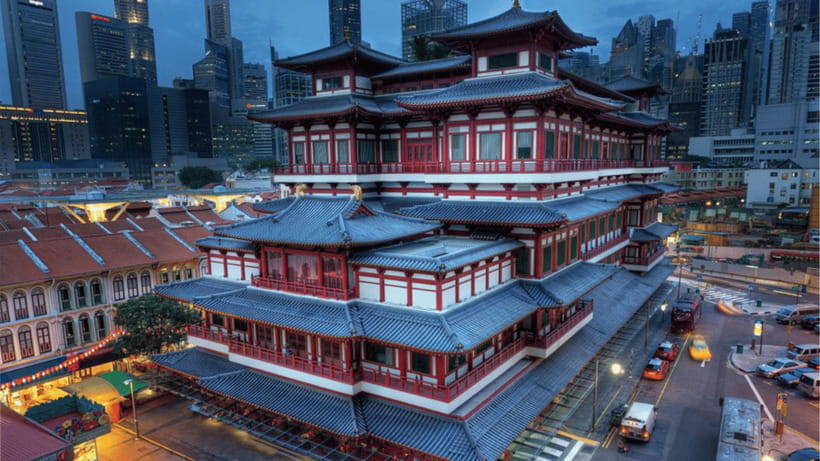
- Buddha Tooth Relic Temple and Museum: Tang-Style Design and the Buddha Tooth Relic
- Sago Lane: The Cantonese Street of the Dead
- Chinatown Complex: Tile-Ornament Shop-Houses and a Convenient Finish
- Price and Value: What $63 Buys You in Real Terms
- Comfort, Footwear, and Rain: Your Small Checklist for a Smooth Walk
- Who This Tour Suits Best (And Who Might Want Something Else)
- Should You Book This Chinatown Hidden Treasures Walk?
- FAQ
- FAQ
- Where is the meeting point for the tour?
- How long is the Chinatown walking tour?
- What is included in the tour price?
- What food will we eat during the tour?
- Is there table booking or food pre-ordering at the hawker center?
- What languages are the live guides available in?
- Can kids join the tour?
- Is the tour wheelchair-accessible?
- Are special dietary needs catered to?
- What’s the cancellation policy?
Key Highlights You’ll Care About
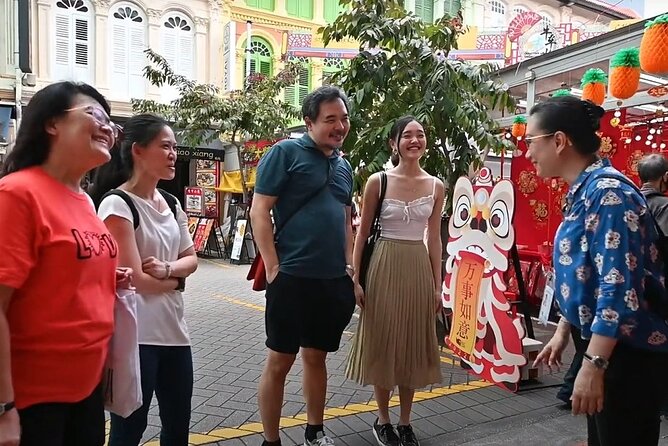
- Pagoda Street stories from Chinese immigrant life, including coolies and Samsui women
- Hidden alley access plus Yip Yew Chong 3-D murals built for photos
- Sri Mariamman Temple details that make the gopuram feel personal
- Maxwell Food Centre picks like chicken rice and Fuzhou oyster cakes
- Buddha Tooth Relic Temple + Sago Lane with the Cantonese street-of-the-dead nickname
- Chinatown Complex shop-houses with traditional tile ornaments and ending-point convenience
Where Chinatown’s Hidden Treasures Feel Actually Hidden
A lot of Chinatown tours are basically a route through the big postcard stops. This one spends more time on the in-between parts: the narrow lanes, the shop-houses tucked behind larger streets, and the visual punch of murals you can spot only if someone points them out.
The value for me is simple. You’re paying for three things you can’t easily DIY: a licensed guide, a smart walking order that ties locations together, and guidance for what’s worth your attention (especially for food).
At $63 per person for 3 hours, you’re also buying time. If you want hawker-center confidence, temple context, and a good photo plan without spending your day researching, the structure here is built for that.
Starting at Chinatown MRT Exit A: Easy to Find, No Guesswork
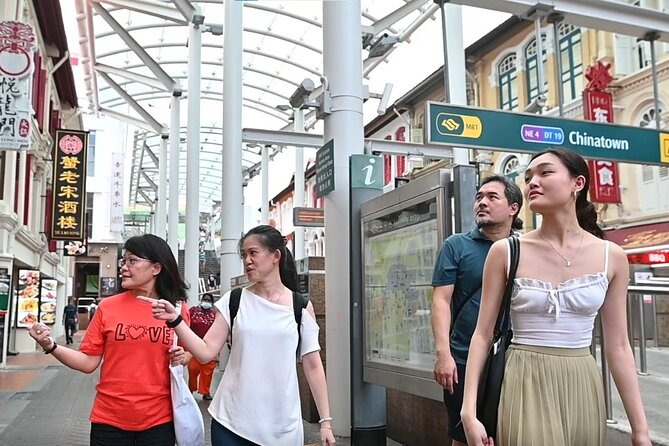
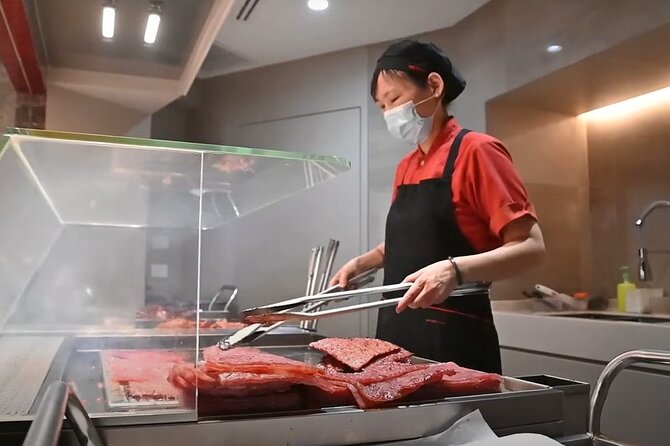
You meet at Chinatown MRT Station, Exit A (street level), in front of the Bee Chiang Heng Bak Kwa Store. That’s great if you like starting clean—no complicated pick-up spots or last-minute subway maze.
From there, the tour keeps moving on foot. Because it’s only three hours, it’s best if you show up with comfortable shoes and a quick rain plan. The walking can include steps and uneven surfaces.
Chinatown holds more lanes than one afternoon
Chinatown Heritage Centre on Pagoda Street: Stories That Give the Streets Meaning
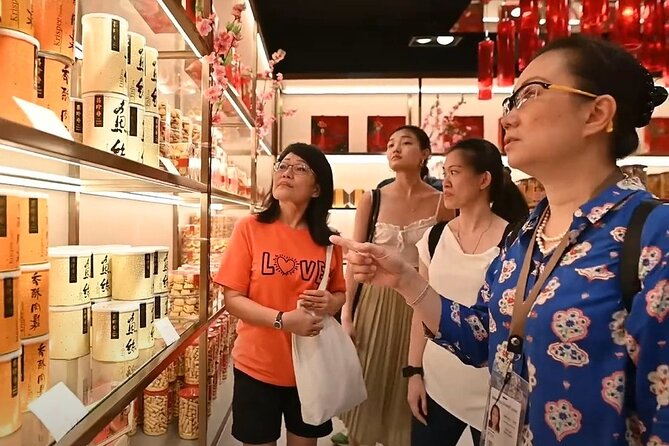
The first major stop is the Chinatown Heritage Centre area around Pagoda Street. This is where the tour shifts from seeing buildings to understanding why they look the way they do.
You’ll hear the lived story of Chinese immigrants in Singapore, including the reality of being hired as coolies and the role of Samsui women. It’s not just dates and names—it’s the human push-and-pull of migration, work, and survival, explained in a way that helps you recognize what you’re looking at as you move.
Practical tip: when the guide starts talking about immigrant life, pay attention to street patterns and shop-house layouts you pass right after. Those details make the story stick.
Hidden Alley Walking: Ethnic Shop-Houses and Yip Yew Chong’s 3-D Murals
The centerpiece for many photo lovers comes next: walking into hidden alleys with picturesque ethnic shop-houses. These lanes are where Chinatown feels most like a lived-in neighborhood rather than a theme park.
Then you get the standout visual element: 3-D murals by local artist Yip Yew Chong. The fun part isn’t just that they look good. The guide helps you line up angles, so you’re not fumbling with your camera while everyone else is already at the right spot.
If you care about photos, this is one of the best uses of your time. The tour’s pacing matters here: you get to look closely, not just glance and move on.
Sri Mariamman Temple: Singapore’s Oldest Hindu Temple Up Close
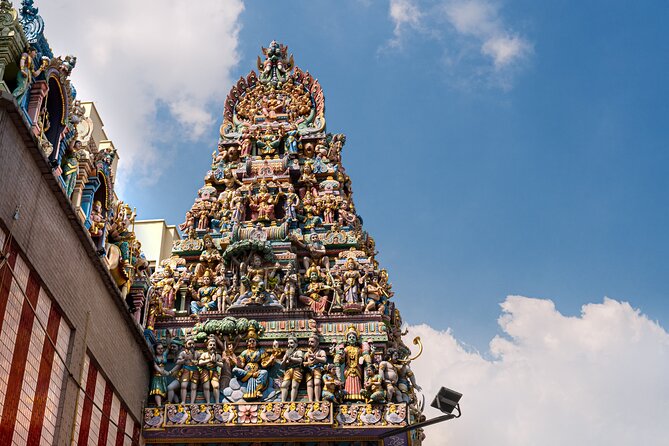
Next is Sri Mariamman Temple, known as Singapore’s oldest Hindu temple. You’ll see intricate sculptures and the main feature most people travel to photograph: the towering gopuram decorated with Hindu deities and figures.
What makes this stop work well on a walking tour is the guide’s ability to translate design into meaning. You’re not only looking at decoration—you’re learning how the temple’s artwork functions as a kind of language for worship and belief.
Photo note: temple exteriors are often busy. Go with a slow, respectful pace, and don’t feel pressured to grab every shot at once. The point is to see the carvings and colors in full detail as you move around.
Shophouse streets reward slow feet, keep going
- Singapore: Private Walking Tour with a Local★ 4.7 · 410 reviews
- Private Customised Singapore Walking Tour★ 5.0 · 370 reviews
- Singapore: Chinatown and Little India Guided Walking Tour★ 4.8 · 190 reviews
- Singapore: Customized Private Tours (Car/Bus/Walking)★ 5.0 · 181 reviews
Ann Siang Hill and Club Street: Restored Shop-Houses and a Crazy Rich Asians Spot
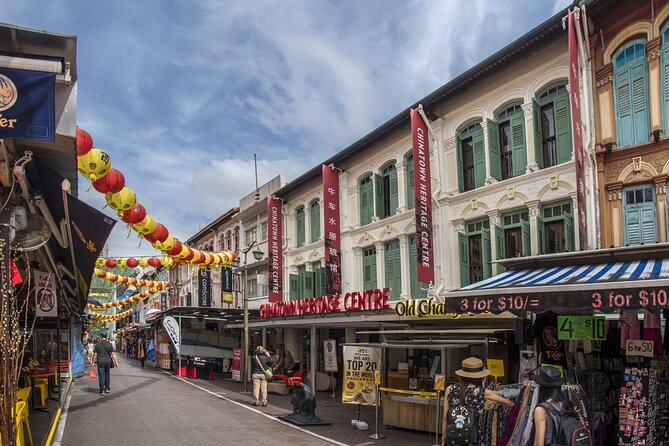
From the temple zone you cross toward Ann Siang Hill and Club Street, where Chinatown has a different rhythm. The area connects to the older Chinese immigrant business hub era, but now you’ll find restored shop-houses and architectural charm side-by-side.
One fun, practical highlight: you’ll be shown a photo-taking spot featured in the movie Crazy Rich Asians. Even if you’re not a movie fanatic, this kind of marker helps you orient yourself and understand why certain corners are worth stopping at.
The trade-off is that this section can feel a bit more polished than the narrower back lanes. If you’re chasing raw everyday street life, you may like the alley segments even more. If you like architecture and street-level stories with a cinematic touch, this part lands.
Maxwell Food Centre: Chicken Rice, Fuzhou Oyster Cakes, and Real Local Order Wisdom
Now you hit the part food people actually care about: Maxwell Food Centre. You’ll get a guide-led food stop with recommendations for classic hawker options, including Singapore chicken rice and Fuzhou oyster cakes.
This is where having a guide pays off. Hawker centers can be confusing when you’re hungry and indecisive. You’ll have someone steering you toward common favorites that make sense for a first visit.
Important reality check: you can’t book tables or pre-order in advance, and there may be waiting. That’s not a tour failure—it’s just hawker life. Wear shoes you can stand in, and treat the line time as part of the experience.
Also, the tour ends with the area being convenient for your own follow-up meal. Maxwell is close to Buddha Tooth Relic Temple, so you can keep eating without relocating.
Buddha Tooth Relic Temple and Museum: Tang-Style Design and the Buddha Tooth Relic
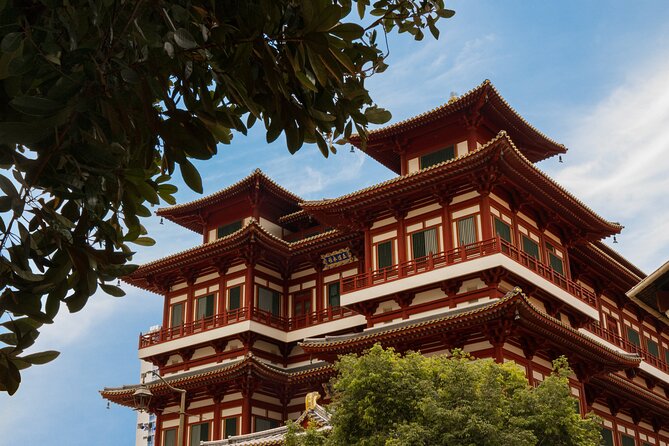
After the food stop, you’ll visit Buddha Tooth Relic Temple and Museum. You’ll see a Tang-style Chinese Buddhist temple with ancient art and history on display.
The key attraction here is the revered relic said to be a Buddha tooth. And as you walk, you’ll notice how the temple’s physical presence changes the feel of the neighborhood around it.
In past tours, people have highlighted an orchid garden on top of the temple and also a small coffee shop or museum-style tea stop connected to the experience. That fits with the tour’s included break for coffee or milk tea with kaya toast, which you’ll get during the walk rather than at the end.
If you love mixing culture with comfort, this is a strong pairing. You get a serious cultural stop, then you get a break that doesn’t feel like an afterthought.
Sago Lane: The Cantonese Street of the Dead
Right nearby is Sago Lane, known in Cantonese as the street of the dead. This is one of those details that’s easy to miss when you just scan streets on your own.
On a guided walk, the nickname gives you a lens to notice what’s around you and how stories cling to places over time. It’s short, but it adds texture to the day.
Chinatown Complex: Tile-Ornament Shop-Houses and a Convenient Finish
The final stop is Chinatown Complex, where you’ll see distinctive two- or three-storey shop-houses with traditional Chinese tile ornaments.
This is a good ending point because it’s visually interesting and practically useful. You finish here rather than somewhere inconveniently far from transport.
It also gives your eyes a final shift—from temples and murals back to everyday commercial architecture. That contrast helps you understand Chinatown as a living working neighborhood, not only a set of tourist checkpoints.
Price and Value: What $63 Buys You in Real Terms
Let’s talk value without hype. At $63 per person for 3 hours, you’re covering:
- A licensed tour guide who can connect the dots between immigrants, temples, and street layout
- Entry and time at major sites like Sri Mariamman Temple and Buddha Tooth Relic Temple and Museum
- A included coffee or milk tea with kaya toast set
- A planned route that keeps you moving efficiently across Chinatown without missing key corners
Could you do parts of this independently? Sure. But you’d be doing it with less guidance on what to photograph, where to stand for the best angles of the 3-D murals, and what to order at a hawker center without guessing.
Also, the experience has a personalized feel, especially when you’re in a smaller group. Past participants have specifically praised full attention when it was just a couple, and they also noted the tour wasn’t hurried.
Comfort, Footwear, and Rain: Your Small Checklist for a Smooth Walk
This isn’t wheelchair-accessible, and the walk can include steps. If you have any mobility limits, it’s smart to plan your day with extra care.
Bring:
- Comfortable footwear you can stand and walk in
- An umbrella or poncho if weather turns
One extra practical point: if you have a foot injury or soreness, don’t hide it. Guides in past groups have been attentive to comfort needs, including checking that steps were manageable.
Who This Tour Suits Best (And Who Might Want Something Else)
This works especially well if you’re:
- A first-time or return visitor who wants Chinatown sights with context
- A photo lover who cares about murals in specific alley angles
- A food person who prefers a guide’s ordering recommendations at Maxwell Food Centre
- A couple, small group, or anyone who would enjoy a calm pace rather than a speed-walk
It may not be the best fit if you:
- Want minimal walking or a fully seated experience
- Need strict dietary accommodations, since the tour doesn’t guarantee catering to special diets unless arranged as a private tour
Should You Book This Chinatown Hidden Treasures Walk?
I’d book it if you want a single 3-hour block that mixes street-level photography, major temple sights, and one of Chinatown’s best hawker-center meal moments—all with a guide who can explain what you’re seeing.
I’d think twice if you dislike walking over uneven surfaces, hate standing in food-center queues, or need dietary support that hasn’t been arranged in advance. In those cases, a private setup or a different format might suit you better.
FAQ
FAQ
Where is the meeting point for the tour?
You meet at Chinatown MRT Station, Exit A (street level), in front of the Bee Chiang Heng Bak Kwa Store.
How long is the Chinatown walking tour?
The tour lasts 3 hours.
What is included in the tour price?
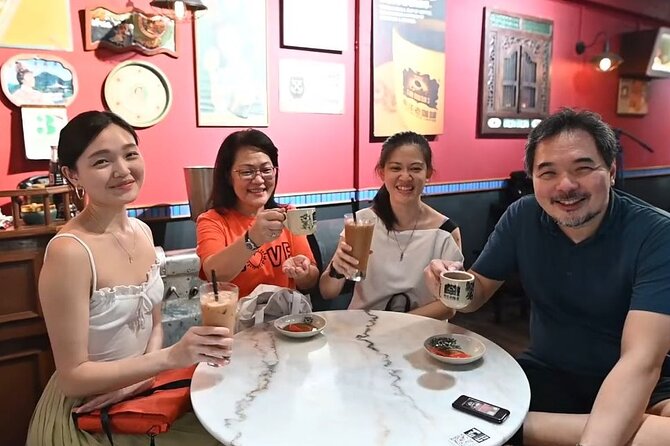
It includes a licensed tour guide plus 1 cup of coffee or milk tea with a shared set of kaya toast.
What food will we eat during the tour?
You’ll visit Maxwell Food Centre, where the guide recommends local dishes such as Singapore chicken rice and Fuzhou oyster cakes.
Is there table booking or food pre-ordering at the hawker center?
No. The food stop is at a hawker center, and table booking or food pre-ordering isn’t possible, so waiting may be required.
What languages are the live guides available in?
The live tour guide is available in Chinese, English, and Japanese.
Can kids join the tour?
Children aged 0–2 can join free. The tour also notes child ticket limits connected to adult ticket purchases.
Is the tour wheelchair-accessible?
No. The activity is not wheelchair-accessible.
Are special dietary needs catered to?
Special dietary needs may not be catered for, unless it’s a private tour. It’s best to contact the operator before booking if you have dietary requirements.
What’s the cancellation policy?
You can cancel or reschedule up to 24 hours before the scheduled time for a full refund.
If you want, tell me your travel dates and whether you’re more into food or photos, and I’ll suggest what to prioritize during the walk (and what to plan for afterward).
Walks That Earn the Humidity
Chinatown, Lane by Lane
Fresh Reviews from the Little Red Dot
- Night Safari Tickets with Tram Ride
★ 4.5 · 3 reviews - Singapore: Architecture and Food Tour with Tastings
★ 5.0 · 3 reviews - Singapore Private Full-Day Sightseeing Tour
★ 5.0 · 3 reviews - Private Chinatown Heritage Tour with Best 8 Local Tastings
★ 5.0 · 3 reviews
Chinatown Tours & Tastings, compared.
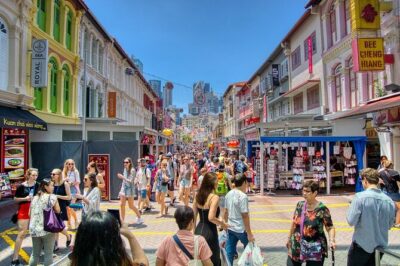 ★ 5.0Chinatown, Little India, Kampong Gelam City Highlights TourFrom $80224 reviews
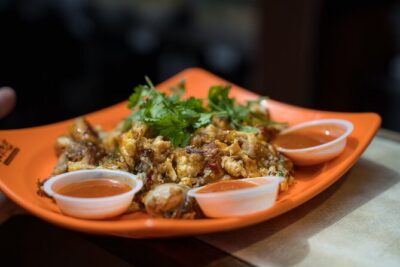 ★ 5.0Chinatown Hawker Market Food Tour with 7 Food TastingsFrom $146213 reviews
Chinatown, Little India, Arab Street Walking TourFrom $53207 reviews
★ 5.0Chinatown Hawker Market Food Tour with 7 Food TastingsFrom $146213 reviews
Chinatown, Little India, Arab Street Walking TourFrom $53207 reviews
 ★ 4.8Chinatown and Little India Guided Walking TourFrom $78190 reviews
 ★ 5.0Chinatown Historic Walking Tour with LunchFrom $54134 reviews
 ★ 5.0Chinatown Hawker Food Tasting TourFrom $8896 reviews
 ★ 4.5Kampong Glam, Little India & Chinatown with Local Street Food TastingsFrom $17770 reviews
 ★ 5.0Chinatown Heritage Centre (Admission Ticket)From $2065 reviews
Browse the lists this tour appears in