
Reviewed · CHINATOWN TOURS & TASTINGS
Chinatown Heritage Centre (Admission Ticket)
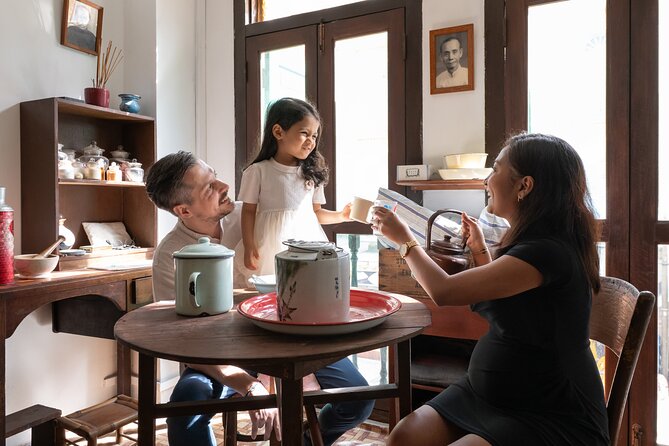
Step into Chinatown’s stories with timed entry. Chinatown Heritage Centre packs shop-house history into a calm, walk-at-your-own-pace visit. You’re not stuck with a big group, and you can match your entry time to the rest of your day in Singapore’s Chinatown.
I especially like the self-paced layout and the QR-code + audio storytelling that helps you understand what you’re seeing instead of just looking at objects. A guide named Chin Yee also comes up in reviews for being genuinely helpful, which makes the experience feel more personal than a typical museum stop.
One thing to keep in mind: it’s a compact visit (about 1 to 2 hours) with no re-entry, so plan your timing and don’t dawdle if you have other Chinatown stops lined up.
In This Review
- Key things to know before you go
- Why Chinatown Heritage Centre works so well in Singapore’s Chinatown
- Self-paced exploring (and why it feels calmer than many museums)
- What you’ll see inside: shop-house spaces and early Chinatown life
- The QR-code stories and audio options on your phone
- The small details that make it feel like day-to-day life
- Time, entry windows, and the no re-entry rule
- Price and value: is $20.18 a good deal?
- Practical rules inside the Centre (the stuff that affects your experience)
- Family-friendly notes (and who it’s best for)
- Who should book—and who can skip it
- Should you book Chinatown Heritage Centre admission?
- FAQ
- How long does the visit take?
- What’s included with the ticket?
- Do I need to pick a time slot?
- Can I re-enter after I leave?
- What time is the last admission?
- Are there age rules for children?
- Can I cancel for a full refund?
Key things to know before you go
- Timed entry without crowds: pick an entry window and explore at your own pace
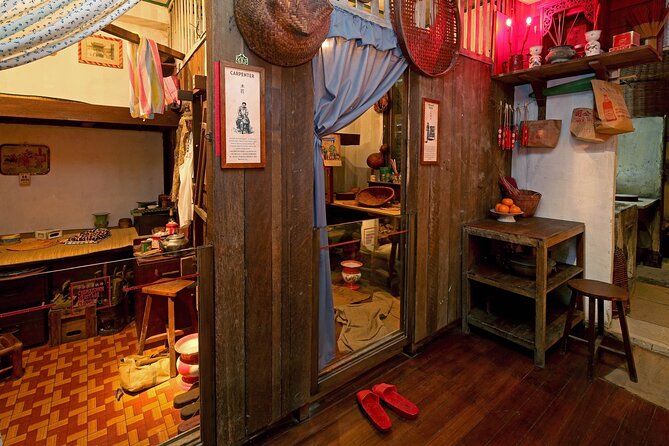
- A shop-house museum setup: the experience uses older shop-house spaces and galleries
- Interactive storytelling: QR-code scanning and audio content on your phone
- Hands-on era details: tailor shop, kitchen scenes, opera house, and street barber areas show daily life
- Good for a short stop: it fits neatly into a sightseeing day (roughly 1–2 hours)
Why Chinatown Heritage Centre works so well in Singapore’s Chinatown
Chinatown Heritage Centre is the kind of attraction that turns a wandering day into something you can actually explain later. Instead of only admiring street life and shop-house facades from the outside, you get inside and see how early community life in Chinatown took shape.
The ticket also makes your day easier. You choose an entry time, you get guaranteed admission to a popular spot, and you’re not stuck waiting in a long line just to get your start. That matters in Singapore, where plans can change quickly when rain, crowds, or transport delays show up.
Self-paced exploring (and why it feels calmer than many museums)
The biggest win here is the freedom. This is designed for you to explore without a large group and without having to follow a rigid schedule. In practice, that means you can spend longer where you’re curious and skim what you’re not.
You’ll move through several exhibition spaces, and the museum’s size is part of the appeal. Reviews describe it as the right scale—big enough to feel substantial, but small enough that you’re not exhausted after one stop. If you like museums you can finish while your legs still feel good, this fits.
Chinatown holds more lanes than one afternoon
What you’ll see inside: shop-house spaces and early Chinatown life
Expect a museum set in the spirit of Chinatown itself. One of the most common takeaways is that the experience uses the older look of shop houses and then builds exhibits around what life was like for early Chinese settlers in Singapore.
You’ll see rooms and displays tied to the community’s day-to-day reality—how people lived, worked, and built a neighborhood. One review notes that the latest extension adds a more “back-in-time” angle and focuses on people and professions. That’s useful because it moves beyond general background and into specific roles and trades.
In short: you’re not just collecting facts. You’re trying on the perspective of how the district functioned.
The QR-code stories and audio options on your phone
This is where the visit turns from passive to active. Reviews mention hearing stories through a QR code scanner, which is a smart way to connect the physical space in front of you with the context you need.
You can use your own mobile device for free audio content, as long as you bring an earpiece (the museum supports this for audio). If you prefer a more traditional guided feel, multimedia guides are available for rent on-site, though you’ll want to keep it simple if you’re squeezing this into a busy itinerary.
Tip: when you see a station with a QR prompt, don’t just grab the next room. Pause, scan, and let the story catch up with what you’re looking at. That’s when it starts clicking.
The small details that make it feel like day-to-day life

What stands out across the reviews is how specific some of the recreated spaces feel. People bring up areas such as:
- Tailor shop: hands-on and fun, with the sense of an everyday workplace
- Kitchen scenes: described as olden-time-style, including small cubicle-like setups
- Opera house: where entertainment and community culture show up in the layout
- Street barber: a street-level profession that helps you picture daily routines
- Other period artifacts and displays: enough variety that you don’t feel stuck in one mood
This matters because Chinatown can be broad. A museum like this helps you narrow it down. Instead of only “Chinatown is historic,” you get a mental map of what that history looked like day after day.
Further back into the island story, war years included
- Historical Singapore Bike Tour on Full-Sized Bicycles★ 5.0 · 1,421 reviews
- Nightout at Colonial Charms of the City★ 3.5 · 733 reviews
- Singapore: Historical Half-Day Bike Tour★ 4.8 · 399 reviews
- Singapore Private Food, Culture and Heritage Tour with 9 tastings★ 5.0 · 394 reviews
Time, entry windows, and the no re-entry rule

This ticket is valid only on your specified date, and it’s tied to an entry window. The visit itself is short—about 1 to 2 hours—so it’s best treated as a focused stop, not a wandering half-day.
There’s also a strict rule that you can’t re-enter after you go in. That sounds obvious, but in practice it means you should plan your day so you’re not counting on popping back out for food, photos in the street, or a quick restroom break and then returning.
One more timing consideration: last admission is at 6:00 PM, and late arrivals can’t be accommodated. If you’re the type who likes to “see how the day goes,” build in cushion time so you don’t arrive at 5:45 and miss your slot.
Price and value: is $20.18 a good deal?
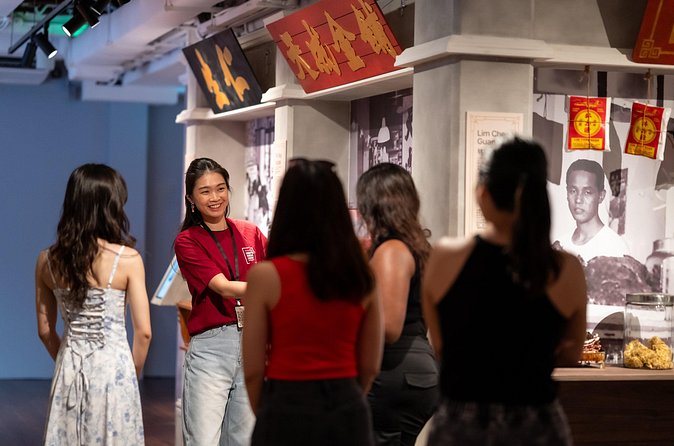
At $20.18 per person, the price is positioned as an efficient cultural stop. For value, think in two parts:
1) You’re paying for access to the exhibition galleries, and the format helps you get meaning from the displays rather than just walking through rooms.
2) You’re paying for timing certainty. The ticket gives you guaranteed entry, and you choose from several entry times. That can save you time and stress, which is real value.
In one review, the museum’s cost is mentioned as about $25 per person, and another notes it was a strong value when used with a pass like Go City. Even without a pass, the “short visit with good payoff” approach is what makes the price feel reasonable for many people.
If you’re spending a full day in Chinatown anyway, this is a smart use of money because it adds depth to everything you’ll see outside afterward.
Practical rules inside the Centre (the stuff that affects your experience)
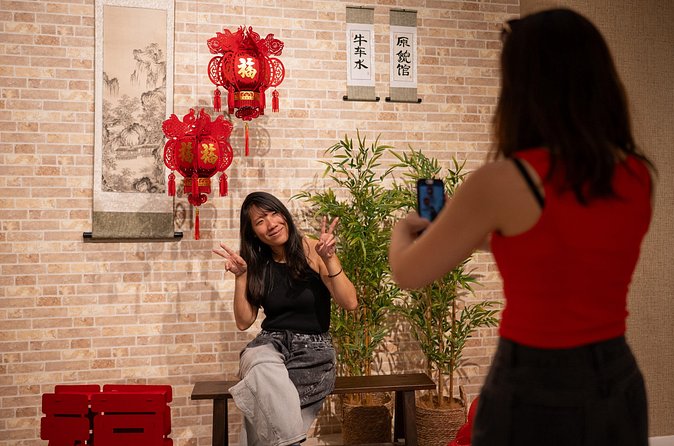
A few house rules can make or break a visit if you’re not expecting them:
- Flash photography isn’t allowed inside
- Food and drinks aren’t allowed in the Centre
- Each ticket admits one person and is checked at entry
- Re-entry isn’t permitted, so once you’re in, you’re in for the visit
Also, there may be queues required for entry, even though the ticket guarantees admission. That can feel confusing at first, but it’s normal for timed attractions: your ticket keeps your spot, not necessarily the walking speed.
Family-friendly notes (and who it’s best for)
Chinatown Heritage Centre can work well for families, but the rules are clear. Children under 12 must be accompanied by an adult, while children under 3 get free admission. So if you’re traveling with young kids, you’ll want to think about how easily they can handle a museum-style route.
It’s also a good fit for:
- people who want a meaningful Chinatown stop without committing to a long guided tour
- anyone who likes interactive elements like QR scanning
- travelers who prefer structured context over wandering with only guidebook hints
If you’re only after outdoor street scenes and don’t care about museum galleries, you might feel this is too inside-focused. But if you want Chinatown to make sense, it’s one of the better ways to do that in a short time.
Who should book—and who can skip it
Book it if:
- you want a time-managed Chinatown activity that doesn’t swallow half your day
- you enjoy learning through objects, recreated workspaces, and story-driven exhibits
- you like museum stops with tech support (your phone audio, QR prompts)
You might skip it if:
- you dislike timed entry or strict end times
- you’re expecting a long, multi-hour tour with lots of walking between far-apart locations
- you’re looking for pure street atmosphere only
Should you book Chinatown Heritage Centre admission?
Yes, I’d book it for most first-time Chinatown visitors who want one high-return stop. The combination of timed guaranteed entry, self-paced exploring, and QR/audio interpretation makes it feel efficient without being rushed. Add in the memorable period details—tailor shop, kitchen scenes, opera house, and street barber-style spaces—and it becomes more than a quick museum glance.
If your schedule is tight, this is also one of the easier cultural choices to fit in. Just be sure you arrive before last admission and treat the visit as a single pass, since no re-entry is part of the deal.
FAQ
How long does the visit take?
Plan for about 1 to 2 hours. The experience is designed to be a compact stop that fits into a sightseeing day.
What’s included with the ticket?
Your ticket includes admission to the Centre’s galleries / exhibition area.
Do I need to pick a time slot?
Yes. You can choose from several entry times, and your ticket guarantees entry for the selected date.
Can I re-enter after I leave?
No. Re-entry is not permitted, so try to finish your visit during your entry window.
What time is the last admission?
The last admission is at 6:00 PM. Late arrivals can’t be accommodated.
Are there age rules for children?
Yes. Children under 12 must be accompanied by an adult. Children under 3 enjoy free admission.
Can I cancel for a full refund?
Yes. You can cancel up to 24 hours in advance for a full refund. If you cancel less than 24 hours before the start time, the amount paid isn’t refunded.
Museum Hours on the Island




Old Singapore, Retold



Chinatown, Lane by Lane



Fresh Reviews from the Little Red Dot
- Night Safari Tickets with Tram Ride
★ 4.5 · 3 reviews - Singapore: Architecture and Food Tour with Tastings
★ 5.0 · 3 reviews - Singapore Private Full-Day Sightseeing Tour
★ 5.0 · 3 reviews - Private Chinatown Heritage Tour with Best 8 Local Tastings
★ 5.0 · 3 reviews
Chinatown Tours & Tastings, compared.
 ★ 5.0Chinatown, Little India, Kampong Gelam City Highlights TourFrom $80224 reviews
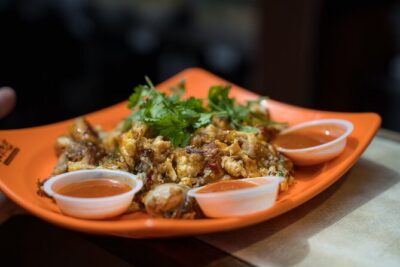 ★ 5.0Chinatown Hawker Market Food Tour with 7 Food TastingsFrom $146213 reviews
Chinatown, Little India, Arab Street Walking TourFrom $53207 reviews
★ 5.0Chinatown Hawker Market Food Tour with 7 Food TastingsFrom $146213 reviews
Chinatown, Little India, Arab Street Walking TourFrom $53207 reviews
 ★ 4.8Chinatown and Little India Guided Walking TourFrom $78190 reviews
 ★ 5.0Chinatown Historic Walking Tour with LunchFrom $54134 reviews
 ★ 5.0Chinatown Hawker Food Tasting TourFrom $8896 reviews
 ★ 4.5Kampong Glam, Little India & Chinatown with Local Street Food TastingsFrom $17770 reviews
 ★ 5.0Tasting Trails: Chinatown OR with Kampong Glam, Little IndiaFrom $6759 reviews
Browse the lists this tour appears in