
Reviewed · CHINATOWN TOURS & TASTINGS
Singapore: Chinatown Hawker Market Food Tour with 7 Food Tastings
Chinatown can be a feast for your senses. This 3-hour walking tour pairs serious food eats with quick hits of religious and architectural history across Chinatown and nearby Marina Bay. You get 7 tastings plus local drinks, and your guide ties each bite to the neighborhood’s story.
I especially love how the tour focuses on classic Singapore comfort food you might miss on your own. The lineup includes Hainanese chicken rice, kaya toast with Nanyang coffee, and a hawker-centre tasting that makes the whole area feel understandable fast.
One fair caution: it’s not a sit-and-sprawl meal tour. It’s a lot of walking, and if you’re the type who usually orders a full plate for every meal, you could still feel hungry at the end.
In This Review
- Key things I found most useful
- Chinatown’s Hawker Food Tour That Actually Teaches You What You’re Eating
- Starting at Bee Cheng Hiang: Your First Bite Route Begins Here
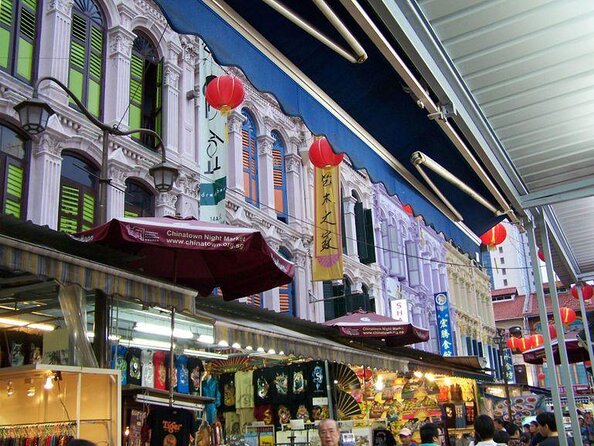
- Restored Shophouses: When Early Chinatown Life Explains the Food
- The 1827 Hindu Temple Stop: Why Religious Sites and Food Belong Together
- Tang-Style Temple and Rooftop Quiet: A Reset During a Walking Food Tour
- Maxwell-Style Hawker Centre Energy: Eating Where Singapore Eats
- Chia Ann Siang Hill and the One-Way Road Story: City Details With Meaning
- Marina Bay’s Red Dot Design Museum: A Practical Pace Change
- The Food List: 7 Tastings That Add Up to a Real Meal
- Drinks, Coffee, and Chilled Sweet Stops That Keep You Comfortable
- How Much Walking Is “Approx. 3 Hours” in Real Life?
- What Makes the Guides Matter: Real Names, Real Variety
- Price and Value: What You’re Really Paying for at $146
- Who This Tour Fits Best (and Who Might Skip It)
- Should You Book This Chinatown Hawker Food Tour?
- FAQ
- What is the price and tour length?
- How many people are in the group?
- What food is included?
- Where do I meet and where does it end?
- Is there walking involved?
- Can I request dietary requirements?
- Is transportation included?
- What if my plans change and I cancel?
Key things I found most useful
- Small group (max 12): easier pacing, more time for questions, and less waiting around.
- Big flavor range: from savory hawker staples to sweet chendol, so you don’t get stuck on one cuisine.
- Temple stop mix: Hindu and Tang-style religious sites help explain why Chinatown tastes the way it does.
- At least one museum-style detour: Red Dot Design Museum adds a smart change of pace.
- Come hungry energy: multiple stops mean you’ll be eating across the walk, not just at one place.
Chinatown’s Hawker Food Tour That Actually Teaches You What You’re Eating
Singapore food has a superpower: it travels well across cultures, and Chinatown is one of the best places to see that in action. On this tour, you don’t just get a list of dishes. You get a guide who connects food to place, so the names on the menu start to make sense.
The format is simple. You walk. You stop. You taste. And you move on before the day turns into one long shuffle of lines and indecision. It works especially well if it’s your first time in Singapore food, or if you’ve already wandered Chinatown but want a fast way to sort what matters.
You’ll also notice the tour’s balance. You get food, but you also get context for why these foods show up where they do. That’s the difference between “I ate stuff” and “I get it.”
Starting at Bee Cheng Hiang: Your First Bite Route Begins Here
You meet at Bee Cheng Hiang (美珍香) on Pagoda Street. It’s a clear, easy landmark, and it puts you in the thick of Chinatown right away. Starting at a food-focused spot matters because it sets the tone: this isn’t an art-and-snacks stroll. It’s built around eating decisions.
If you’ve ever been intimidated by hawker menus, this start helps. Your guide sets the expectation that you’ll taste your way through different styles of Singapore cooking—sweet, savory, grilled, griddle-cooked, and cold-dessert relief.
You’ll also be walking back to the same meeting point at the end, so you don’t have that awkward “now what” feeling. The tour is designed as a loop.
Chinatown holds more lanes than one afternoon
Restored Shophouses: When Early Chinatown Life Explains the Food
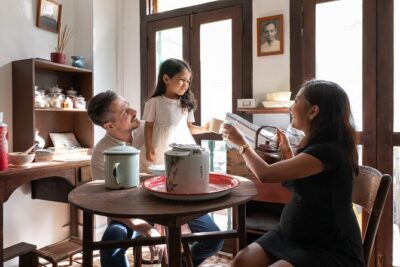
One stop features restored shophouses showing living spaces and furnishings from early Chinatown settlers. This is the kind of stop that can sound like “just looking at buildings.” But it’s useful.
Why? Because it gives you a quick mental model for the neighborhood. When you understand that shophouses were both home and business space, food choices start to feel less random. Street food and small kitchens aren’t side characters in the story. They’re part of how people lived.
You’ll likely notice the tour doesn’t spend too long stuck in theory. You’ll leave this stop with a clearer idea of how Chinatown became a food district, not just a tourist district.
The 1827 Hindu Temple Stop: Why Religious Sites and Food Belong Together
The itinerary includes Singapore’s oldest Hindu temple, built in 1827, with a tower decorated with deities. This stop gives you a grounded view of how religion shows up in daily life, including food routines, festival culture, and community gathering.
Even if you’re not a religion buff, it helps to see how Chinatown isn’t one “single” culture. It’s multiple communities overlapping, each leaving a mark. Food is where that overlap becomes deliciously visible.
If you care about why a city eats the way it does, this is a smart moment. Without it, you might treat the tastings as random highlights. With it, they feel like chapters.
Tang-Style Temple and Rooftop Quiet: A Reset During a Walking Food Tour
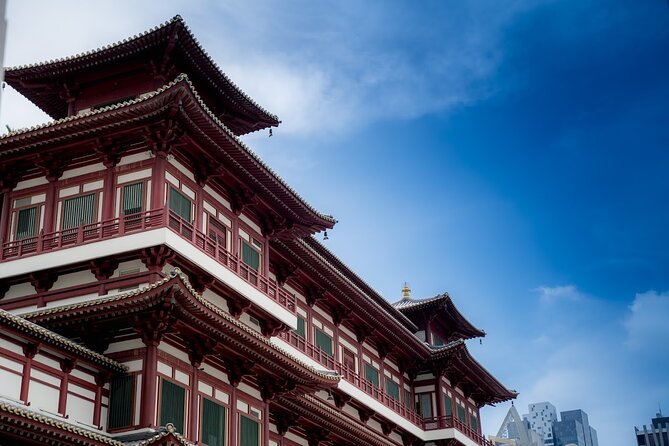
Another temple stop is a Tang dynasty–style temple that houses religious relics, with ornate rooms and a tranquil rooftop garden. After several food-related stops, this part acts like a breather.
It’s also practical. A tour like this moves fast, and you need at least one pause that isn’t another line-up for snacks. This stop tends to do that job: quieter, slower pace, and a change in scenery.
This kind of contrast makes the whole day work better. Your senses get a moment to reset, so the next tasting hits with full attention instead of post-snack blur.
Still hungry? The hawker trail keeps going
- Small Group: Michelin and Local Hawker Food Tour with 9 tastings★ 5.0 · 1,890 reviews
- Small Group: Singapore Street Food & Night Tour with 9 tastings★ 5.0 · 1,240 reviews
- The Award-Winning PRIVATE Food Tour: 10 Tastings of 3 Cultures★ 4.5 · 1,017 reviews
- Singapore: Chinese, Indian & Arabic Quarters, Culture & Food Tour★ 5.0 · 789 reviews
Maxwell-Style Hawker Centre Energy: Eating Where Singapore Eats
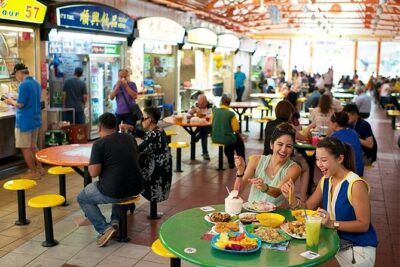
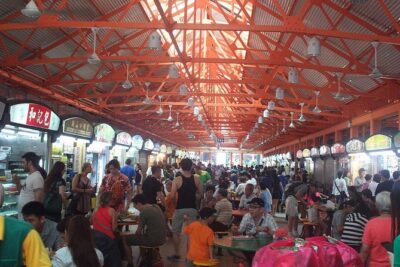
You’ll visit one of Singapore’s largest food centres. Hawker centres are a major part of how Singapore feeds people, and this stop is where you see the system at work: lots of stalls, lots of choice, and food built for speed.
What I like about including a large food centre on a tour like this is that it gives you a reference point. Afterward, when you see other stalls on your own, you’ll recognize patterns in ordering and flavors.
There’s also a psychological win. When a guide tells you what to try (and explains why), you don’t waste time guessing. You get to taste widely instead of burning your energy on indecision.
Chia Ann Siang Hill and the One-Way Road Story: City Details With Meaning
Chinatown includes a small hill and the name of a one-way road linked to Chia Ann Siang, a wealthy businessman. This isn’t a major “photo landmark” stop. It’s the kind of detail that makes a neighborhood feel specific.
These small facts matter on a walking tour. They anchor the place in real people and real history, instead of making everything generic.
It’s also a reminder that Singapore’s city layout has layers. Roads and neighborhoods weren’t built only for tourists. They were built for how people moved, worked, and traded.
Marina Bay’s Red Dot Design Museum: A Practical Pace Change
The tour ends with a stop at the Red Dot Design Museum along the Waterfront Promenade at Marina Bay. It’s a design-focused detour, and it can feel surprising compared to hawker eating.
But that’s why it works. After Chinatown temples and food centres, you get a different lens on Singapore. Design is part of modern Singapore life, and the museum’s presence on the route signals that the city’s identity isn’t only traditional.
If you like short “side quests” that break up a walking day, you’ll likely appreciate this. It also helps justify the overall time. You’re not just walking to eat. You’re covering multiple aspects of the city in one go.
The Food List: 7 Tastings That Add Up to a Real Meal
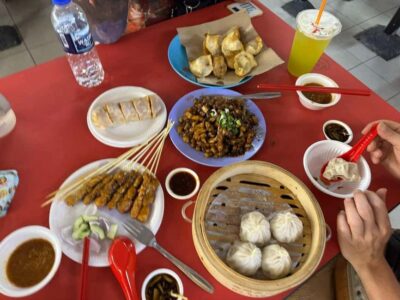
This tour is built around a lineup that targets Singapore staples and comfort foods you can’t easily replicate at home. The exact menu can shift based on availability, but the tour includes these items:
- Smoky Bak Kwa: tender barbecued meat with that sweet-salty edge.
- Nanyang coffee with kaya butter toast: a classic breakfast combo that’s both aromatic and satisfying.
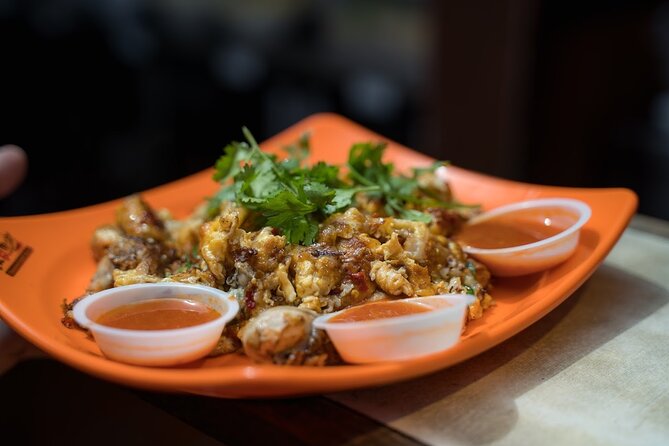
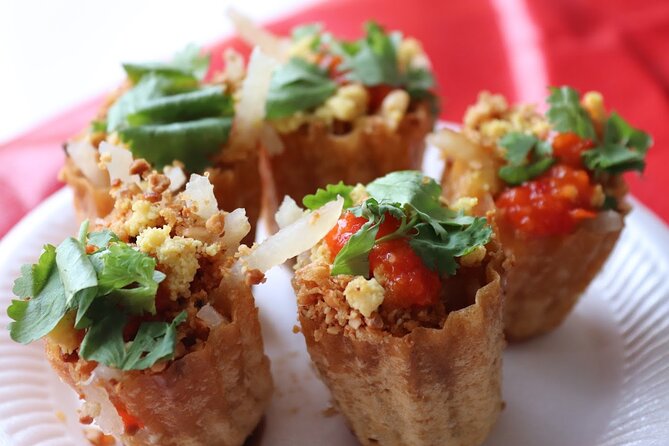
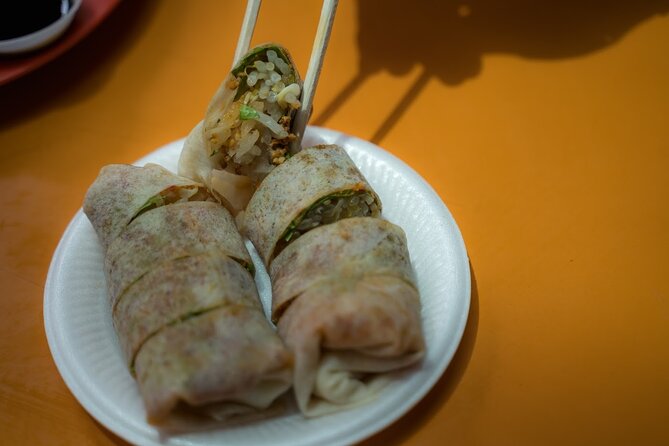
- Crispy popiah or golden oyster cake: crispy street snacks that keep the walk interesting.
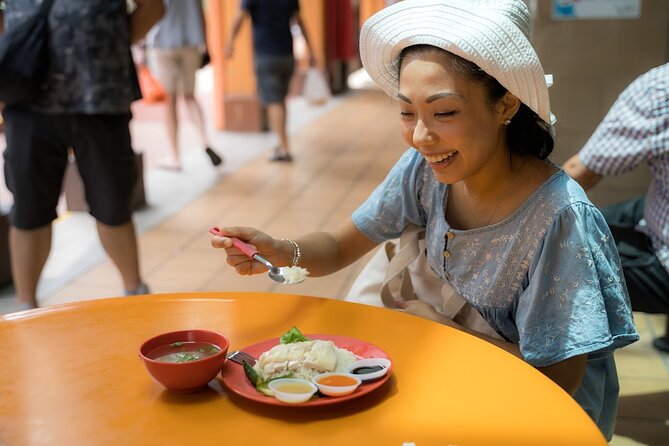
- Authentic Hainanese chicken rice: one of Singapore’s signature dishes, and often the “serious” stop on the list.
- Fluffy prata or thosai: griddle-cooked comfort, usually warm and filling.
- Chendol dessert: coconut and gula melaka with a cooling effect after savory bites.
- Chwee kueh with savory radish topping: soft rice cake with a savory kick.
Then there’s the Secret Dish, plus local beer and bottled water.
Here’s the value part: you’re not getting seven tiny “look at this” samples. The overall experience is designed to feed you across multiple stops. In fact, many people treat it as a highlight morning and not a “light appetizer tour.”
Drinks, Coffee, and Chilled Sweet Stops That Keep You Comfortable
One of the smartest inclusions is local beer and bottled water. If you’re walking for three hours in Singapore heat, hydration isn’t optional. Bottled water also means you’re not stuck figuring out where to buy it mid-route.
The Nanyang coffee and kaya toast gives you early energy, and the chendol gives you a sweet reset later. This mix is more than variety for variety’s sake. It creates a rhythm: savory first, then griddle/street snack energy, then cooling dessert relief.
If you prefer non-alcoholic options, you might want to ask ahead about what’s available. The tour notes that dietary needs should be discussed in advance.
How Much Walking Is “Approx. 3 Hours” in Real Life?
The tour is about 3 hours and involves a fair amount of walking. That’s the main practical consideration.
You should plan for stairs and sidewalks, not a museum-day pace. Comfortable shoes matter, and it’s worth wearing something breathable. Also, bring an attitude that says you’ll stop and eat often, not wait for one big meal.
A few guides in the reviews made a point of pacing and ensuring people could rest. Even so, this is still a walking tour. If you’re trying to keep your trip low-impact, think hard before booking.
What Makes the Guides Matter: Real Names, Real Variety
One of the strongest patterns in the feedback is guide quality. People repeatedly highlighted their guides’ friendliness and storytelling, and the fact that they explained food in a way that made the city feel more connected.
Different guides you may encounter include Kent, Winston, Jag, Edwin, Paul, Jeanette, Ronnie, Helen, TC, YC, Natalie, and Kuo Ai. Common praise across the names includes keeping the tour on track, answering lots of questions, and making the history feel useful instead of heavy.
I like that. A food tour is more fun when you’re not just receiving instructions. You’re having a conversation about why the food exists where it does.
Price and Value: What You’re Really Paying for at $146
At $146 per person, this tour isn’t a cheap snack crawl. But it stacks value in a few clear ways:
- Food volume across multiple stops: You’re tasting a full spread, not one restaurant’s menu.
- Local drinks included: beer and bottled water reduce extra spending.
- Guide-led context: you’re not only eating; you’re learning why these foods connect to Chinatown.
- At least one bigger destination stop: the Red Dot Design Museum detour adds variety.
If you’re the type who ends up spending money anyway on hawker meals plus museum tickets plus multiple “just in case” snacks, this starts to look like a bundled deal.
If you only want a light snack and a casual walk, the price might feel steep. And if you’re expecting a slow food experience with lots of seating, you might find the pace more energetic than you wanted.
Who This Tour Fits Best (and Who Might Skip It)
This tour fits best if you:
- Want an efficient way to get your bearings in Chinatown while eating well
- Like mainstream Singapore favorites (like Hainanese chicken rice) plus street snacks
- Prefer a small-group experience capped at 12 travelers
- Appreciate quick history and temple context tied directly to food
You might skip it if you:
- Hate walking for three hours
- Want a purely food-focused session with minimal cultural stops
- Expect only small samples and nothing filling
Should You Book This Chinatown Hawker Food Tour?
Yes, I’d book it if you want a guided morning that combines real Singapore staples with neighborhood context, and you like the idea of eating your way through Chinatown without guessing what to order.
It’s especially worth it when you’re short on time or you don’t want to plan a hawker “strategy” yourself. The lineup is built around dishes most people can recognize and enjoy, and the pacing tends to turn a simple walk into an actually memorable start to your trip.
Book it with an empty stomach, bring comfy shoes, and go in ready to learn while you eat. If that sounds like your kind of day, this one is a strong pick.
FAQ
What is the price and tour length?
The tour costs $146.00 per person and runs for about 3 hours.
How many people are in the group?
The tour has a maximum of 12 travelers.
What food is included?
Included tastings cover items such as bak kwa, Nanyang coffee with kaya butter toast, popiah or golden oyster cake, Hainanese chicken rice, prata or thosai, chendol, chwee kueh, a secret dish, plus local beer and bottled water.
Where do I meet and where does it end?
You meet at Bee Cheng Hiang (美珍香) at 69 Pagoda Street. The tour ends back at the same meeting point.
Is there walking involved?
Yes. The tour involves a fair amount of walking, so comfortable shoes are recommended.
Can I request dietary requirements?
Yes. You should contact the tour operator in advance for any dietary requirements so they can cater as best they can.
Is transportation included?
No. Transportation is not included.
What if my plans change and I cancel?
You can cancel for a full refund up to 24 hours before the experience start time. Free cancellation is offered, but refunds are not available for cancellations within 24 hours of the start time.
From Rempah to Plate
Hawker Stalls Left on the List

Chinatown, Lane by Lane

Fresh Reviews from the Little Red Dot
- Night Safari Tickets with Tram Ride
★ 4.5 · 3 reviews - Singapore: Architecture and Food Tour with Tastings
★ 5.0 · 3 reviews - Singapore Private Full-Day Sightseeing Tour
★ 5.0 · 3 reviews - Private Chinatown Heritage Tour with Best 8 Local Tastings
★ 5.0 · 3 reviews
Chinatown Tours & Tastings, compared.
 ★ 5.0Chinatown, Little India, Kampong Gelam City Highlights TourFrom $80224 reviews
Chinatown, Little India, Arab Street Walking TourFrom $53207 reviews
★ 5.0Chinatown, Little India, Kampong Gelam City Highlights TourFrom $80224 reviews
Chinatown, Little India, Arab Street Walking TourFrom $53207 reviews
 ★ 4.8Chinatown and Little India Guided Walking TourFrom $78190 reviews
 ★ 5.0Chinatown Historic Walking Tour with LunchFrom $54134 reviews
 ★ 5.0Chinatown Hawker Food Tasting TourFrom $8896 reviews
 ★ 4.5Kampong Glam, Little India & Chinatown with Local Street Food TastingsFrom $17770 reviews
 ★ 5.0Chinatown Heritage Centre (Admission Ticket)From $2065 reviews
 ★ 5.0Tasting Trails: Chinatown OR with Kampong Glam, Little IndiaFrom $6759 reviews
Browse the lists this tour appears in