
Reviewed · PHOTO WALKS & PHOTOSHOOTS
Singapore Night Photography Workshop
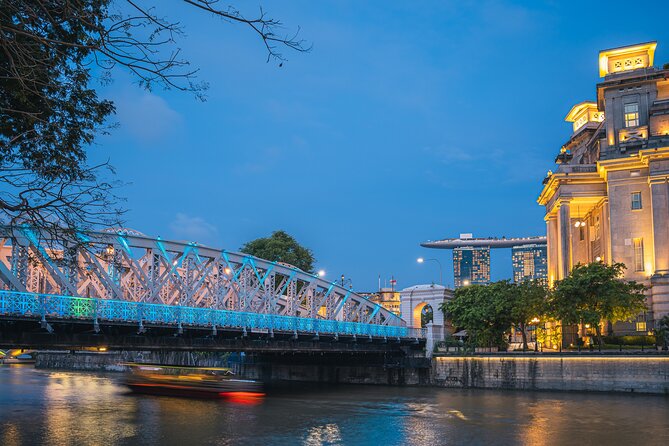
Night lights make the city look different. This Singapore Night Photography Workshop turns that feeling into real skills as you shoot along the Singapore River while the day slides into twilight. I like that you get hands-on help from a professional photographer instructor and a structured focus on camera settings. I also like the mix of modern and historical scenes, so your photos aren’t all the same. One possible drawback: you’re shooting at night, so bring your own comfort with low-light and expect it to depend on weather.
The group size stays small (up to three), so you’re not lost in a crowd. You also get a photo review, which helps if you want to improve instead of just collecting snapshots. If you don’t have your own camera or basic gear like a tripod, you’ll need to plan ahead since equipment isn’t included.
In This Review
- Key highlights worth caring about
- Singapore River after dark: the real reason this workshop works
- The 6:30 pm start: twilight practice beats late-night guessing
- What you actually learn: camera settings that create light trails and silky water
- The photo walk: modern skyline, historical textures, and river reflections
- Guided angles and on-the-spot coaching: how you avoid common night-photo mistakes
- Photo review time: turning your shots into clear next steps
- Price and logistics: is $145.26 per person a good deal?
- What to bring (and what to skip) so the workshop is easy
- Who this Singapore Night Photography Workshop is best for
- Should you book this night workshop?
- FAQ
- How long is the Singapore Night Photography Workshop?
- Where does the workshop start and end?
- Is photography equipment included?
- What kind of photography skills will I practice?
- How big is the group?
- What happens if the weather is bad?
Key highlights worth caring about
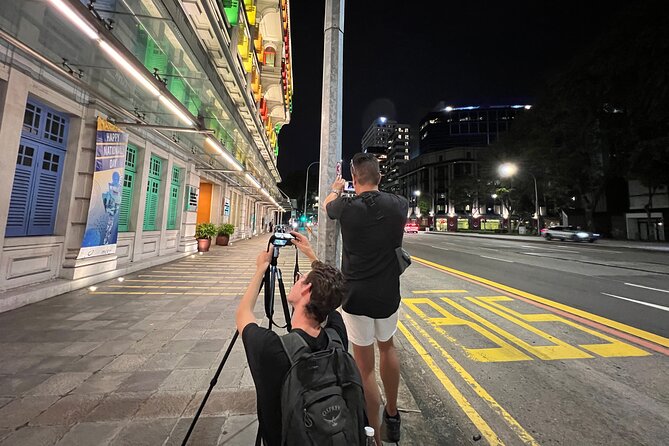
- Up to three people means more direct coaching and fewer slowdowns
- Twilight-to-night shooting so you practice settings as light changes
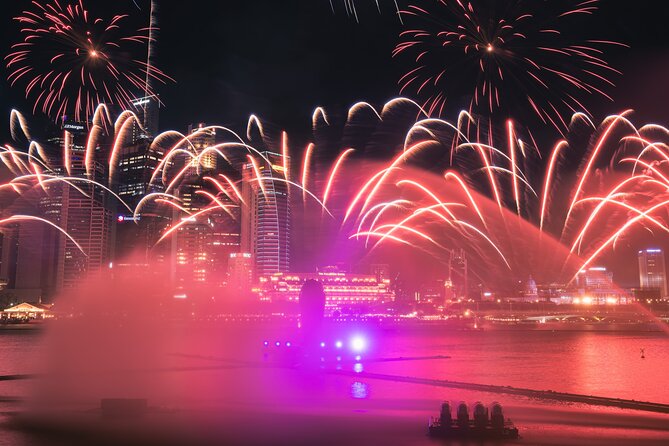
- Creative effects you’ll work toward like light trails, light bursts, and silky waters
- Singapore River photo route with modern skyline views plus older architecture
- Photo review included so you know what to fix for next time
Singapore River after dark: the real reason this workshop works
If you’ve ever tried night photos on your own, you know the usual problem: the city looks amazing to your eyes, but your camera may return something flat or blurry. This workshop is built around the answer—use the Singapore River at the exact time night lights start turning on and reflecting on water.
You’ll be photographing a stretch of the riverside waterfront with a mix of views: the city skyline plus architecture that feels more grounded in the past. That matters because night photography isn’t only about lights. It’s about layers. You want foreground detail, middle-distance buildings, and those glowing reflections that make long exposure images look “right.”
And since the plan is specifically about photographing iconic riverfront scenes, you aren’t guessing where to stand. You’re guided to angles designed for composition—so you can spend your energy learning, not wandering.
The 6:30 pm start: twilight practice beats late-night guessing
The workshop starts at 6:30 pm and runs about two hours. That timing is smarter than a purely late-night session.
Twilight is when you get the best “training wheels” for night photography. The sky isn’t fully black yet, so it’s easier to balance exposure while you experiment with settings. Then, as night takes over, the city lights become more intense and you can see the effects you’re trying to create—without waiting forever.
If you’re the type who wants photos that show the moment “the city wakes up,” this schedule is the sweet spot. You’ll be working through that transition rather than only shooting one flat lighting condition.
Paint, batik and perfume benches, more sessions

What you actually learn: camera settings that create light trails and silky water
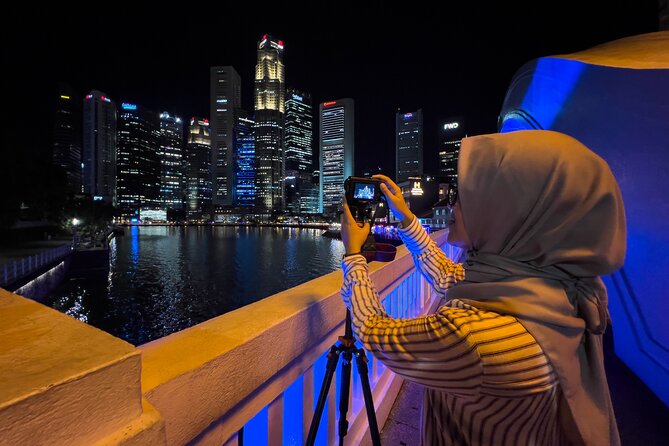
This workshop isn’t framed as a theory lecture. You’ll work on your camera settings to create different effects as the light changes from twilight to night.
Here’s the payoff: by the end, you should have practical knowledge for low-light shots and creative results such as:
- Light trails (moving vehicles or lights stretched into streaks)
- Light bursts (brighter points of light that bloom and flare in your frame)
- Silky waters (smoother water texture from longer exposures)
Those effects usually depend on shutter speed and how you manage light. You can think of it this way: the river and the skyline provide steady subjects, while night lighting gives you enough brightness to experiment without guessing in the dark.
You’ll also get guidance on composition, including unique angles. That’s crucial because night photography often fails on framing. Even if your exposure is good, the image can feel empty. The coaching helps you build shots that feel intentional: lines leading toward the skyline, reflections that actually support the photo, and people/architecture arranged for storytelling.
The photo walk: modern skyline, historical textures, and river reflections
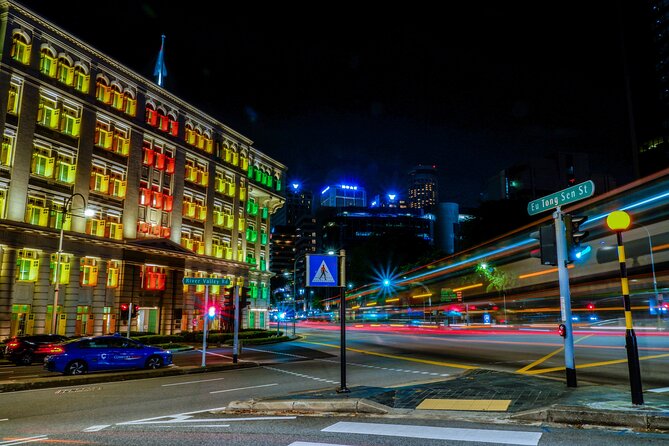
Your time is spent photographing along the Singapore River/Riverside area, guided to capture a mix of modern and historical architecture, cityscapes, and people.
That mix is a big deal for value. Many night shoots focus only on the tallest buildings and forget the rest of the scene. Here, you’re encouraged to see the city as a set of relationships:
- Buildings and architecture give structure
- People add scale and movement
- The river adds reflection and texture
- City lights bring color and contrast
You’ll be photographing Singapore’s iconic riverfront views, and you’ll learn how to approach the same location in multiple ways. Even if the scenery looks familiar from photos online, getting there in person with a purpose changes everything.
A small note to consider: a riverfront night scene can be crowded with onlookers. Since your group is tiny, you’ll still likely have room to get set up, but you may need patience while you compose—especially for longer exposures.
Guided angles and on-the-spot coaching: how you avoid common night-photo mistakes
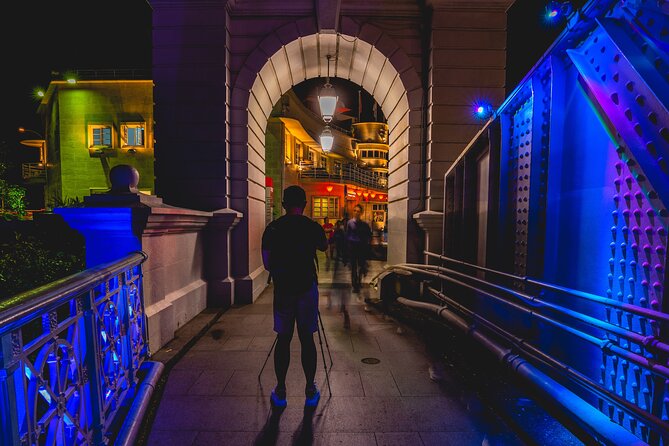
The most useful part of these workshops is the real-time help. You’re not left with a list of tips and a vague “good luck.”
With a professional travel photographer instructor, you can practice camera settings while someone helps you correct the common issues that show up at night, such as:
- Exposures that are too dark or blown out
- Photos that look sharp in the viewfinder but soft in the final image
- Shots where reflections don’t line up with the composition
- Frames that capture lights but miss the story
Because the group is limited to three, you’re more likely to get individualized prompts. Instead of waiting your turn, you can adjust faster and keep your momentum during the twilight-to-night transition.
If you’ve tried night photography before and still feel stuck, this kind of targeted coaching is often the difference between repeating the same mistake and actually improving.
More frames of you against the skyline
- #instawalk: Bugis, Waterloo, Kampong Glam★ 5.0 · 60 reviews
- Singapore Instagram Private Walking Tour (Private & All-Inclusive)★ 5.0 · 35 reviews
- Singapore Instagram Tour By Car (Private & All-Inclusive)★ 5.0 · 27 reviews
- Vacation Photographer in Singapore★ 5.0 · 27 reviews
Photo review time: turning your shots into clear next steps
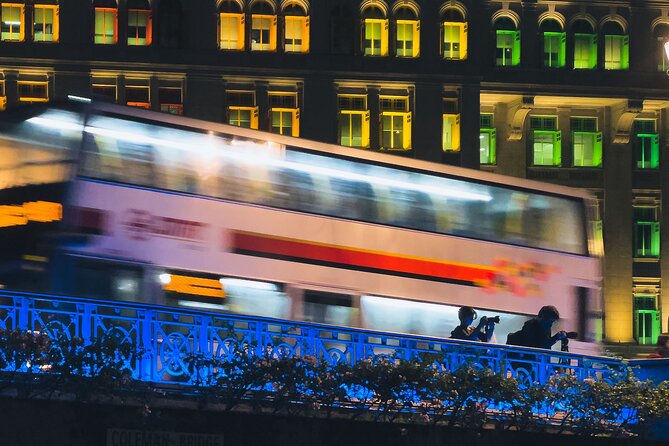
Included in the workshop is a photo review. That’s a strong value add because it moves the experience from “shooting time” into “learning time.”
A review helps you connect what you did with what the camera produced. You can usually spot patterns quickly, like which settings created the effect you wanted and which ones didn’t. It also gives you a chance to refine your approach for similar scenes later—meaning you don’t just get better photos for one night, you get better for future low-light city trips.
If you like improving fast, this included feedback is one of the most praised parts of the experience—many people highlight the advice as the key reason the time feels worthwhile.
Price and logistics: is $145.26 per person a good deal?
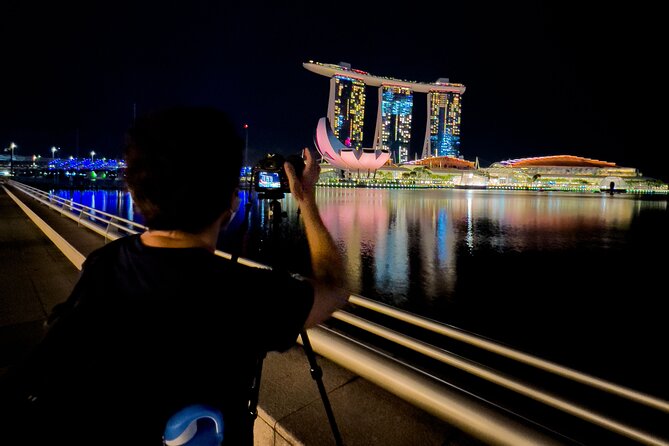
At $145.26 per person for about two hours, you’re paying for three things you might not get in a free-form photo walk:
- A professional photography instructor
- Hands-on guidance and tutorial time
- A structured shoot with a photo review
The fact that the group is capped at three is also a big part of the value. When you’re paying for coaching, smaller groups usually mean better attention. You’re not competing with ten other people for help.
What isn’t included matters too. Photography equipment is not provided. That can change the economics for first-time photographers, because you may need to rent or use your own camera and lens. A tripod often helps for long exposures (especially for silky water and light trail effects), but the workshop doesn’t supply gear—so plan based on what you already own.
Also note: food and drinks aren’t included, and there’s no hotel pickup or drop-off. The meeting point is Clarke Quay Central, 6 Eu Tong Sen St, Singapore 059817, and the activity ends back at the same location.
What to bring (and what to skip) so the workshop is easy
Since equipment isn’t included, you’ll want to bring what you need to get those night effects.
At a minimum, have:
- Your camera
- Any lens you plan to use for low-light city scenes
- The ability to support your camera for steadier long exposure shots (a tripod, if you have one)
- Enough memory space and batteries for a couple of focused shooting sessions
You should also bring practical night-walk basics: something comfortable for standing and moving along the riverfront, and clothes appropriate for evening weather.
And since the workshop requires good weather, it’s smart to dress for “what Singapore decides to do” that day. If it’s canceled due to poor weather, you’ll either be offered a different date or a full refund.
Who this Singapore Night Photography Workshop is best for
This is a great fit if you want night photos with control and purpose, not just a pretty view.
You’ll likely enjoy it most if:
- You want to learn low-light camera settings through practice
- You’re aiming for specific effects like light trails, light bursts, and silky waters
- You value small-group coaching and a photo review
- You like photography as well as walking through a real part of the city (not only standing in one spot)
It’s also a solid choice if you’re visiting Singapore and want one evening activity that feels technical but still fun. You’re sightseeing with a goal, and the instructor helps turn the goal into images.
Most people can participate, and service animals are allowed. It’s also set up as a private tour/activity, meaning only your group participates.
Should you book this night workshop?
Yes, I’d book it if your priority is learning night photography quickly with real guidance. The small group size, the specific focus on camera settings and creative effects, and the included photo review are the combo that makes this feel more like a class than a casual photo walk.
I’d skip it or reconsider if:
- You don’t plan to use your own camera (and you don’t want to rent gear)
- You’re only interested in quick sightseeing photos and don’t care about settings or feedback
- You can’t handle weather-dependent plans, since the experience requires good conditions
If you’re aiming to take home stronger night images of Singapore’s riverfront, this workshop gives you a practical path—and it does it with coaching that actually helps you improve.
FAQ
How long is the Singapore Night Photography Workshop?
It runs for about 2 hours.
Where does the workshop start and end?
It starts at Clarke Quay Central, 6 Eu Tong Sen St, Singapore 059817, and ends back at the same meeting point.
Is photography equipment included?
No. You’ll need to bring your own camera and any gear you plan to use (such as lenses, tripod, memory cards, and batteries).
What kind of photography skills will I practice?
You’ll work on camera settings as the city transitions from twilight to night. You’ll practice low-light shooting and create effects such as light trails, light bursts, and silky waters.
How big is the group?
The workshop is limited to a small group with a maximum of three people at a time.
What happens if the weather is bad?
The experience requires good weather. If it’s canceled due to poor weather, you’ll be offered a different date or a full refund. The booking itself is non-refundable and cannot be changed for other reasons.
Classes with Take-Homes




Shots Worth the Humid Hair
Souvenirs You Make Yourself


Fresh Reviews from the Little Red Dot
- Night Safari Tickets with Tram Ride
★ 4.5 · 3 reviews - Singapore: Architecture and Food Tour with Tastings
★ 5.0 · 3 reviews - Singapore Private Full-Day Sightseeing Tour
★ 5.0 · 3 reviews - Private Chinatown Heritage Tour with Best 8 Local Tastings
★ 5.0 · 3 reviews
Photo Walks & Photoshoots, compared.
 ★ 5.0#instawalk: Bugis, Waterloo, Kampong GlamFrom $5660 reviews
 ★ 5.0Singapore Instagram Private Walking Tour (Private & All-Inclusive)From $13535 reviews
 ★ 5.0Vacation Photographer in SingaporeFrom $30127 reviews
 ★ 5.0Singapore Instagram Tour By Car (Private & All-Inclusive)From $29527 reviews
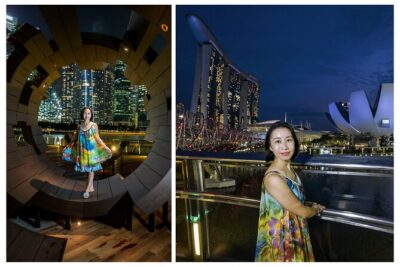 ★ 5.0Instawalk with Phonetography of Iconic SingaporeFrom $17526 reviews
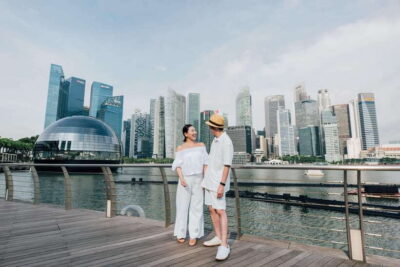 ★ 5.0Moments in the City Private Photography SessionFrom $15420 reviews
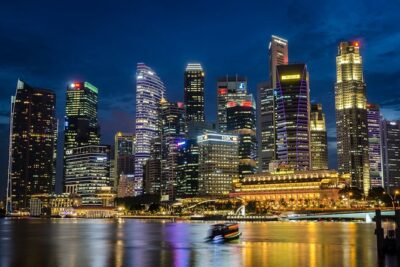 ★ 5.0Singapore Photography Masterclass – Private Photography LessonFrom $19017 reviews
 ★ 4.9Professional photoshoot at Gardens by the BayFrom $10615 reviews
Browse the lists this tour appears in