
Reviewed · COOKING CLASSES & WET MARKET VISITS
Singapore: Hands-on Cooking Class with Cultural Immersion
Stove time in Chinatown makes Singapore click. This hands-on class pairs family recipes with stories of how local cooks learned their skills, so you’re not just copying steps—you’re understanding the why. I love the step-by-step guidance at your station, and I especially like that you sit down for a full 3-course meal made by you, not just a tasting.
One catch: the studio sits on level 2 of a conservation shophouse without lift access, so it’s not a great match if stairs are difficult.
In This Review
- Key highlights worth planning for
- Chinatown, Coffee, and a Quick Start by Buddha Tooth Relic Temple
- The Weekly Menu Rules: Choose Your Day for the 3 Dishes You Want
- From Dish Origins to Local Ingredients: What You Learn Before You Cook
- Apron On, Stove Ready: How the Hands-On Cooking Works
- Cooking Your 3 Signature Dishes (and Learning the Patterns Behind Them)
- Your 3-Course Meal: Eating It While It’s Still Fresh
- Value Check: Why $94 for 3 Hours Often Feels Fair
- Who Should Book This Cooking Class in Chinatown
- Practical Tips Before You Go (So You Don’t Lose Time)
- Should You Book This Singapore Cooking Class?
- FAQ
- What is the duration of the Singapore cooking class?
- Where is the meeting point?
- What dishes do you cook?
- Do I need to bring ingredients?
- Do I eat the food I cook?
- Is hotel pickup and drop-off included?
- What drinks are provided?
- Is the class taught in English?
- Is video recording allowed?
- Is the studio accessible by lift?
Key highlights worth planning for
- Pick your weekday for the 3 dishes you want, since the menu runs on a fixed weekly schedule.
- You learn dish origins and local ingredients before you cook, so it feels more like food education than a demo.
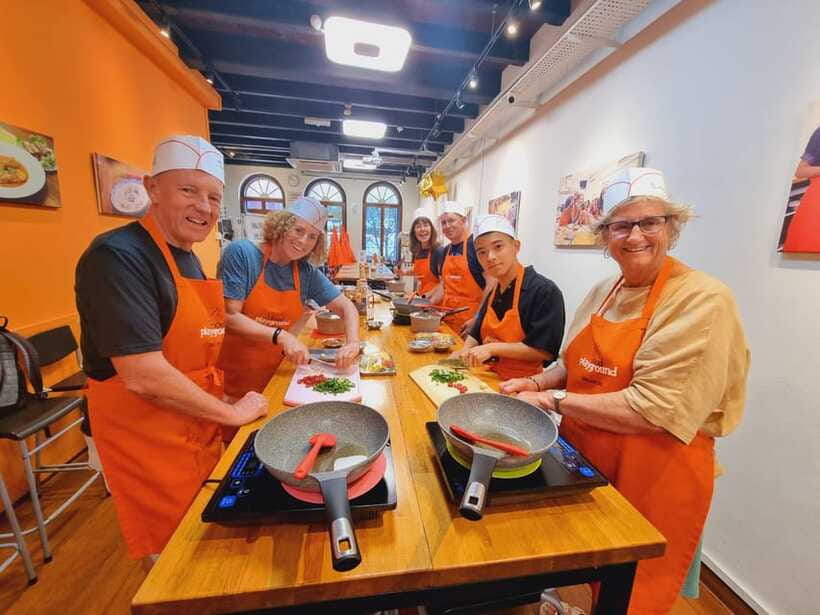
- Fully equipped workstations mean you can actually cook, not hover and watch.
- You eat what you make in a proper sit-down meal with the other students.
- Chinatown location by Buddha Tooth Relic Temple makes it easy to pair with nearby sightseeing.
- No video recording keeps the focus on hands-on learning and group dining.
Chinatown, Coffee, and a Quick Start by Buddha Tooth Relic Temple
This class starts in Chinatown, right next to the Buddha Tooth Relic Temple and Museum. When you’re near the landmark, look for an orange sign with the local partner’s name—it’s a simple way to avoid wandering around in tourist-density confusion.
When you arrive, you’ll get settled and offered coffee or tea with nostalgic snack bites. Then you kick things off with a fun icebreaker game aimed at food and heritage. It’s a small thing, but it helps you get comfortable fast, especially if you’re coming solo or you’re not sure what the group vibe will be like.
A big part of the experience is the tone the instructors set. Based on what I’ve heard from multiple guides (people like Nur, Sara, Annie, and Helen), the best sessions feel warm and organized—like someone actually wants you to succeed. You’ll also hear personal stories tied to the way recipes were learned and carried forward, which adds real weight to the cooking.
The Weekly Menu Rules: Choose Your Day for the 3 Dishes You Want
This is a fixed-menu class, meaning your dishes depend on the day you book. That matters because you’ll likely remember the first dish you cook most clearly—and you might want to match your schedule to your food cravings.
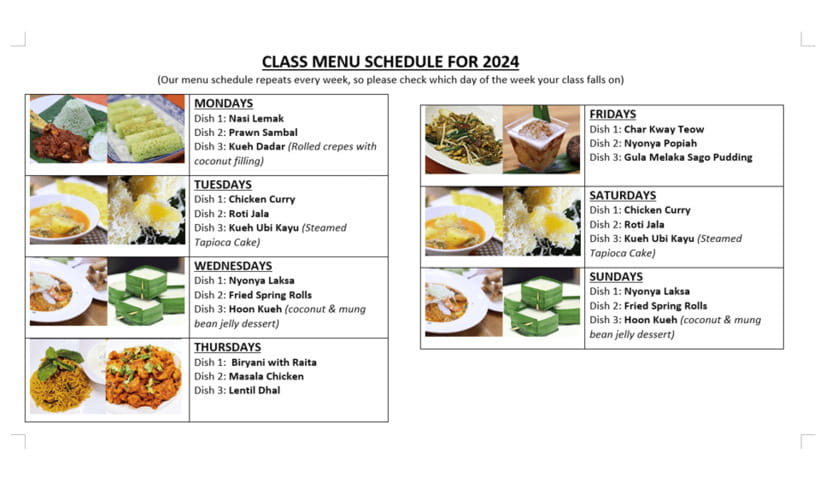
Here’s how the weekly rotation works:
- Monday: Nasi Lemak, Sambal Prawns, Kueh Dadar
- Tuesday: Curry Chicken, Roti Jala, Ondeh Ondeh
- Wednesday: Laksa, Fried Spring Rolls, Hoon Kueh
- Thursday: Nasi Biryani, Masala Chicken, Lentil Dhal
- Friday: Char Kway Teow, Nyonya Popiah, Sago Gula Melaka
- Saturday: Curry Chicken, Roti Jala, Ondeh Ondeh
- Sunday: Laksa, Fried Spring Rolls, Hoon Kueh
My practical advice: check the menu before you book, and then pick the day that gives you at least one dish you already love. Even if you’re willing to try everything, it’s more satisfying when one item hits your preferences immediately.
Also notice the spread includes both savory mains and Singaporean sweets/snacks (kueh, ondėh ondėh, sago gula melaka). That’s part of why it works as a true 3-course experience rather than a single-dish cooking session.
From wet market to wok, more sessions
From Dish Origins to Local Ingredients: What You Learn Before You Cook
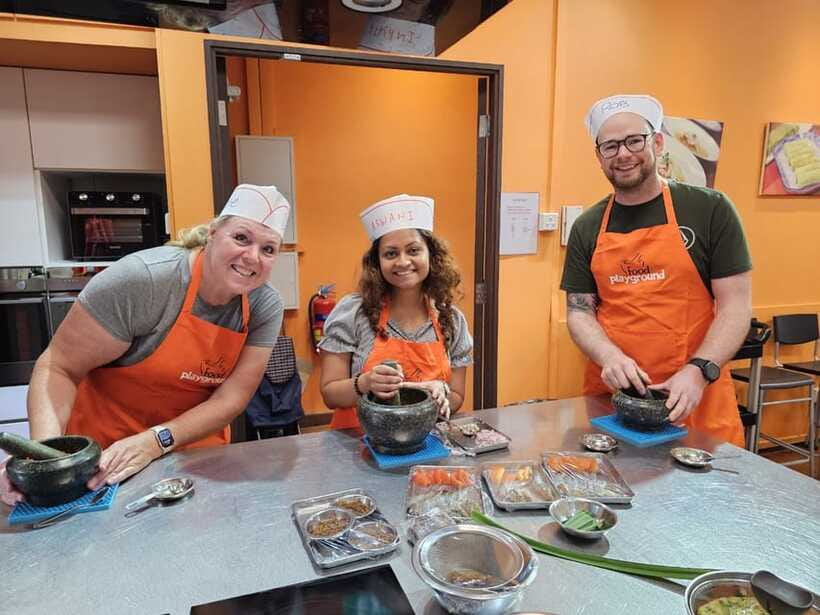
Before you put on the apron and chef hat, the class talks you through what you’re making. You’ll hear about the origins of the dish and the specific local ingredients that shape the flavor.
That upfront context is more than trivia. Singapore cooking often feels like it has a different logic than Western recipes—spice blends, seafood notes, coconut cream, tamarind tang, and sweet-salty balances all play together. When you know what each dish is trying to do, the cooking steps make more sense and you’re more likely to reproduce results at home.
You’ll also get guidance on the ingredients themselves—what to look for, how they behave, and why instructors treat certain components as non-negotiable. People such as Wy Wy and Cindy are often singled out for being clear and patient, and you can feel that kind of teaching style in how the steps are explained.
Then there’s the cultural side. Instructors share stories about overcoming life challenges, which helps you connect dishes to people instead of treating recipes like museum pieces. It turns a meal into a narrative you can taste.
Apron On, Stove Ready: How the Hands-On Cooking Works
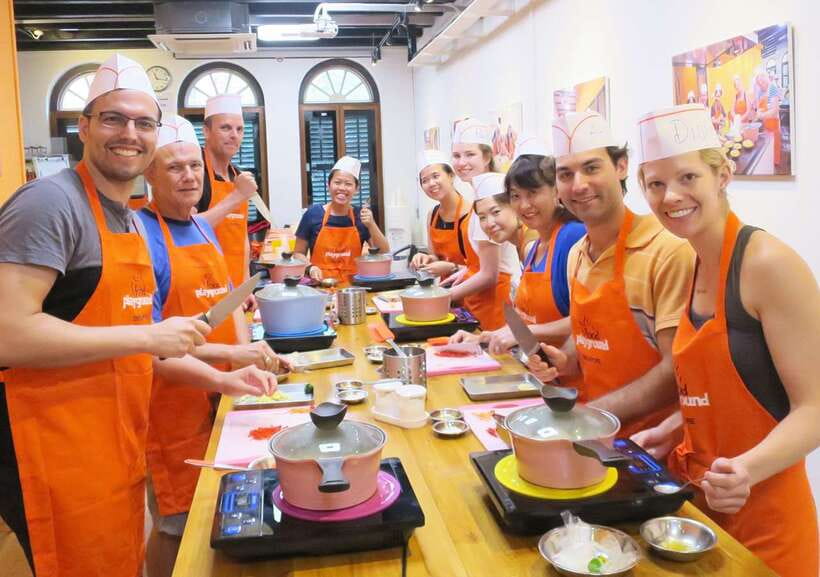
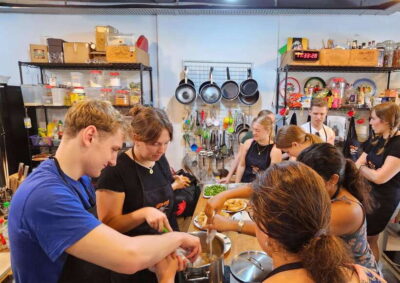
Once you get into the kitchen, it’s real cooking time. You’ll be set up with fully equipped workstations, ingredients, and close instructor guidance. This is the part where the class earns its place on your itinerary: you’re not watching someone else work while you take notes.
You’ll move through the process step-by-step, with support if your technique is shaky or if you’re learning for the first time. Multiple people mention instructors being helpful and ready when you arrive, and you’ll feel that preparation in how smoothly the stations run and how clean everything stays during the session.
The class format is also friendly for different skill levels. One person described the instructor as patient with varying experience levels, and that’s consistent with how these hands-on sessions typically work when the teaching team expects mixed groups.
A useful mindset: treat this as learning how to think, not just how to copy. For example, Singapore sauces and gravies often depend on small adjustments—heat level, timing, and spice bloom. If you understand that, you can adapt at home even when your supermarket doesn’t carry the exact same jar.
Cooking Your 3 Signature Dishes (and Learning the Patterns Behind Them)
Your exact dishes change by day, but the structure stays the same: you cook three signature items that together become your 3-course meal. On a day with Nasi Lemak and Sambal Prawns, you’ll likely focus on coconut-based richness and the heat-building logic of sambal. If you’re on a laksa day, you’ll concentrate on getting the right depth of flavor that makes the soup feel layered, not flat.
On a curry chicken + roti jala + ondėh ondėh day, you’ll get a sweet-and-savory contrast that many first-timers love. Roti jala itself feels a bit magical the first time you make it, and desserts like ondėh ondėh teach you how Singapore handles texture and temperature—outside, syrupy, and comforting in a very specific way.
If you’re on a char kway teow + nyonya popiah + sago gula melaka day, the experience leans toward street-food energy but with guided control. Char kway teow is about stir timing and heat management, while popiah is about assembly and balance. Then dessert lands you back in the sweet rhythm of local snacks.
The bigger takeaway for you: you’re not only learning three recipes. You’re learning repeatable patterns—how spices wake up, how sauces thicken, how balance works between salty, sweet, and tang. That’s what makes it worth trying to replicate later.
Make something to carry home in hand luggage
- Experience Singapore: Cultural Cooking Class★ 5.0 · 1,514 reviews
- Singapore: Hands-on Cooking Class with Cultural Immersion★ 4.9 · 107 reviews
- Local Cuisine Cooking Class in Singapore★ 5.0 · 86 reviews
- Private Local Cuisine Cooking Class In Singapore★ 5.0 · 84 reviews
Your 3-Course Meal: Eating It While It’s Still Fresh
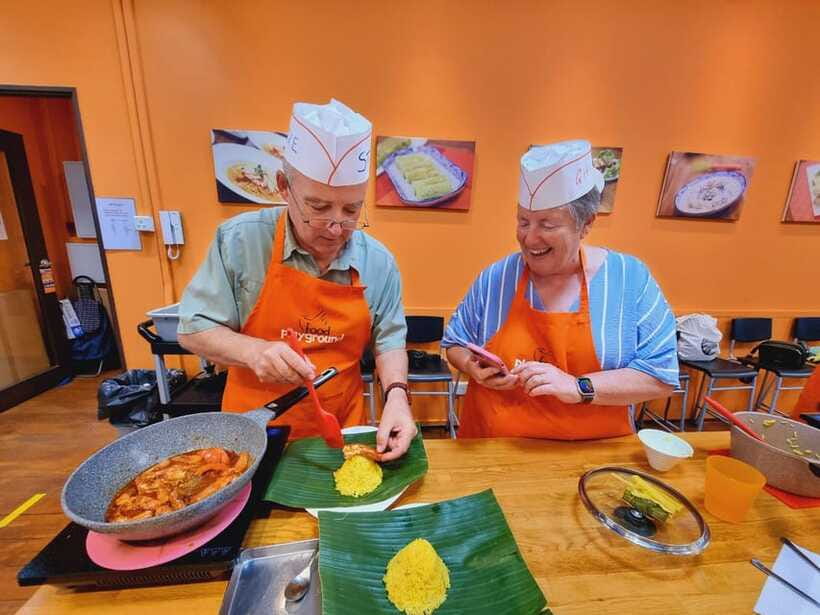
Finally, you eat. You sit down and enjoy the spread you cooked, with everyone in the class sharing the meal. That part matters more than people expect.
When you’re learning cooking techniques, the “taste test” right away locks in the lesson. You can connect what you did—stirring, simmering, balancing—to how it should feel. It’s a fast way to build food memory.
This is also when the group mingling turns practical. After the meal, you can ask instructors about where to eat and what to do for the rest of your stay. People mention that instructors are generous with local expert knowledge, and that’s a big advantage of a guided class versus a one-off cooking demo.
One more thing: the class atmosphere tends to be relaxed. Several instructors—like Mrs Lee and Lur—are noted for hospitality and organization, including having everything clean and set up. So you get the fun of cooking without the end-of-session chaos.
Value Check: Why $94 for 3 Hours Often Feels Fair
At $94 per person for a 3-hour session, you’re paying for more than a recipe card. You’re getting:
- Ingredients and a full cooking setup
- Hands-on instruction in English
- Coffee/tea and water
- A sit-down meal built from what you cooked
If you’ve ever tried to learn Singapore cooking by buying random ingredients and guessing, you already know how expensive trial-and-error can be. Here, the cost is wrapped around a guided process and a proper meal, which makes it easier to justify.
Also, the menu includes dishes that take real effort—seafood, spice blends, desserts, and time-sensitive steps. That effort is the “hidden price” you’d otherwise pay in time, nerves, and likely a few kitchen mistakes.
Think of it as paying for coaching. If you want to actually understand Singaporean flavors and then take that home, the value starts to make sense quickly.
Who Should Book This Cooking Class in Chinatown
This fits best if you want a guided, social way to learn Singapore food culture. It’s a strong pick for:
- First-time visitors who want more than walking and ordering
- Food lovers who like practical lessons they can repeat later
- Solo travelers who don’t mind meeting people and eating together
It’s also a good fit if you appreciate stories tied to how recipes survive—especially when instructors share how they learned and kept their craft through life’s hurdles.
The main mismatch is mobility. The studio is on level 2 with no lift access, so it’s not recommended for people with limited mobility or anyone who struggles with stairs. If that’s you, save your energy and choose an alternative activity.
Practical Tips Before You Go (So You Don’t Lose Time)
A few simple things will help you enjoy the class more:
- Wear clothes that can handle kitchen activity. You’ll be working at a station with real ingredients.
- Closed shoes are smart. You’ll be moving around inside the kitchen area.
- Arrive a few minutes early and find the orange sign near Buddha Tooth Relic Temple—it’s your fastest route to check-in.
- Plan for hands-on work. Video recording is not allowed, so bring curiosity, not a filming setup.
- Don’t assume hotel pickup. The class includes no pickup/drop-off, so build in time to get yourself to Chinatown.
One more “know yourself” point: if you’re nervous about cooking, this class is built to teach. The instructors are described as patient and ready to help, and the stations are set up so you can follow along.
Should You Book This Singapore Cooking Class?
Yes—if you want a practical way to learn Singaporean flavors and you’re excited about cooking three dishes (not just watching). The fixed weekly menu makes it easy to choose a day that matches your tastes, and the meal payoff is immediate.
Skip it only if stairs are an issue for you, since the studio is on level 2 without lift access. If you’re mobile and you like learning from people, this is one of those experiences that turns a trip into something you can cook again later.
FAQ
What is the duration of the Singapore cooking class?
The class runs for 3 hours.
Where is the meeting point?
The studio is located next to the Buddha Tooth Relic Temple and Museum in Chinatown. Look for an orange sign with the local partner’s name.
What dishes do you cook?
You cook 3 signature Singaporean dishes based on a fixed weekly schedule (the menu varies by day).
Do I need to bring ingredients?
No. All ingredients required for the class are included.
Do I eat the food I cook?
Yes. At the end, you enjoy a 3-course Singaporean meal that includes what you cooked.
Is hotel pickup and drop-off included?
No. Hotel pickup and drop-off are not included.
What drinks are provided?
Coffee, tea, and drinking water are provided.
Is the class taught in English?
Yes. The instructor provides instruction in English.
Is video recording allowed?
No. Video recording is not allowed.
Is the studio accessible by lift?
The studio is on level 2 of a conservation shophouse without lift access, so it is not recommended for people with limited mobility.
Classes with Take-Homes
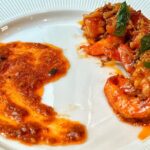

From Rempah to Plate
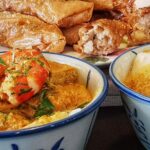
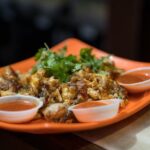
Fresh Reviews from the Little Red Dot
- Night Safari Tickets with Tram Ride
★ 4.5 · 3 reviews - Singapore: Architecture and Food Tour with Tastings
★ 5.0 · 3 reviews - Singapore Private Full-Day Sightseeing Tour
★ 5.0 · 3 reviews - Private Chinatown Heritage Tour with Best 8 Local Tastings
★ 5.0 · 3 reviews
Cooking Classes & Wet Market Visits, compared.
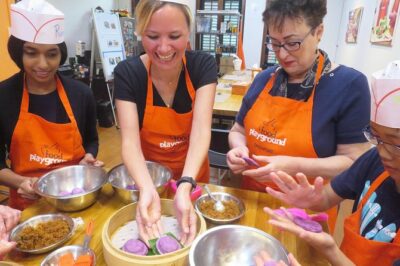 ★ 5.0Experience Singapore: Cultural Cooking ClassFrom $961,514 reviews
 ★ 5.0Singapore Market to Table Culinary Experience (Wet Market Tour included)From $112479 reviews
 ★ 5.0Chinatown Hawker Market Food Tour with 7 Food TastingsFrom $146213 reviews
 ★ 5.0Local Cuisine Cooking Class in SingaporeFrom $14286 reviews
 ★ 5.0Private Local Cuisine Cooking Class In SingaporeFrom $27884 reviews
 ★ 5.0Singapore Chinatown Market Private Food Tour with 7 Food TastingsFrom $47519 reviews
 ★ 5.0Market-to-Table Experience and Cooking ClassFrom $10917 reviews
 ★ 4.5Private Market Visit and Cooking Class With A Professional ChefFrom $12610 reviews
Browse the lists this tour appears in