
Reviewed · HAWKER & STREET FOOD TOURS
Singapore Private Food, Culture and Heritage Tour with 9 tastings
Singapore’s best bites come with backstories.
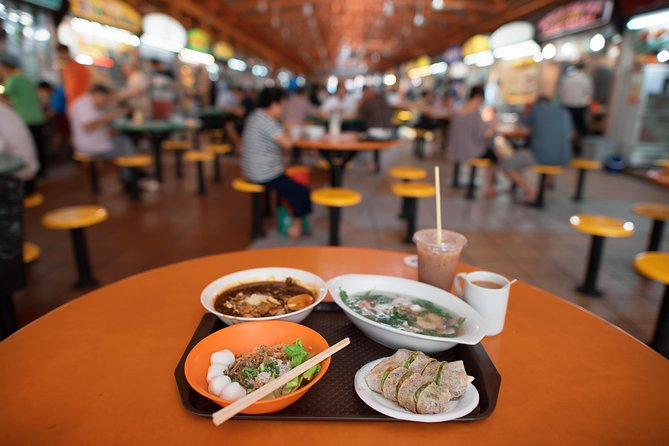
This private walking tour strings together food, architecture, and real neighborhood history across Chinatown, Little India, and Kampong Glam, then carries you toward the river and Marina Bay Sands. I like how it’s built around 9 to 10 local ethnic dishes and drinks (with a fixed plan), and I also like that it uses public transport so you get the city rhythm without renting taxis.
Two things I especially like: the route hits multiple major ethnic food zones, and the guide frames each stop so the flavors connect to migration, community, and daily life. My one caution is simple: the program is not suitable for guests with dietary restrictions (and the food is fixed, not customized), so you need to check your needs carefully before you book.
In This Review
- Key Takeaways Before You Go
- A 6-Hour Route Through Singapore’s Food Neighborhoods
- What You Really Get: Tastings, Transport, and a River Cruise Ticket
- Starting at Chinatown: Kreta Ayer Square and the City’s Diversity Theme
- Chinatown Stops: Chinatown Complex, Street Markets, and Heritage Anchors
- Hawker-Culture Context at Tekka and Market Energy Without the Guesswork
- Little India: Curries, Garlands, and North vs South Traditions
- Kampong Glam: Malay Heritage, Sultan Mosque Photos, and Arab Street Lanes
- Clarke Quay, Singapore River, and the Marina Bay Sands Finish
- Food Tasting Reality Check: Fixed Stops, Sharing, and Pacing
- Getting More Out of Your Guide (Even If You Love Food More Than History)
- Who This Tour Suits Best (And Who Might Feel Frustrated)
- Quick Tips for a Smooth Day in Heat and Humidity
- Should You Book This Private Food, Culture and Heritage Tour?
- FAQ
- How long is the Singapore private food and culture tour?
- Where does the tour start and where does it end?
- Is hotel pickup included?
- How many tastings do I get?
- Does the tour include a river cruise?
- Which areas of Singapore does the tour cover?
- Is the tour private?
- What if it rains?
- Are the food tastings customized for dietary needs?
- Is tipping included for the guide?
Key Takeaways Before You Go
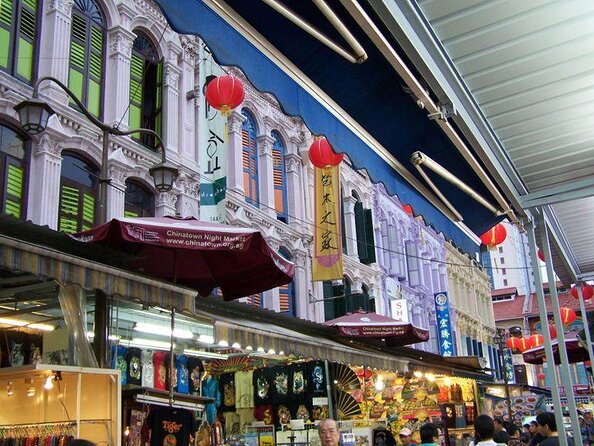
- 9 tastings included: you’re not just sightseeing, you’re eating your way through key neighborhoods.
- Major districts in one sweep: Chinatown, Little India, and Kampong Glam, plus a river-area finish.
- River cruise ticket included: the itinerary builds in time near Clarke Quay and Singapore River.
- Photo-stop friendly: Buddha Tooth Relic Temple, Sultan Mosque, and Arab Street are quick wins for memorable shots.
- Guides vary by group: many names show up in high ratings (Ping, Reyney, Andrew, Leo, Walter, Cecelia), but always set expectations about how food-forward you want it.
A 6-Hour Route Through Singapore’s Food Neighborhoods
If you’ve only got one day to get your bearings, this kind of structured walking tour makes sense. It’s about six hours of moving between Singapore’s biggest heritage food zones, with a guide translating the city’s “why” into what you’re tasting and where you’re standing. You’ll start near Chinatown MRT and end in the Marina Bay Sands area.
The tour isn’t a slow meander. You’ll be outside for long stretches, including moderate walking and heat-and-humidity conditions. The good news: your route is set up so each neighborhood has a purpose—Chinese heritage sites first, then Indian culture and spice traditions, and finally the Malay-Muslim quarter vibe of Kampong Glam and nearby lanes.
What You Really Get: Tastings, Transport, and a River Cruise Ticket
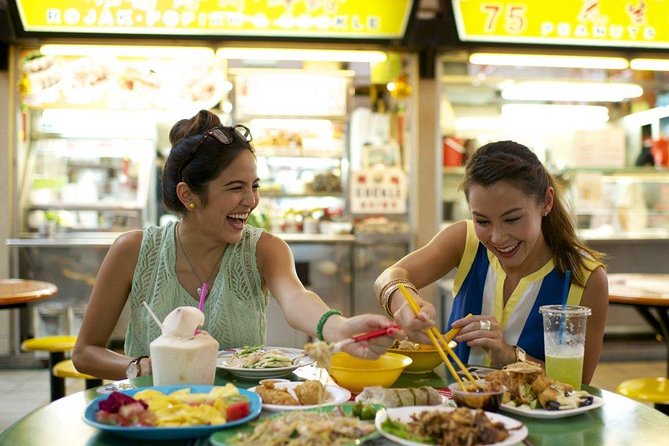
The headline sounds like a food tour, but the package is really a three-part blend: food tastings, culture storytelling, and transit between districts. You get an English-speaking local guide, public transport (MRT & bus), and (if you select it) hotel pickup. You also get a River Cruise admission ticket included as part of the experience.
Let’s talk value. At $185.75 per person for a private group, you’re paying for organization: a guide who knows which hawker areas and heritage pockets are worth your time, plus tickets and transport coordination. Food prices in Singapore can be low when you DIY, so the money here isn’t for cheaper eating—it’s for convenience and context, especially if you’re new to the city or want someone to shorten your learning curve.
Where value can feel uneven is the “tasting” side. Some people love the pacing and the variety; others felt the food amount was lighter than expected for the price. So set your expectation that this is a culture-and-heritage walking tour with tastings, not a nonstop buffet.
Still hungry? The hawker trail keeps going
Starting at Chinatown: Kreta Ayer Square and the City’s Diversity Theme
You begin at Chinatown MRT Exit A (New Bridge Rd area). The first stop is Kreta Ayer Square, a launch point that frames one big Singapore idea: racial diversity as part of what it means to be Singaporean. The tour also tees up what’s coming next—how architecture and streets relate to where people lived, worked, and ate.
This is a useful opener because it changes how you read the neighborhoods. Instead of treating Chinatown like a theme park, you start noticing the human logic—where communities formed, how streets developed, and why certain food traditions stuck around. It’s the kind of context that makes later tastings feel connected rather than random.
Chinatown Stops: Chinatown Complex, Street Markets, and Heritage Anchors
After Kreta Ayer Square, the tour leans into Chinatown proper. You’ll spend time around major landmarks and food-adjacent stops, including Chinatown and the Chinatown Street Market. The guide is meant to explain not just what the streets are, but why they matter—especially in relation to markets and everyday commerce.
Next comes Sago Street, often described as Street of the Dead, where early immigrant stories shape the street’s reputation and history. This is one of those stops that can feel intense if you’re expecting only snacks. But it’s also where a food tour becomes a real culture tour—because the foods you’ll try later are tied to migration patterns, labor history, and community survival.
You then hit two heritage-focused stops:
- Buddha Tooth Relic Temple and Museum: a quick photo opportunity with a clear sense of place.
- Chinatown Heritage Centre: where you can peek into older shophouse style architecture and see the neighborhood as more than storefronts.
A practical note: temples and heritage centers are often air-conditioned or cooler than the street, so use those minutes to reset before the next outdoor stretch.
Hawker-Culture Context at Tekka and Market Energy Without the Guesswork
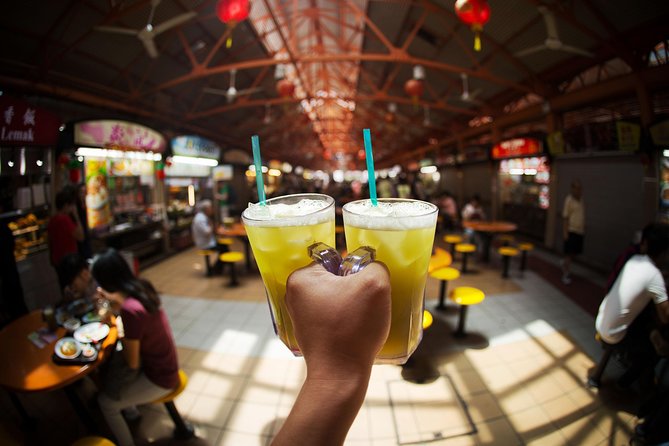
Moving from Chinatown into the next food zone, you’ll reach Tekka Centre. This is one of the tour’s “local life” moments—where the guide points out what to try and how to read the market energy. Tekka is useful because it’s not just a single stall experience. You get a sense of how Singapore’s food culture works across different communities.
In the itinerary, Tekka Centre is paired with quick passes like Campbell Lane, and then you’re off toward Little India proper. Those little location clarifications sound small, but they matter in Singapore. If you understand which lane connects to which neighborhood, you can come back later on your own and spend time where the guide set the context.
Further back into the island story, war years included
- Historical Singapore Bike Tour on Full-Sized Bicycles★ 5.0 · 1,421 reviews
- Nightout at Colonial Charms of the City★ 3.5 · 733 reviews
- Singapore: Historical Half-Day Bike Tour★ 4.8 · 399 reviews
- Singapore Group History & Culture Walking Tour★ 5.0 · 160 reviews
Little India: Curries, Garlands, and North vs South Traditions
Little India is where the tour becomes noticeably more aromatic. You’ll be introduced to the scent of curries and the look of garlands, and you’ll also hear a specific cultural distinction: the difference in North and South Indian traditions and cuisine.
Then you’ll see House of Tan Teng Niah (photo stop) before continuing into Little India’s food and texture-heavy scenes. The tour also includes Little India Arcade, again primarily for photos and atmosphere, and then it transitions toward Tekka and adjacent areas.
What I like about having Little India explained this way is that it prevents the usual tourist mistake: treating Indian food as one category. Even without being a food historian, you can notice different spice styles, ingredient patterns, and cooking approaches once the guide frames what you’re seeing and tasting.
Kampong Glam: Malay Heritage, Sultan Mosque Photos, and Arab Street Lanes
Next is Kampong Glam, the Malay heritage quarter with a mix of traditional culture and modern café-and-shopping energy. The itinerary explicitly notes that the area includes both Malay culture and a more cosmopolitan, trend-forward vibe on the “Hispter Lane” style of streets.
You’ll get photo moments at:
- Malay Heritage Centre (pointed out as a place to visit after the tour)
- Sultan Mosque (photo opportunity plus location context)
- Arab Street (location and vicinity context)
- Plus Bugis as a nearby stop for shopping and quick lifestyle energy
Even if you’re not shopping, these stops help you understand how neighborhoods overlap in Singapore. You’re not just walking through “old versus new.” You’re walking through how new commerce sits next to heritage identity.
Clarke Quay, Singapore River, and the Marina Bay Sands Finish
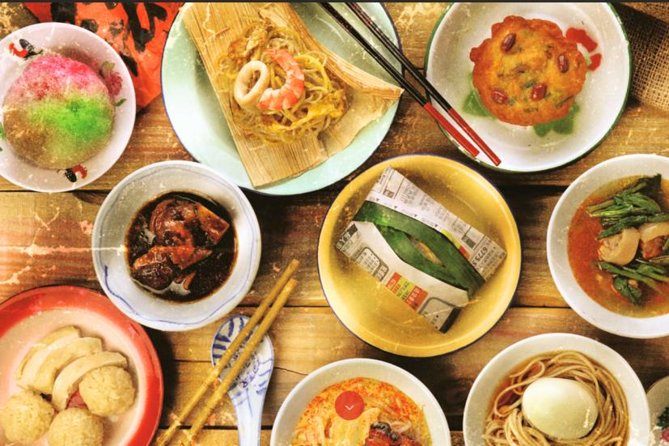
As the tour wraps, you shift from streets and markets to water and city skyline views. You’ll pass through Clarke Quay, known for riverside dining and nightlife energy, then move to Singapore River for a longer segment focused on the waterway’s role in trade and urban development.
This is also where your included river cruise ticket comes into play. Even if the exact timing depends on your day and guide flow, the route is clearly designed so the river isn’t just scenery. It’s a story you can experience, which is a smart move for people who want more than photos.
Finally, the tour ends at Marina Bay Sands (MBS). The end point is iconic and convenient, especially if you want to keep exploring afterward on your own. It’s a clean “wrap” for a day that started in compact heritage streets and ends in a modern skyline.
Food Tasting Reality Check: Fixed Stops, Sharing, and Pacing
This is the part that can make or break your expectations. The tour includes 9 to 10 local ethnic food dishes and drinks, but the itinerary itself includes many short photo stops and heritage segments that aren’t heavy on eating. That’s why some people call it more culture-forward than they expected.
Also, the tour notes that food items are fixed and do not get customized. Officially, the tour isn’t suitable if you have dietary restrictions or need walking assistance. Still, I’d treat guide behavior as an important variable. In the feedback I saw, guides like Pam, Raynee, Andrew, Leo, Walter, Cecelia, and Bryan were praised for good pacing and selection. One comment even pointed out attention to allergies, so the human factor matters—but don’t rely on luck. If you have dietary needs, ask directly before booking.
On portioning: a private group doesn’t automatically mean every tasting is unlimited. One negative review mentioned sharing and minimal drinks, which lines up with the “fixed tastings” model. If you want bigger meals, you might need to plan a follow-up dinner.
Getting More Out of Your Guide (Even If You Love Food More Than History)
The tour’s success is closely tied to your guide’s style. When guides are at their best, they connect each tasting to a story—migration, community habits, and why certain stalls became “the place.” Names that came up in strong ratings include Ping, Reyney, Marcus, Notel, Swee Lin, Justin, and Raymond Teo. That mix tells you something: the product is the route, but the personality turns it from good to great.
Here’s how to get the most value from that. Go in hungry (without assuming you’ll eat everything you want). Ask one or two practical questions as you go: what people order here, what’s a safe first choice, and what’s worth trying again later. If you care about specific categories like seafood versus sweets, you can’t change the menu, but your guide can often steer you toward the right “why this matters” context.
Who This Tour Suits Best (And Who Might Feel Frustrated)
This works really well for:
- First-time visitors who want an organized route through major heritage districts
- Food lovers who also enjoy context—why a dish exists and how communities shaped menus
- People who like short walking segments with frequent story stops
- Anyone who would rather ride MRT and buses with a guide than figure it out alone
It may frustrate you if:
- You expect a strictly food-heavy format with lots of large portions
- You have dietary restrictions that require customization
- You need walking assistance, since moderate outdoor walking is part of the plan
- You get impatient with photo-stop cadence and heritage narration
A humorous but honest way to put it: bring your food appetite, but bring your patience for history scenes too.
Quick Tips for a Smooth Day in Heat and Humidity
Singapore in daytime can be a lot, even in “comfortable footwear” mode. The tour runs rain or shine, so pack a poncho or umbrella and carry water. Wear breathable clothes and shoes that can handle sidewalks and market floors.
Also, because the tour uses public transport and includes hotel pickup when selected, be punctual. In a multi-stop route, being late can ripple into the pacing of your tastings and the timing of the river segment.
Lastly, if you’re the type who likes photos, you’ll have multiple quick windows. Use those short stops to capture skyline and landmark shots, but don’t block the group while you set up for the perfect frame.
Should You Book This Private Food, Culture and Heritage Tour?
I think this tour is worth booking if you want a first-day Singapore framework: Chinatown + Little India + Kampong Glam in one coherent narrative, with tastings and a river cruise ticket included. The price isn’t the cheapest way to eat in Singapore, but it’s a reasonable way to buy guidance, timing, and cultural context—especially if you’re not sure where to start.
Skip it or at least ask tough questions before booking if you’re expecting a pure “eat as much as possible” day, or if dietary restrictions are part of your reality. The fixed menu and suitability limits are real. If those fit you, though, this is a strong way to get a lot of Singapore in a single, well-paced afternoon.
FAQ
How long is the Singapore private food and culture tour?
It runs for about 6 hours.
Where does the tour start and where does it end?
It starts at Chinatown MRT Exit A151 on New Bridge Rd, Singapore 059443. It ends in a different location at the Marina Bay Sands area.
Is hotel pickup included?
Hotel pickup is included only if you select the pickup option. Hotel drop-off is not included.
How many tastings do I get?
You receive 9 to 10 local ethnic food dishes and drinks as part of the experience.
Does the tour include a river cruise?
Yes. Admission ticket to a River Cruise is included.
Which areas of Singapore does the tour cover?
You’ll walk through Chinatown, Little India, and Kampong Glam, with additional stops along the river and toward Marina Bay Sands.
Is the tour private?
Yes. It’s a private tour/activity, meaning only your group participates.
What if it rains?
The tour operates rain or shine, and you’re advised to bring a poncho or umbrella and water.
Are the food tastings customized for dietary needs?
No. Food items are fixed and the tour does not customize for individual preferences or needs, and it notes it is not suitable for guests with dietary restrictions.
Is tipping included for the guide?
No. Guide tipping is not included.
Singapore Run to Your Schedule
Old Singapore, Retold


Hawker Stalls Left on the List
Fresh Reviews from the Little Red Dot
- Night Safari Tickets with Tram Ride
★ 4.5 · 3 reviews - Singapore: Architecture and Food Tour with Tastings
★ 5.0 · 3 reviews - Singapore Private Full-Day Sightseeing Tour
★ 5.0 · 3 reviews - Private Chinatown Heritage Tour with Best 8 Local Tastings
★ 5.0 · 3 reviews
Hawker & Street Food Tours, compared.
 ★ 5.0Small Group: Michelin and Local Hawker Food Tour with 9 tastingsFrom $791,890 reviews
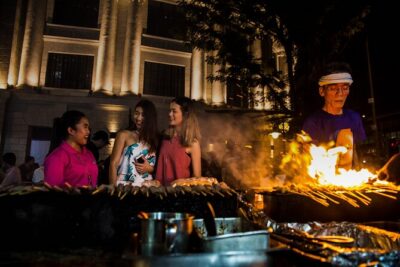 ★ 5.0Small Group: Singapore Street Food & Night Tour with 9 tastingsFrom $791,240 reviews
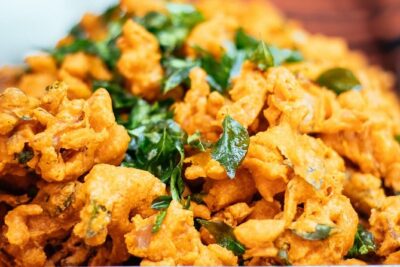 ★ 4.5The Award-Winning PRIVATE Food Tour: 10 Tastings of 3 CulturesFrom $1521,017 reviews
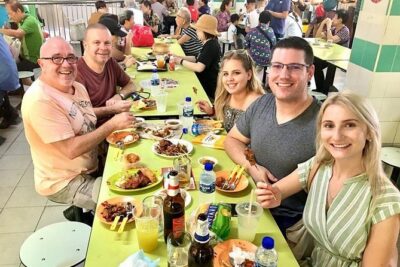 ★ 5.0Chinese, Indian & Arabic Quarters, Culture & Food TourFrom $148789 reviews
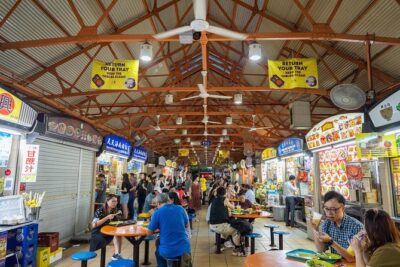 ★ 5.0UNESCO Street Food & Cultural ExperienceFrom $161524 reviews
 ★ 5.0Singapore Market to Table Culinary Experience (Wet Market Tour included)From $112479 reviews
 ★ 5.0Small-Group Food Tour With Hawker Center: Eat Like A LocalFrom $161420 reviews
 ★ 4.5Guided Street Food Tour at NightFrom $72393 reviews
Browse the lists this tour appears in