
Reviewed · HISTORY & WARTIME TRAILS
Singapore Group History & Culture Walking Tour
Singapore at night feels different, and this tour shows why. You get big skyline drama plus the everyday stuff locals actually eat and drink, all in one smooth 4.5-hour loop. Two highlights I love are the bumboat ride along the Singapore River and the chicken rice dinner at a real hawker center. One thing to consider is the walking: you’ll cover close to 9 km, even at a slow pace.
The payoff is how the pieces connect. You’ll hear how Singapore’s story stretches from colonial times and wartime occupation to modern nation-building, while you hop between landmarks like St Andrew’s Cathedral and Marina Bay waterfront viewpoints. If that walking distance or evening crowds near the water aren’t your thing, a shorter private option would suit you better.
In This Review
- Key Points at a Glance
- A Night Tour Built Around Food, Water, and Turning Points
- Price and Value: What $126.05 Covers (and Why It Matters)
- Walking Reality Check: 9 km Is the Real Schedule
- Getting Oriented at City Hall: Start Where Singapore Reinvented Itself
- St Andrew’s Cathedral Since 1836: An Old Western Landmark in a New City
- Former City Hall as a National Monument: Colonial and Wartime Threads
- National Gallery Singapore: Singaporean Art on a Major Scale
- Clarke Quay and the Singapore River: Trade, Boats, and River-Made City Life
- The Bumboat Cruise: The Most Relaxed 30 Minutes of Your Evening
- Merlion Park to Esplanade Park: Sunset Views With Context
- Marina Bay Waterfront and Fullerton Waterboat House: Architecture You Can Read
- Pinnacle @ Duxton Sky Gardens: Public Housing as a Modern City Signal
- Maxwell Food Centre: The Chicken Rice Dinner That Grounds the Story
- Tea Chapter Tasting: How an Imperial Tea Story Ends Your Evening
- Small-Group Benefit: Why This Feels Personal
- Who Should Book This Tour (and Who Might Skip It)
- Should You Book? My Decision Shortcut
- FAQ
- How long is the Singapore Group History & Culture Walking Tour?
- Where does the tour start and where does it end?
- What’s included in the price?
- How much walking is involved?
- Is the tour suitable for young children?
- What happens if the Pinnacle rooftop is closed?
Key Points at a Glance
- Small group (max 9) for an easier pace and more chances to ask questions
- Bumboat cruise included for a classic river perspective without the hassle
- Chicken rice dinner + sugar cane juice as a grounded local-food experience
- Tea tasting with a take-home souvenir, including an Imperial-tea connection
- Downtown landmarks timed for night views, especially around Marina Bay
- 9 km walking requirement, so plan shoes and energy like it matters
A Night Tour Built Around Food, Water, and Turning Points
Singapore’s history isn’t stuck behind glass. It’s right there on the streets, and this evening tour is built to help you notice it while you’re moving.
I like that the day’s usual theme—just museums or just views—isn’t the whole story. You start in the Civic District, shift through colonial-era landmarks, then move toward the river and Marina Bay for sunset-to-night energy. And you don’t just snack. You get a proper hawker dinner (chicken rice) and a traditional tea tasting with a souvenir.
The other reason this works so well for first-time visitors: it’s paced like a conversation, not a checklist. You’ll see major stops, sure, but each one is tied to a larger story about how Singapore became the city you recognize today.
Price and Value: What $126.05 Covers (and Why It Matters)
At $126.05 per person, this isn’t the cheapest way to “see downtown.” But the value is in what’s included and how much you can compress into one evening.
Here’s what’s bundled:
- Dinner: chicken rice (served at a hawker center)
- Sugar cane juice
- A traditional tea tasting plus a take-home souvenir
- A professional guide
- All taxes, fees, and handling charges
- A bumboat river cruise cost included in the tour
When you’re paying for a guide in Singapore, you’re mainly paying for context—what you’re looking at and why it matters. You’ll also pay less time figuring things out yourself because you’re following a guided route through landmarks that would take longer to stitch together on your own.
If you already plan to eat at hawker centers and do a river cruise anyway, this package becomes much easier to justify. If your ideal trip is more “sit and stare,” then the walking load may make it feel expensive for what you actually enjoy.
Further back into the island story, war years included
Walking Reality Check: 9 km Is the Real Schedule
This tour is rated for travelers with a moderate fitness level, and the big constraint is explicit: you must be able to walk about 9 km. They do keep a slow casual pace and there are lots of stops, but the distance still adds up.
If you tire easily, you’ll feel it by late afternoon. My practical advice:
- Wear comfortable shoes that you can walk in for hours
- Bring a light layer for evening air near the river
- If you want to reduce walking, consider a private version so you can use occasional taxis at your own expense
It’s also not set up for kids under 6 because of the walking requirement. For vegetarian diners, they’ll try to get you something at the hawker center, but they can’t promise specific items or availability.
Service animals are allowed, and the tour is near public transport. You’ll still want to plan as if you’re doing a long city walk, because that’s exactly what it is.
Getting Oriented at City Hall: Start Where Singapore Reinvented Itself
The tour begins at City Hall (150 N Bridge Rd) at 3:30 pm, and it finishes in Chinatown around 8 pm.
That timing matters. Starting in late afternoon gives you two useful things:
- You see key civic buildings while streets are calmer than night rush.
- You reach the Marina Bay area in time for sunset shifting into nighttime lights.
The route also has a nice “zoom in, then zoom out” rhythm. You’re not just stepping from one photo spot to another. You’re learning how planning and power decisions shaped the city’s layout—then you walk into the areas that reflect trade, housing, and modern identity.
St Andrew’s Cathedral Since 1836: An Old Western Landmark in a New City
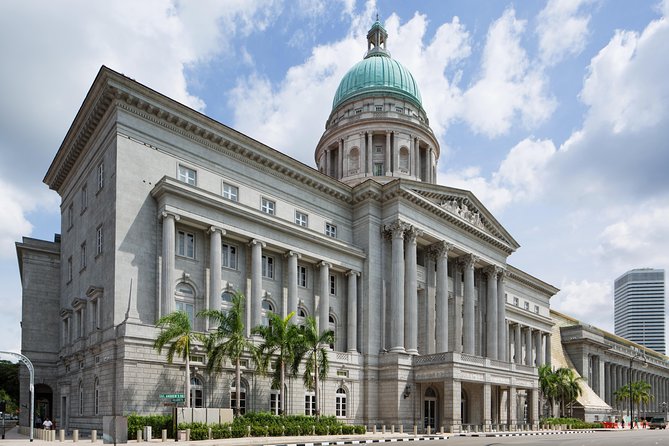
One of the early stops is St Andrew’s Cathedral, described as the oldest Western religious building in Singapore. It’s also the largest in Singapore, and the site has existed since 1836.
The cool part here isn’t just the architecture. It’s the contrast: you’re standing in a space with deep colonial-era roots while Singapore’s skyline and political story keep rolling forward around it. This is a good stop for people who like their history grounded in real streets, not just dates.
Expect a quick but meaningful pause—enough time to look up, notice details, and get the “why it matters” explanation before you keep walking.
Shophouse streets reward slow feet, keep going
- Singapore: Private Walking Tour with a Local★ 4.7 · 410 reviews
- Private Customised Singapore Walking Tour★ 5.0 · 370 reviews
- Singapore: Chinatown, Little India, Arab Street Walking Tour★ 4.9 · 207 reviews
- Singapore: Chinatown and Little India Guided Walking Tour★ 4.8 · 190 reviews
Former City Hall as a National Monument: Colonial and Wartime Threads
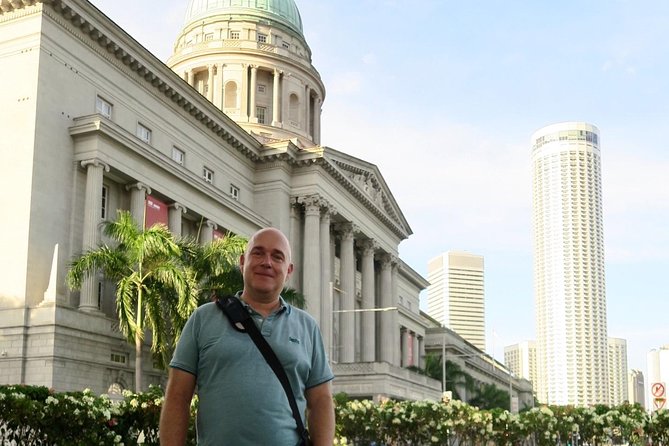
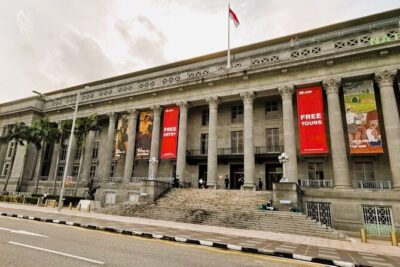
Next you visit Former City Hall, now a national monument. The building dates to 1926, and the story connected to it includes Singapore’s colonial past, the Japanese occupation, and the path leading toward independence.
What I like about this kind of stop is that it turns a big, impressive structure into something human. You’re not only admiring the facade; you’re learning how government buildings were used, damaged, repurposed, and remembered.
You’ll get a short visit, but it’s designed to set up the later “modern Singapore” moments so the story doesn’t feel disconnected.
National Gallery Singapore: Singaporean Art on a Major Scale
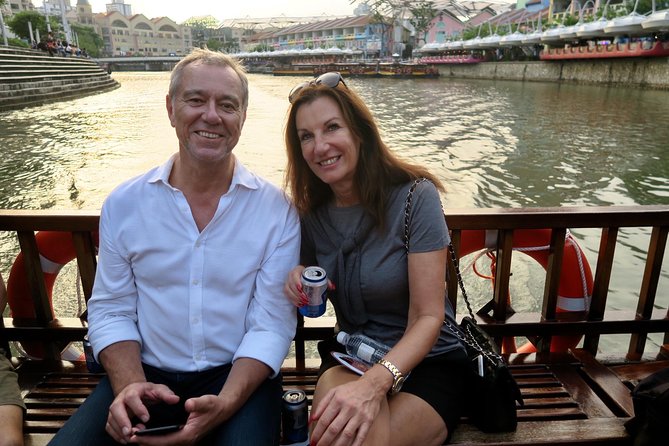
At National Gallery Singapore, you’re looking at more than a few exhibits. It’s highlighted as overseeing the world’s largest public collection of Singaporean and Southeast Asian art, with over 8,000 artworks.
This stop works for two types of people:
- If you like art, you’ll appreciate the scale and the sense that Singapore’s identity isn’t only about politics and skyline engineering.
- If you’re more history-focused, you still get a reminder that culture matters in how a place defines itself.
It’s a quick stop, so don’t expect a full museum session. Instead, think of it as a guided orientation moment—what to look for, and what kind of stories the collection tends to tell.
Clarke Quay and the Singapore River: Trade, Boats, and River-Made City Life
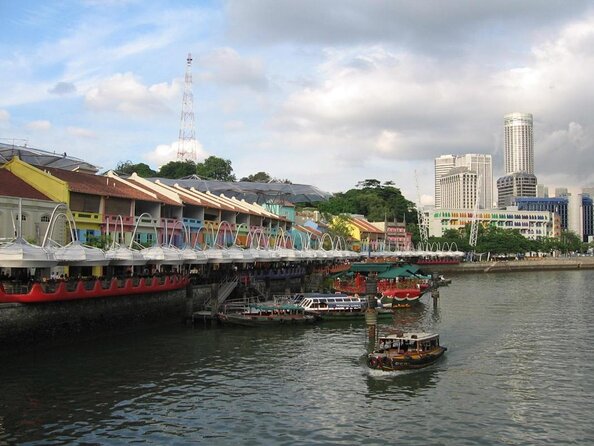
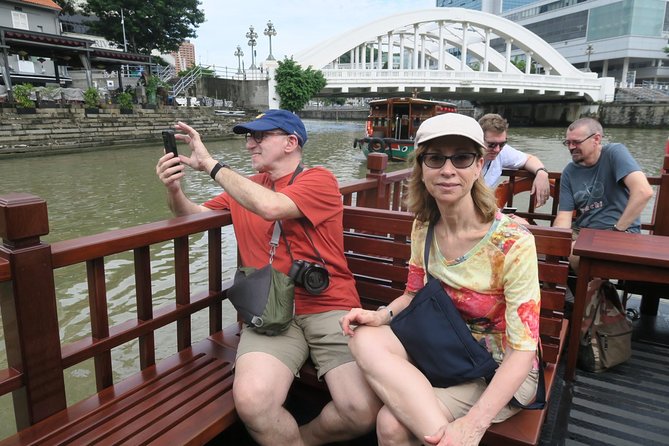
When you reach Clarke Quay, you’re walking along the Singapore River and learning how early traders built businesses along the water.
This is where the tour starts feeling more lived-in. The river is not just scenery—it’s a working part of how Singapore grew. The guide’s explanations help you connect the old commercial role of the river to what you see today.
Then comes the big practical highlight: the bumboat river cruise.
The Bumboat Cruise: The Most Relaxed 30 Minutes of Your Evening
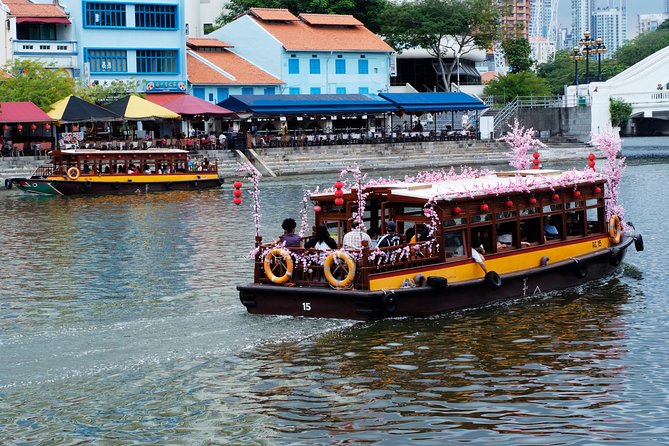
Boarding a traditional-style bumboat for a ride along the Singapore River is one of the smartest inclusions on this tour. You get to slow down while still covering iconic areas you’d otherwise work hard to view from shore.
You’ll have about 30 minutes on the water, with the cost included. Even if you’ve visited other ports and river rides, this one is worth it because Singapore’s riverfront is so tightly tied to the city’s story—from trade to modern redevelopment.
My advice: don’t rush this segment. Look up from your phone for a moment and try to picture what cargo and visitors might have looked like back when the river was the main route.
Merlion Park to Esplanade Park: Sunset Views With Context
The tour brings you to Merlion Park for a sunset-style view over Marina Bay, with a focus on the “mega construction project” behind the dramatic setting.
From there, you head to Esplanade Park, described as one of Singapore’s oldest parks. You’ll also reflect on contributions made to Singapore by many great men at memorials located here.
This pair of stops works because they’re visual and conceptual. One is about the skyline and modern engineering; the other is more reflective and grounded. Together, they help you see why people talk about Singapore as a planned, engineered city—and how memory is built into public space.
Marina Bay Waterfront and Fullerton Waterboat House: Architecture You Can Read
Next you walk the Marina Bay waterfront, where you get to see distinctive architectural icons up close while you stroll.
Then you check out the Fullerton Waterboat House, located near Merlion Park at the mouth of the Singapore River. It’s associated with the Fullerton Bay Hotel and was built in the 1940s.
I like stops like this because the buildings make more sense once you’ve already heard the bigger “how Singapore changed” story. By this point, you’re better at noticing what’s old, what’s preserved, and what’s rebuilt.
Pinnacle @ Duxton Sky Gardens: Public Housing as a Modern City Signal
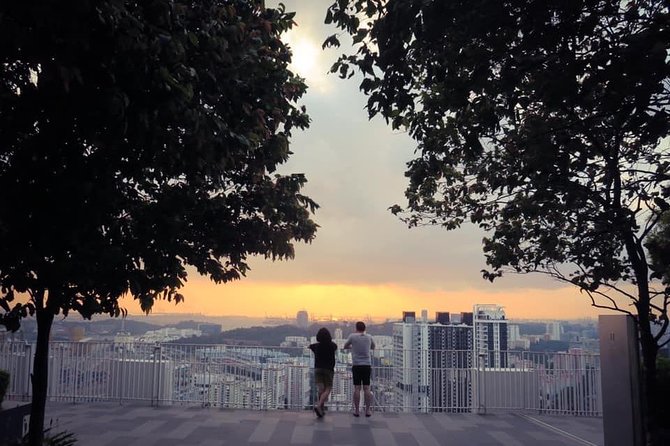
One of the most surprising stops for many first-timers is The Pinnacle @ Duxton, a 50-story residential development in the city center.
The big draw here is that it features the world’s two longest sky gardens—500 meters each—on the 26th and 50th floors. Even though it’s residential, the tour treats it like a landmark because it represents a very Singapore-style idea: housing isn’t only practical. It’s designed, shared, and meant to shape community life.
There’s also a weather rule worth knowing. If the rooftop area is closed due to bad weather, the tour will take you to a different HDB building instead. So you won’t be left out entirely.
If you’re interested in how Singapore manages density without pretending people don’t live there, this stop is a strong one.
Maxwell Food Centre: The Chicken Rice Dinner That Grounds the Story
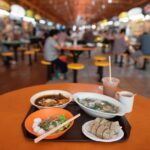
Now for the meal. You go to Maxwell Food Centre (in the Chinatown area) to enjoy chicken rice and to wash it down with sugar cane juice with lemon.
This is one of the tour’s most valuable parts because it forces you to experience the city the way many locals do: fast, practical, and social. Chicken rice is the kind of dish that becomes more than food when you’re learning a country’s daily habits alongside its national decisions.
A quick practical note: hawker centers can get crowded, and ordering can be a bit chaotic if you’re unfamiliar with how they work. The guide helps you navigate the moment so you’re not spending your dinner time figuring out where to stand and what to ask for.
If you’re vegetarian, they’ll promise to get you something at the hawker center, but it might be fairly basic, like rice and vegetables, depending on what’s available.
Tea Chapter Tasting: How an Imperial Tea Story Ends Your Evening
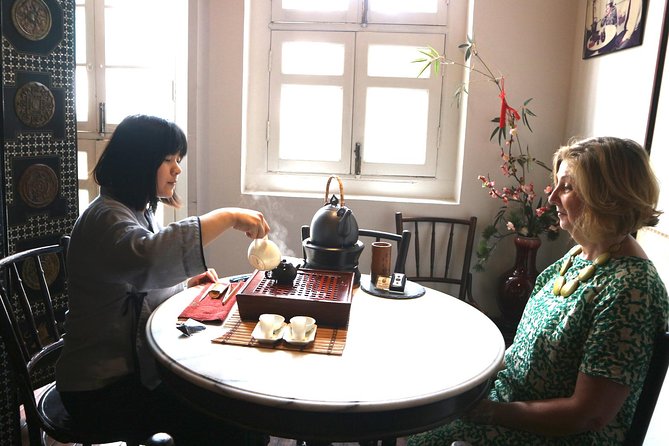
Your last stop is the Tea Chapter tea house, where you do a traditional tea tasting experience. This includes a take-home souvenir, and it’s connected to an Imperial tea that Queen Elizabeth II was served in the same tea house.
What I like about this ending is that it changes the pace one last time. After walking, river air, and hawker energy, the tea ceremony gives you quiet structure and a chance to ask questions in a comfortable setting.
If you’re the type who forgets to slow down on trips, this is a good moment to do it. You’re not just consuming the city’s highlights—you’re letting the evening cool off before heading back to your hotel.
Small-Group Benefit: Why This Feels Personal
This is capped at 9 travelers, which makes a big difference in practice. It’s easier to keep the group together on busy streets, and it’s easier for you to ask follow-up questions when something clicks—or when it doesn’t.
In addition, several guides who have led this experience by name are known for being energetic and detail-focused, including Kavin, Pam, RK, Gee, Gee Soo, Su, Gene, Bibi, and Darryl. You can reasonably expect a guide who knows how to connect the dots between architecture, politics, and daily life.
That’s the real “tour” value here: it’s not only where you go. It’s how the guide helps you see what you’re looking at.
Who Should Book This Tour (and Who Might Skip It)
This is a strong choice if:
- You’re visiting Singapore for the first time and want major downtown landmarks plus local food in one evening
- You care about how Singapore changed from “third world to first world” in one generation, explained in plain language
- You like a hands-on experience: river cruise, hawker dinner, and tea tasting
- You’re comfortable with walking close to 9 km
You might skip it if:
- You want mostly sitting and minimal walking
- You travel with very young kids who can’t meet the walking requirement
- You’re sensitive to evening crowding near popular waterfront areas (since you’ll be around Marina Bay and the river)
Should You Book? My Decision Shortcut
Book this tour if you want the most efficient way to understand Singapore after dark—history with context, a real meal, and the river view that makes the city feel like itself.
Consider an alternative if you’re worried about distance. With the walking requirement built in, comfortable shoes aren’t optional. If you can handle the pace, you’ll leave with a clearer sense of how Singapore’s past and present sit next to each other, not just in museums, but in everyday life.
FAQ
How long is the Singapore Group History & Culture Walking Tour?
The tour lasts about 4 hours 30 minutes.
Where does the tour start and where does it end?
It starts at City Hall (150 N Bridge Rd, Singapore) at 3:30 pm and finishes in Chinatown. The tour description notes the meeting point at City Hall and that your guide will provide directions back to your hotel from the finish area.
What’s included in the price?
Dinner (chicken rice), sugar cane juice, a professional guide, a traditional tea tasting with a take-home souvenir, taxes/fees/handling charges, and the bumboat river cruise cost.
How much walking is involved?
You should be able to walk about 9 km. The pace is described as slow and casual, but the distance is part of the requirements.
Is the tour suitable for young children?
It’s not suitable for under 6’s due to the walking requirement. If you have young children, the guidance is to book a private tour instead.
What happens if the Pinnacle rooftop is closed?
If the rooftop of The Pinnacle is closed due to bad weather, the tour will take you to a different HDB building.
Walks That Earn the Humidity

Old Singapore, Retold

Fresh Reviews from the Little Red Dot
- Night Safari Tickets with Tram Ride
★ 4.5 · 3 reviews - Singapore: Architecture and Food Tour with Tastings
★ 5.0 · 3 reviews - Singapore Private Full-Day Sightseeing Tour
★ 5.0 · 3 reviews - Private Chinatown Heritage Tour with Best 8 Local Tastings
★ 5.0 · 3 reviews
History & Wartime Trails, compared.
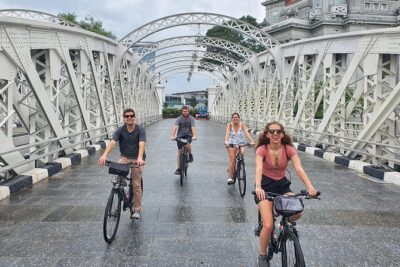 ★ 5.0Historical Singapore Bike Tour on Full-Sized BicyclesFrom $641,421 reviews
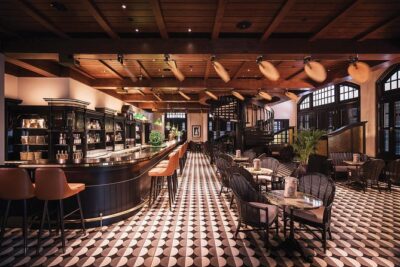 ★ 3.5Nightout at Colonial Charms of the CityFrom $135733 reviews
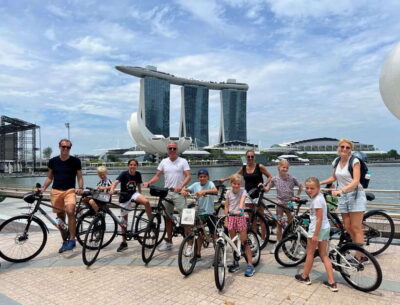 ★ 4.8Historical Half-Day Bike TourFrom $63399 reviews
 ★ 5.0Singapore Private Food, Culture and Heritage Tour with 9 tastingsFrom $185394 reviews
 ★ 5.0Chinatown Historic Walking Tour with LunchFrom $54134 reviews
 ★ 4.5Disappearing TradesFrom $112126 reviews
 ★ 5.0Of Graves, Guns & Battles™: A Tour of Fort Canning HillFrom $79106 reviews
 ★ 5.0Splendour of Colonial Singapore Walking Tour with LunchFrom $4982 reviews
Browse the lists this tour appears in