
Chinatown can feel like a living set. This Streets Alive Singapore walk uses live performers plus VR at key stops, turning familiar sights into a story you follow on foot. I like that it pairs local culture with modern tech without asking you to ignore either one.
I also like the tight pacing for a 2.5-hour tour: you cover three major Chinatown anchors in a way that feels structured but not rushed. And the group stays small, with a maximum of 15 people, so the experience is easier to manage than the usual big-bus crowd.
One thing to consider: the tour ends at the famous Nanyang Old Coffee, so plan to have time after the walk if you want a proper sit-down. Also, there’s at least one very negative review complaining about meeting-point communication, so double-check the exact instructions you receive after booking.
In This Review
- Quick hits before you go
- How live theater and VR fit into a Chinatown walking tour
- Start at Telok Ayer, end at Smith Street and Nanyang Old Coffee
- Stop 1 at Thian Hock Keng Temple: history plus VR sight and sound
- Stop 2 at Singapore City Gallery: how Singapore changed over 50 years
- Stop 3 on Sago Lane to Buddha Tooth Relic Temple and Museum
- Price and value: what $129 buys for 2.5 hours with VR
- Who this tour suits best (and who might not love it)
- A heads-up on meeting-point communication
- Should you book the Streets Alive Singapore Chinatown Walking Tour?
- FAQ
- How long is the Streets Alive Singapore Chinatown walking tour?
- Where do you meet and where does the tour end?
- How many people are in a group?
- What ticket do I receive?
- Is admission included for the stops?
- Can I get a refund if I cancel?
Quick hits before you go
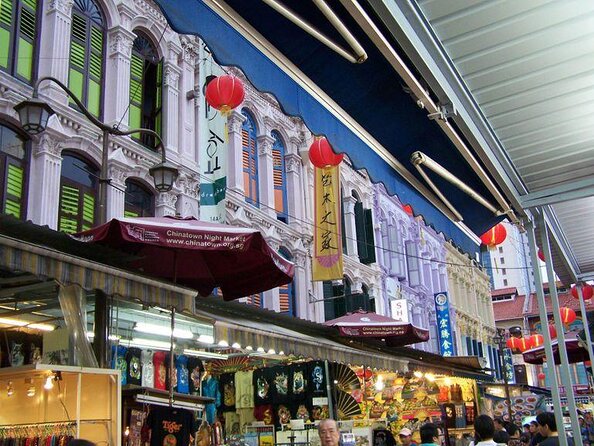
- Live performers in Chinatown: whimsical characters interact while you walk, adding a theatrical layer to heritage sites.
- VR moments at Thian Hock Keng Temple: the VR portion includes sight and sound elements tied to the temple.
- Singapore City Gallery stop: a focused look at physical change over the last 50 years and what planning has shaped next.
- Sago Lane + Buddha Tooth Relic Temple: you move from local backstreet context to a major landmark and museum area.
- Small group size (max 15): easier flow and less chaos around transitions between stops.
- Mobile ticket: you’ll use it on the go, so keep your phone handy.
How live theater and VR fit into a Chinatown walking tour
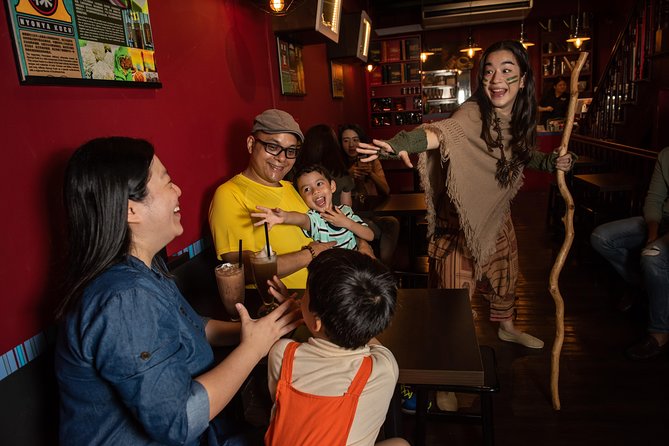
This is not your standard walk where you just listen and take photos. The core idea here is that you’re led through Chinatown while something extra happens around you. The tour description promises characters come alive and interact as you go, and that you’ll get a Virtual Reality experience that takes you into an alternate dimension.
What that means for you on the ground: you’re not only learning facts about the neighborhood. You’re getting guided moments designed to make the area feel like a story world. If you’re the type who likes travel that’s a bit playful (and not only solemn), that’s a big part of the appeal. If you’re more of a quiet-observer, you may still enjoy it, but you might find the character-driven approach a little more staged than you’d normally choose.
The tour also explicitly frames the experience as a pairing of modern technology and traditional culture. That’s the balancing act. You’re visiting heritage sites, but the way you experience them includes VR overlays and performance energy, not just signage and audio.
Start at Telok Ayer, end at Smith Street and Nanyang Old Coffee
Logistics matter here because the tour has a clear start and end point. The meeting point start is listed as Telok Ayer. The walk ends at Smith Street (Smith St) at the heart of Chinatown, specifically near the famous Nanyang Old Coffee.
Why that matters: Chinatown’s sights are close enough to explore by foot, but the day will feel like a route. You’ll want to plan what you’ll do after the tour. Since the ending point is a known coffee stop, it’s a natural place to pause, recharge, and process what you just did.
Timing-wise, you’re looking at about 2 hours 30 minutes. That’s long enough to feel like a real walk, short enough that you’re not committing your whole afternoon. The tour also notes that it’s near public transportation, which makes it easier to plug into the rest of your Singapore plan.
You’ll receive confirmation at booking, and you’ll use a mobile ticket, so I’d treat your phone as part of the itinerary. If your phone battery is weak, charge it before you head out.
Chinatown holds more lanes than one afternoon
Stop 1 at Thian Hock Keng Temple: history plus VR sight and sound

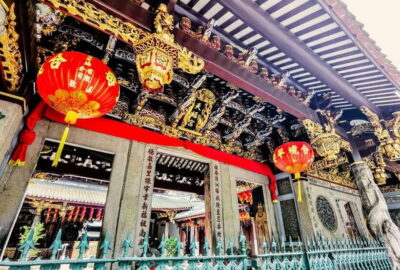
Your first stop is Thian Hock Keng Temple. This is described as Singapore’s oldest Hokkien temple, and the guide will cover its history, its architecture, and its symbolic meaning in modern society. That’s the traditional side of the equation: you’re getting context for why this temple matters and what you’re looking at.
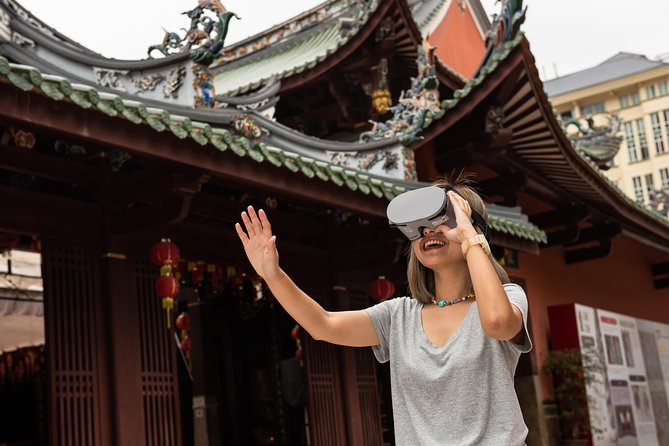
Then comes the VR component tied directly to the temple. The tour description notes that through VR technology, tour goers can see and hear a related experience. You’re not just listening to explanations while standing in the courtyard. You’re being prompted to experience something alongside what you’re seeing.
What I’d watch for as you arrive: don’t treat the VR moment as a separate show that happens somewhere else. The way the tour frames it suggests it’s meant to connect to what you learned moments earlier—history, architecture, and meaning—so your attention will be rewarded if you pay attention during the temple narration.
Time on this stop is listed as about 20 minutes. That’s enough for basic orientation plus the VR segment, but it’s not a long, slow temple sit. If you prefer long quiet time for photos and reading, this might feel like a faster entry than you’d do on your own.
Also note: the stop is listed with admission ticket free. That’s good value for you because it reduces extra ticket management on the day.
Stop 2 at Singapore City Gallery: how Singapore changed over 50 years
Next up is the Singapore City Gallery. This stop is designed to give you context for why today’s Chinatown sits where it sits and why the city looks the way it does.
The description highlights two specific themes: the physical transformation of Singapore in the last 50 years, and insight into city planning plus future developments. This is a different kind of learning than temple architecture. It’s more about big-picture change—how a city reorganizes itself across decades.
The time here is about 15 minutes, and it’s listed as admission ticket free. So you get a meaningful chunk of perspective without spending the full day inside a museum-style setting.
Practical note: because this is shorter and more concept-focused, I suggest you use this stop to frame the rest of what you’ll see. Once you know the city is shaped by planning decisions over time, the street-level details of Chinatown start to feel less random and more like outcomes of a long process. Even if you’re not a policy nerd, that kind of framing can make the sights click.
Stop 3 on Sago Lane to Buddha Tooth Relic Temple and Museum
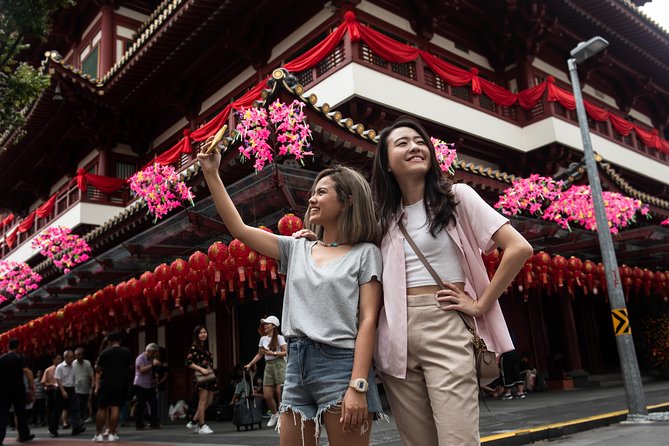
The final stop is Buddha Tooth Relic Temple and Museum. The tour route includes a walk along Sago Lane, which the description mentions became more famous (or infamous) for death houses.
Then you reach the iconic Buddha Tooth Relic Temple. This is where you shift back from broader city change to a specific, recognizable landmark. The tour description includes both the temple experience and the museum component, so you’re not only looking at exterior architecture.
Time is listed as about 10 minutes for this stop. Ten minutes is short for any temple complex if you want to read everything slowly. If you’re the type who loves museums, you may want to plan extra time after the tour if the museum part sparks your interest.
Like the earlier stops, this one is also listed with admission ticket free. That’s another value point baked into the experience structure.
Shophouse streets reward slow feet, keep going
- Singapore: Private Walking Tour with a Local★ 4.7 · 410 reviews
- Private Customised Singapore Walking Tour★ 5.0 · 370 reviews
- Singapore: Chinatown and Little India Guided Walking Tour★ 4.8 · 190 reviews
- Singapore: Customized Private Tours (Car/Bus/Walking)★ 5.0 · 181 reviews
Price and value: what $129 buys for 2.5 hours with VR
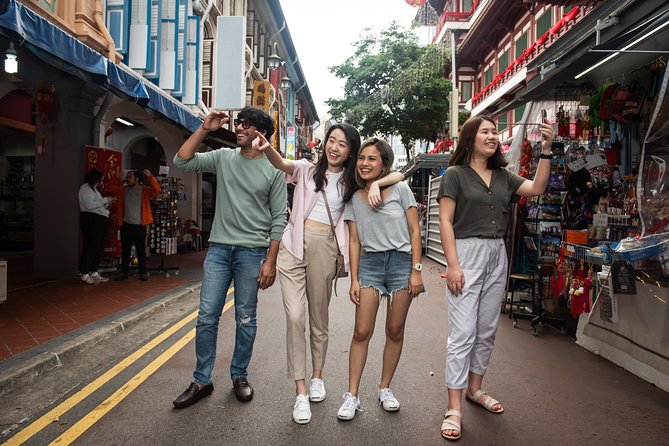
At $129, this tour isn’t a budget “walk and talk.” It’s priced like an attraction that includes production elements: live performers and VR.
Here’s what you’re effectively paying for, based on the details you’ll actually experience:
- Live performers that interact with the group while you’re walking
- VR technology used during the tour, including at Thian Hock Keng Temple
- A guided route that covers three named stops in Chinatown
- Admission ticket free listings for each of the stops
- A small group size (max 15), which usually translates into smoother logistics and a more controlled experience flow than large groups
So is it worth it? I think it is if you want culture plus production. If you love street-level history but also enjoy tech-forward moments—VR layered onto real places—this will feel like you’re getting a full experience, not only a guided lecture.
If, on the other hand, you prefer learning through quiet observation and reading at your own speed, you might feel like the VR and performer elements take time away from deep slow exploring. Since the temple and museum stops are relatively short, you should assume you’ll get a taste, not a thorough linger.
Who this tour suits best (and who might not love it)
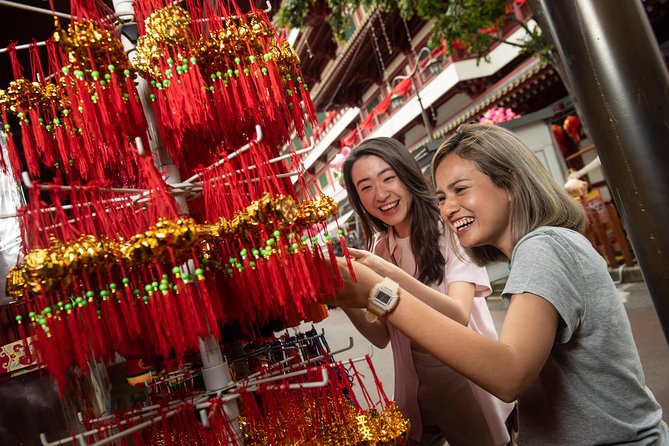
This works best for you if:
- You enjoy VR and interactive experiences paired with real locations
- You want a structured itinerary covering multiple Chinatown landmarks without figuring it out yourself
- You like learning through a guided story, not only through facts on signage
It might feel less ideal if:
- You dislike being in a staged, character-driven experience
- You strongly prefer museums at a slow pace, because the final stop is listed at 10 minutes
- You want purely independent sightseeing. This is a route, with a planned start and end, and the experience is paced accordingly
There’s also a note that most travelers can participate. That’s helpful. But since the tour includes VR, if you have concerns about motion, screens, or anything tech-related, think it through before you book.
A heads-up on meeting-point communication
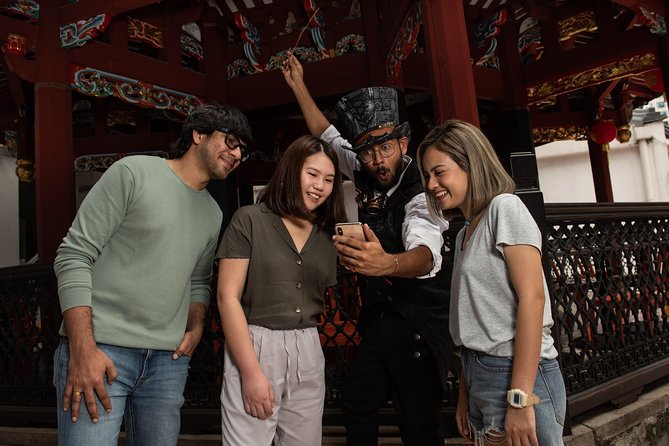
I’m going to be blunt here because it affects your day. The overall rating is 4.4 from 7 reviews, but there’s at least one very low review complaining about lack of response from the tour operator about where to meet. In other words: meeting-point clarity is something you should take seriously.
My practical advice: after you book, check the confirmation message you receive and save it. If you can access a mobile ticket and exact starting location details in your booking info, use that. Don’t assume you’ll guess it easily on the day—Telok Ayer and Chinatown are close, but you still want precision.
Should you book the Streets Alive Singapore Chinatown Walking Tour?
Book it if you want Chinatown that goes beyond standard explanations. Live performers plus VR at real heritage stops is the main selling point here, and the itinerary is designed to give you a quick but structured taste of temple history, city planning context, and a major landmark ending near Nanyang Old Coffee.
Hold off if you mostly want quiet, self-paced sightseeing or you dislike tech-based attractions. The stops are short by design, so you’ll likely finish with interest that you might want to extend on your own.
If you decide to go, I’d do one last thing before you head out: double-check the start location details in your booking confirmation and keep your phone charged for the mobile ticket.
FAQ
How long is the Streets Alive Singapore Chinatown walking tour?
It runs for about 2 hours 30 minutes (approx.).
Where do you meet and where does the tour end?
The start is listed as Telok Ayer Singapore. The tour ends at Smith Street (Smith St), at the heart of Chinatown near Nanyang Old Coffee.
How many people are in a group?
The tour has a maximum of 15 travelers.
What ticket do I receive?
You get a mobile ticket.
Is admission included for the stops?
The itinerary lists admission ticket free for Thian Hock Keng Temple, Singapore City Gallery, and Buddha Tooth Relic Temple and Museum.
Can I get a refund if I cancel?
No. The experience is non-refundable and cannot be changed for any reason.
Walks That Earn the Humidity



Chinatown, Lane by Lane


Fresh Reviews from the Little Red Dot
- Night Safari Tickets with Tram Ride
★ 4.5 · 3 reviews - Singapore: Architecture and Food Tour with Tastings
★ 5.0 · 3 reviews - Singapore Private Full-Day Sightseeing Tour
★ 5.0 · 3 reviews - Private Chinatown Heritage Tour with Best 8 Local Tastings
★ 5.0 · 3 reviews
Chinatown Tours & Tastings, compared.
 ★ 5.0Chinatown, Little India, Kampong Gelam City Highlights TourFrom $80224 reviews
 ★ 5.0Chinatown Hawker Market Food Tour with 7 Food TastingsFrom $146213 reviews
Chinatown, Little India, Arab Street Walking TourFrom $53207 reviews
★ 5.0Chinatown Hawker Market Food Tour with 7 Food TastingsFrom $146213 reviews
Chinatown, Little India, Arab Street Walking TourFrom $53207 reviews
 ★ 4.8Chinatown and Little India Guided Walking TourFrom $78190 reviews
 ★ 5.0Chinatown Historic Walking Tour with LunchFrom $54134 reviews
 ★ 5.0Chinatown Hawker Food Tasting TourFrom $8896 reviews
 ★ 4.5Kampong Glam, Little India & Chinatown with Local Street Food TastingsFrom $17770 reviews
 ★ 5.0Chinatown Heritage Centre (Admission Ticket)From $2065 reviews
Browse the lists this tour appears in