

Reviewed · HISTORY & WARTIME TRAILS
Exploring Singapore’s Forgotten Hills
A good morning walk in Singapore should give you both air and answers. This one threads nature trails with big historical backdrops, from hilltop views down to the mangroves at Labrador. I like that the pace is active but not brutal, and the guide turns each stop into a story you can actually picture. You’ll also get rarely talked about corners of the city that feel calmer than the usual tourist routes.
Two things I really like: the views at the start, and how the guide connects plants, places, and Singapore’s layered past. You’ll learn about local flora and fauna, plus the British colonial period and the Japanese occupation in WWII—then tie it to today’s shipping footprint. One consideration: it’s a moderate hill walk, so if stairs make you slow, build in extra time for the photo stops.
In This Review
- Key highlights you’ll feel on this walk
- Why this route feels different from a typical Singapore walk
- Starting at Harbourfront and setting your expectations
- Mount Faber: the easy climb that rewards you fast
- Southern Ridges: nature trails plus built heritage
- Henderson Waves: Singapore’s highest pedestrian bridge moment
- Labrador Nature Reserve: mangroves you can actually see
- The 140-year-old fort at Labrador: when history becomes physical
- What you’ll learn: stories that connect school, empire, and today
- Group size and why it changes the whole vibe
- Weather matters more than you think
- Price and value: $64.38 for a guided, multi-spot morning
- Who should book this walk (and who might not)
- Quick take on the logistics that actually matter
- Should you book this tour of southern Singapore’s forgotten hills?
- FAQ
- What’s the duration of the walking tour?
- Where does the tour start and end?
- Is the tour suitable for people with moderate fitness?
- How many people are in the group?
- What does it cost?
- Are there admission tickets required for the stops?
- What happens if the weather is poor?
Key highlights you’ll feel on this walk
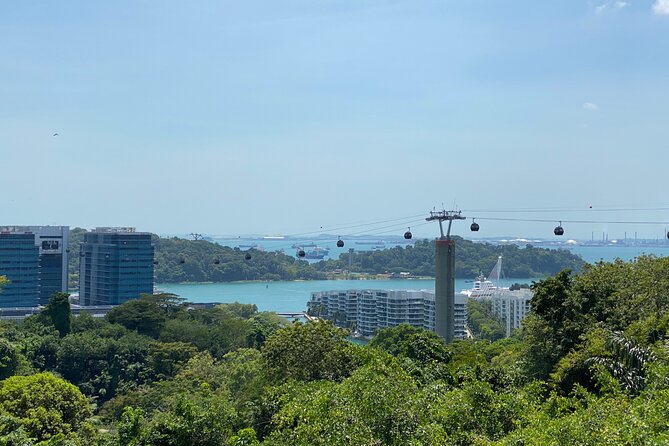
- Hilltop harbour views at Mount Faber and the Southern Ridges set the tone fast.
- Henderson Waves gives you a memorable photo pause on Singapore’s highest pedestrian bridge.
- Mangroves at Labrador Nature Reserve let you see one of the last remaining wetland areas in the south.
- A 140-year-old military fort at Labrador adds real texture to the nature visit.
- Small groups (max 8) mean it’s easier to ask questions and go at a steady pace.
Why this route feels different from a typical Singapore walk
Southern Singapore has a way of making the city feel smaller. Instead of racing from landmark to landmark, this walk moves along ridges, bridges, and coastal nature areas, where the terrain does some of the work for you. You get a clear sense of how Singapore grew—from fishing village origins to a major transshipment hub—without needing a museum ticket and a long commute.
The best part is that nature here isn’t treated like a break from history. The route keeps linking what you’re seeing—trees, mangroves, and shoreline edges—to why the area mattered. And because the tour runs as a small group (up to 8), it feels more like a guided stroll with focus than a lecture line.
Starting at Harbourfront and setting your expectations
You begin near Harbourfront Singapore at 8:30 am, then finish outside Labrador Park MRT station on the Circle Line. That one-way flow is handy: you don’t have to backtrack across town at the end when your legs are already negotiating with you.
The walk is set for moderate physical fitness, with a 3 hours 30 minutes duration including the key stops. Expect stairs and uphill sections, especially early when you climb toward the ridgeline. The good news: several stops are short enough that you can catch your breath, and the route still makes time for viewpoints and questions.
Further back into the island story, war years included
Mount Faber: the easy climb that rewards you fast
The first stop is Mount Faber Park, accessed via the Marang Trail and aimed at the highest point along the Southern Ridges trail. This is a quick climb, but it’s timed well so you’re rewarded with panoramic views of the harbour and southern seas.
What I like about this kind of start is that it helps you orient your whole visit. From above, you can understand the coastline and shipping areas in a more human way than from ground level. It’s also a nice way to get that morning light and a calmer atmosphere before the midday crowds show up.
Practical note: if you tend to rush uphill, don’t. You’ll want your attention for the guide’s stories and your eyes for the views.
Southern Ridges: nature trails plus built heritage

Next comes the Southern Ridges, where you walk along a section of the trail and learn about both nature and built heritage along the way. This part is less about a single “big moment” and more about steady discovery—tree details, trail context, and the sense of how development and green spaces share the same ground.
This is where the guide’s style really matters. In praised walks, the guide has been described as meticulous in prep, patient with a slower pace, and able to answer a wide range of questions. That matters on a trail like this, because the best Singapore tours aren’t just about points on a map—they’re about noticing.
If you enjoy learning while walking (not after), this segment fits. If you only want one scenic stop, it might feel like a lot of moving; but it’s still a manageable chunk of time.
Henderson Waves: Singapore’s highest pedestrian bridge moment
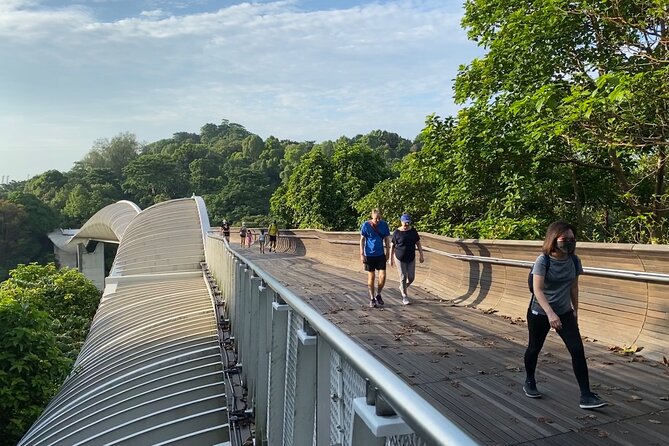
Then you reach Henderson Waves, often singled out for its beauty and photo value. The stop is short—about 15 minutes—but it’s not random. Henderson Waves is Singapore’s highest pedestrian bridge, so even a quick pause gives you a distinctive angle on the surrounding area.
This is a great place to slow down for a few reasons. First, the bridge itself is a landmark you can’t get the same effect from elsewhere. Second, the height makes it easier to spot how the ridges connect, so the earlier trail sections start to feel “mapped” in your head.
If you’re traveling with someone who gets tired easily, this is one of the better moments to lean into the scenery without committing to a long hike.
- Lion City Bike Tour of Singapore★ 5.0 · 6,211 reviews
- Singapore: Gardens by the Bay Bundle Entry Ticket★ 4.3 · 3,726 reviews
- Singapore: Big Bus Hop-On Hop-Off Tour by Open-Top Bus★ 4.5 · 3,261 reviews
- Singapore: Lion City Highlights Bike Tour★ 4.9 · 2,010 reviews
Labrador Nature Reserve: mangroves you can actually see
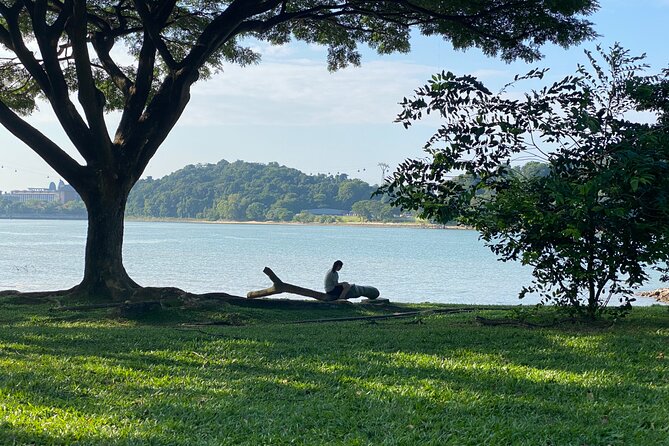
After the bridge, the mood shifts toward water and wetlands at Labrador Nature Reserve. Here you get one of the last remaining mangrove wetland areas in the south, and the stop runs about 45 minutes—long enough to feel like more than a quick photo stop.
Mangroves aren’t just pretty. They’re tied to ecology and coastal protection, and on this walk they’re also paired with military history. That combination is part of what makes the area worth your time: you’re not choosing between nature and heritage. You’re getting both in the same place.
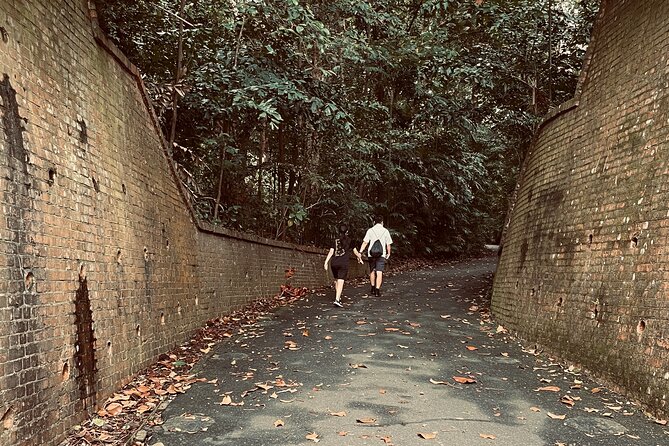
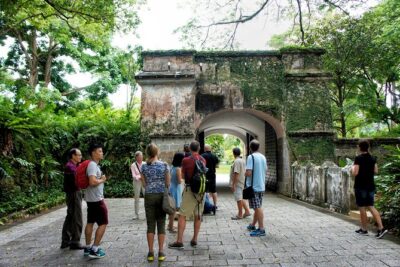
A detail worth knowing: this stop includes a big historical anchor, a 140-year-old military fort built to protect Singapore Harbour. That means you’ll likely spend time connecting what’s around you to why it was here, and not just admire the trees from a distance.
The 140-year-old fort at Labrador: when history becomes physical
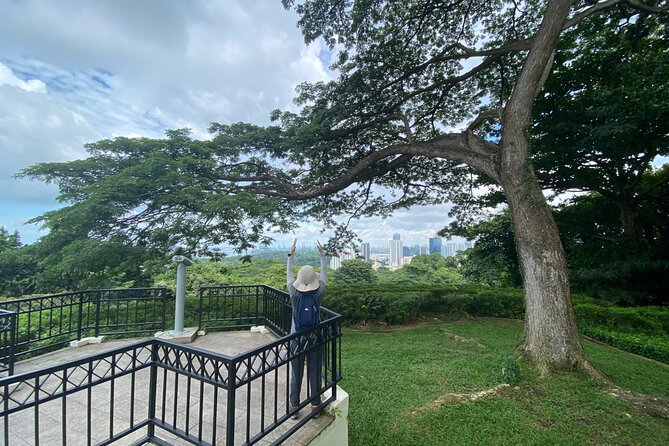
The Labrador portion includes access to (and explanation of) a military fort from roughly 140 years ago. The guide approach is the key: they don’t treat it like a plaque on a wall. Instead, they help you read the site as a defensive coastline tool—how it relates to harbour protection and why the location made sense.
In multiple praised walks, the guide has been described as an illustrated narrator who can connect events across time: British colonial influence, the Japanese occupation during WWII, and even modern links like major port activity. When you’re standing near remnants like this, those stories land differently than they do in a book.
For practical travelers, this also helps you pace mentally. You’re not just watching vegetation; you’re building a storyline that your eyes can support.
What you’ll learn: stories that connect school, empire, and today
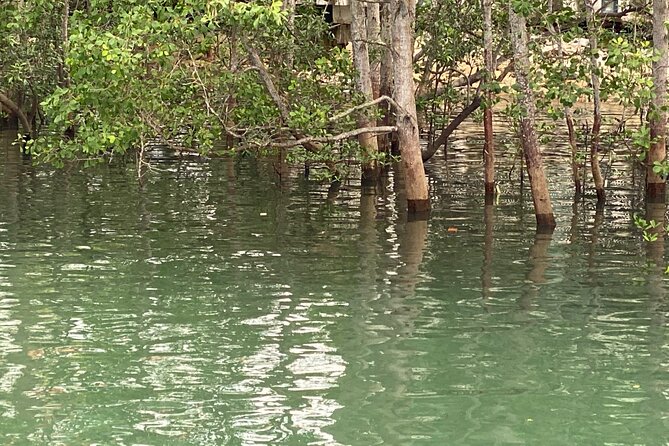
A standout theme in guide praise is how many questions they handle and how broad the history can get—without losing focus. People have credited guides like TC, Tang, and Tuan (names that show up in recent walks) for answering questions, sharing local plant and tree context, and bringing history into a clear timeline.
Some of the topics that have come up in those learning moments include:
- local flora and fauna identification and meaning
- the K-12 education system in Singapore (as part of broader context)
- British colonization
- the Japanese occupation during WWII
- modern shipping relevance tied to Tuas Mega Port
That list isn’t typical “marker-to-marker” tourism. It’s the kind of background that makes a place feel more understandable. If you like turning sightseeing into comprehension, this tour style should appeal to you.
Group size and why it changes the whole vibe
With a maximum of 8 travelers, this isn’t a packed herd. Small groups mean you can hear the guide, take photos without sprinting to catch up, and keep the pace aligned with the group. In praised walks, the guide has been noted as patient with slower pace on stairs and stops for pictures.
This is also why the tour can work for people who are more curious than athletic. If you’re the type who reads the small signs and asks follow-ups, small size helps a lot.
Weather matters more than you think
This experience requires good weather. That’s not just a “comfort” note; it affects traction on trail sections and your ability to enjoy the panoramic stops. If it’s damp or stormy, the outdoor walking becomes less pleasant and less safe.
The good part: if weather causes cancellation, you’ll be offered a different date or a full refund. That’s worth considering because outdoor Singapore can swing quickly from humid to rainy.
Price and value: $64.38 for a guided, multi-spot morning
At $64.38 per person for about 3.5 hours, it’s priced like a quality guided activity. The value boost here is that admission is free at the stated stops, so you’re mainly paying for the guide, pacing, and the interpretation.
You’re also getting a route that would take time to plan yourself: Harbourfront start, hilltop viewpoint sequence, bridge photo moment, then mangroves and a historic fort. If you try to stitch this together alone, you’ll likely spend time researching how the Southern Ridges segments connect and how to manage the one-way finish at Labrador Park.
One more signal: it’s often booked about 46 days in advance. If you have fixed dates, I’d treat that as your reminder to lock it in early.
Who should book this walk (and who might not)
This tour fits well if you:
- want Singapore beyond the usual skyline shots
- like learning as you walk, especially about nature and local history
- enjoy hill views but don’t want a long, hardcore trekking day
- appreciate small group attention
You might rethink it if you:
- can’t handle stairs or sloped paths comfortably
- only want flat, short sightseeing with minimal walking
- prefer self-guided tours with no history narration
Quick take on the logistics that actually matter
You start at Harbourfront Singapore at 8:30 am, and you end outside Labrador Park station on the Circle Line. It’s near public transportation, so you can plan an easy ride to begin—and a straightforward return when you finish.
Also, it’s a mobile ticket setup, which is convenient in Singapore since you’ll be bouncing between transit and walking sections.
Should you book this tour of southern Singapore’s forgotten hills?
If you’re craving a different Singapore day—one where the trail itself sets the rhythm—this is a strong pick. I’d book it when you want a mix of harbour views, mangroves, and a real military site without spending your entire day indoors.
It’s especially worth it if you care about interpretation: the guides credited here are praised for history storytelling, patience on stairs, and answering questions ranging from WWII to local education context. And because the group stays small, you’ll feel like you’re moving through the city with attention, not just following a line.
If you want, tell me your travel dates and your fitness comfort level with stairs. I can suggest the best way to pair this with nearby activities before or after the walk.
FAQ
What’s the duration of the walking tour?
The tour runs for about 3 hours 30 minutes.
Where does the tour start and end?
It starts at Harbourfront Singapore and ends outside Labrador Park station of the MRT Circle Line.
Is the tour suitable for people with moderate fitness?
Yes. The tour is described as suitable for travelers with a moderate physical fitness level, since it includes some walking and stairs.
How many people are in the group?
The maximum group size is 8 travelers.
What does it cost?
The price is $64.38 per person.
Are there admission tickets required for the stops?
Admission tickets are listed as free for the tour stops.
What happens if the weather is poor?
The experience requires good weather. If it’s canceled due to poor weather, you’ll be offered a different date or a full refund.
Old Singapore, Retold




Fresh Reviews from the Little Red Dot
- Night Safari Tickets with Tram Ride
★ 4.5 · 3 reviews - Singapore: Architecture and Food Tour with Tastings
★ 5.0 · 3 reviews - Singapore Private Full-Day Sightseeing Tour
★ 5.0 · 3 reviews - Private Chinatown Heritage Tour with Best 8 Local Tastings
★ 5.0 · 3 reviews
History & Wartime Trails, compared.
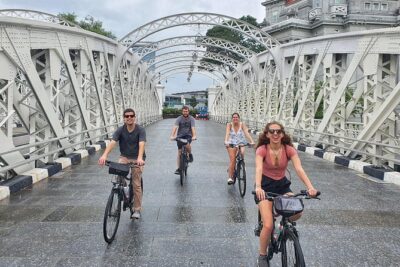 ★ 5.0Historical Singapore Bike Tour on Full-Sized BicyclesFrom $641,421 reviews
 ★ 3.5Nightout at Colonial Charms of the CityFrom $135733 reviews
 ★ 4.8Historical Half-Day Bike TourFrom $63399 reviews
 ★ 5.0Singapore Private Food, Culture and Heritage Tour with 9 tastingsFrom $185394 reviews
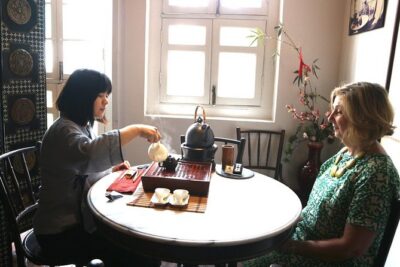 ★ 5.0Singapore Group History & Culture Walking TourFrom $126160 reviews
 ★ 5.0Chinatown Historic Walking Tour with LunchFrom $54134 reviews
 ★ 4.5Disappearing TradesFrom $112126 reviews
 ★ 5.0Of Graves, Guns & Battles™: A Tour of Fort Canning HillFrom $79106 reviews
Browse the lists this tour appears in