
Reviewed · LITTLE INDIA & KAMPONG GLAM TOURS
Guided Walking Tour to the Historical Attractions in Farrer Park
Farrer Park tells stories in plain sight. This walking tour strings together century-old temples and wartime sites with a side stop to an active daytime Red Light Area, all within a focused 2 hours 30 minutes. I love how the guide connects small details to big turning points, and I especially like the way modern streets sit right next to the past. One thing to consider: the tour includes time in an area that’s part of Singapore’s legal red-light district, so keep your comfort level in mind.
You meet at lyf Farrer Park Singapore, and you’ll move at a relaxed walking pace for a max group of 15. It’s handled with an English-speaking licensed guide and a mobile ticket, which makes the day feel easy and low-fuss.
In This Review
- Key highlights to look forward to
- Farrer Park on foot: why this area earns a spot on your Singapore list
- Meeting point and timing: what to expect from the 2.5-hour format
- Race Course Road: from 19th-century horse racing to today’s sports field
- Sakya Muni Buddha Gaya Temple: the reclining Buddha and the sculptures that teach
- Leong San See Temple: ornate Taoism and ancestral worship
- Balestier and Kaliamman: how street names and gods show up in everyday life
- Serangoon noodle break: a real flavor stop without forcing a big meal
- Flanders Square: an active daytime Red Light Area, explained with timing
- Petain Road heritage shophouses: Peranakan architecture in a tight walkway
- Chye Seng Huat Hardware and Tyrwhitt Road: when old streets turn hip
- Holy Trinity Church (Anglican): Chinese Renaissance style in Singapore
- Jalan Besar Stadium: soccer origins and Operation Sook Ching
- Former Victoria School grounds via People’s Association: education and civic space
- Kitchener Road: local food lanes and the amusement park with Charlie Chaplin
- Price and value: is $31.38 fair for 2.5 hours?
- Who should book this Farrer Park walking tour
- Should you book this tour?
- FAQ
- FAQ
- How long is the Guided Walking Tour to the Historical Attractions in Farrer Park?
- How much does the tour cost?
- Where do I meet and where does the tour end?
- What time does the tour start?
- Is a mobile ticket used?
- Does the tour have an English-speaking guide?
- How many people are in a group?
- Are there admission fees at the stops?
- Can I cancel for free?
Key highlights to look forward to
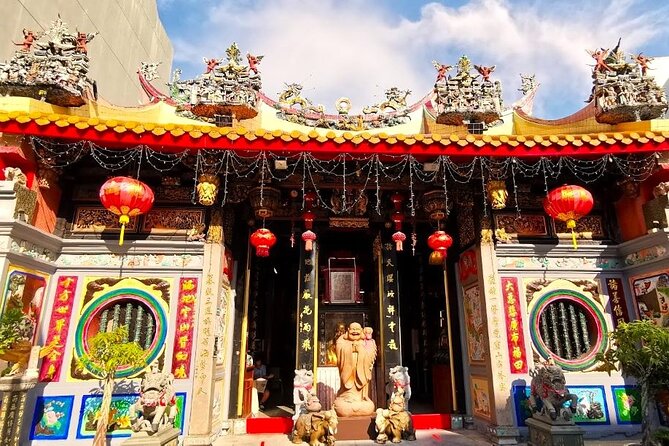
- Temples with story-rich stops: a reclining Buddha scene and ornate Taoist/ancestral carvings.
- Wartime context in real locations: the stadium tied to Operation Sook Ching.
- A daytime look at Flanders Square: a Red Light Area that changes by time of day.
- Peranakan shophouse architecture on Petain Road: restored and photogenic.
- One practical food break: a coffee shop stop for Fried Hokkien Prawn Noodles.
Farrer Park on foot: why this area earns a spot on your Singapore list
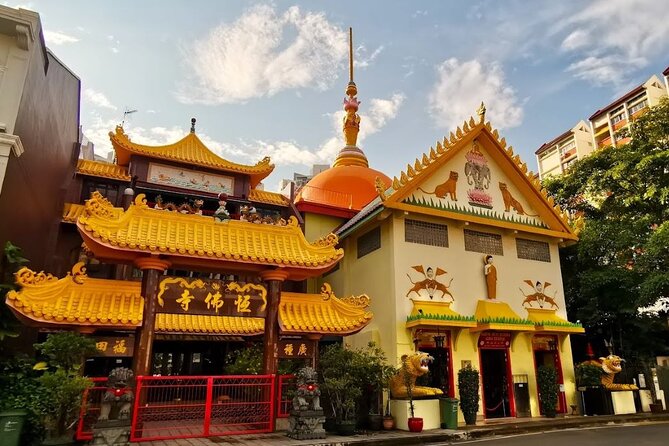
Farrer Park is the kind of place where you don’t need to hunt for clues. Streets, temple gates, church façades, and old-school school grounds all point to different chapters of Singapore’s story, close together and easy to compare.
What I like most is that the walk doesn’t treat culture as wallpaper. You’ll hear how the area shifted over time—from a horse-racing track site to sports and community spaces, and from wartime inspection points to the neighborhoods people live and eat in today.
And yes, it’s also honest about Singapore’s contradictions. A legal red-light area shows up on the same walking route as places of worship and restored heritage shophouses. That contrast is part of the lesson here: city history is not tidy, and it rarely stays in one “theme park” zone.
Meeting point and timing: what to expect from the 2.5-hour format
The tour starts at 11:00 am at lyf Farrer Park Singapore, at 2 Perumal Rd, #01-01 (you’ll end back at the same meeting point). With a duration of about 2 hours 30 minutes and a small maximum of 15 people, you get enough time to hear the stories without feeling dragged along.
The pacing is built for short stops plus walking time between them. Many places on the route are quick, but not rushed—think 5 to 20 minutes each—so the guide can keep the narrative moving and still let you look at details on buildings and temple interiors.
A practical perk: most listed entry points are admission ticket free, so you’re not juggling extra tickets or payment steps at each stop. You’ll also get a mobile ticket, which helps when you’re moving quickly through busy streets.
From Tekka to the Sultan Mosque, more quarter time
Race Course Road: from 19th-century horse racing to today’s sports field
The tour opens with Race Course Road and the site’s older role: a horse racing track that existed from 1843 to 1933. That time span matters, because it explains why you’ll see references to a racing past in an area that later became known for community and sport.
Then you hear how the racecourse was subsequently turned into a sporting field known as Farrer Park. I like this start because it gives you a base layer. Once you understand the site’s function change, a lot of what comes next feels less random.
If you’re the type who enjoys “why is this street here” answers, this first stop sets the tone nicely. If you’re only here for architecture, you’ll still get the pattern: how land use shifts with Singapore’s needs.
Sakya Muni Buddha Gaya Temple: the reclining Buddha and the sculptures that teach
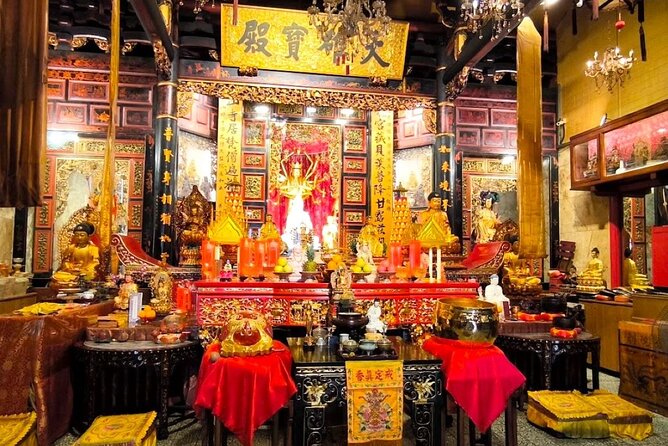
One of the most memorable parts is the stop at Sakya Muni Buddha Gaya Temple. You enter a secret chamber that houses a reclining Buddha, and the guide points you toward sculptures that tell the story of Buddha’s life.
Even if you’re not a temple expert, this stop is approachable. The guide’s job here is translation: not just what you’re looking at, but what the arrangement is trying to communicate. You get a sense that the sacred space is designed to be read, not just photographed.
The only consideration: chamber-style viewpoints can mean tight angles or slower viewing time. If your travel style is to rush through sights, you’ll want to slow down for this one so it doesn’t become just another “quick look and move on.”
Leong San See Temple: ornate Taoism and ancestral worship
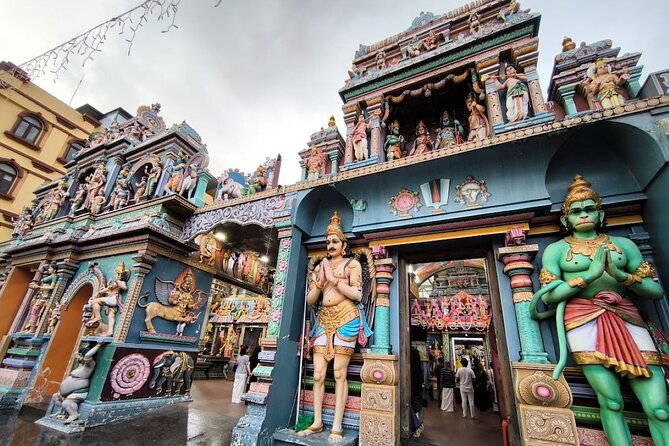
Next comes Leong San See Temple, famous for ornate architecture and linked to Taoism and ancestral worship. This is a solid pairing with the previous stop because it shows how different belief systems shape space in different ways.
What I enjoy is how the guide ties the visuals to the purpose. The temple isn’t presented as a single object; it’s presented as an environment with meaning, down to carvings and the overall feel of the place.
Drawback-wise, this stop can be visually dense. If you’re trying to capture every detail with your camera, you may feel like you’re competing with the group flow. The fix is simple: pick a few focal points and let your eyes do the rest.
Further back into the island story, war years included
- Historical Singapore Bike Tour on Full-Sized Bicycles★ 5.0 · 1,421 reviews
- Nightout at Colonial Charms of the City★ 3.5 · 733 reviews
- Singapore: Historical Half-Day Bike Tour★ 4.8 · 399 reviews
- Singapore Group History & Culture Walking Tour★ 5.0 · 160 reviews
Balestier and Kaliamman: how street names and gods show up in everyday life
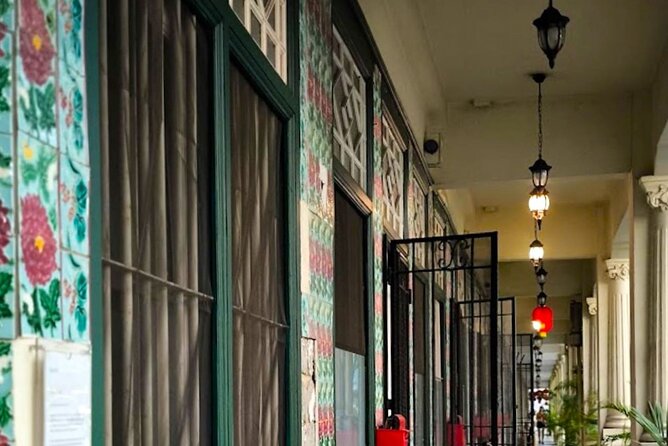
From temple to neighborhood, you’ll move into Balestier, where the guide explains how Balestier Road got its name and its link to America. Then you shift from naming history to the present: Balestier today is framed as a food haven.
That “past to present” rhythm keeps the tour from feeling like a museum parade. Street names are a kind of shortcut memory, and it’s useful to learn what they refer to rather than just walking past them.
Then you visit Sri Vadapathira Kaliamman Temple, a colourful Hindu temple dating back to about circa 1870. The tour focuses on fascinating stories about Hindu gods, and that matters because you get context for what you’re seeing instead of treating the decorations as purely aesthetic.
If you’re sensitive to crowds, temple areas can get busier than open streets. The good news is the stops are short and guided, so you spend time looking rather than trying to figure out where to stand.
Serangoon noodle break: a real flavor stop without forcing a big meal
At Serangoon, the group takes a short break at a local coffee shop known for serving one of the best Fried Hokkien Prawn Noodles in Singapore. This is one of those stops that adds a human, everyday layer to all the cultural sightseeing.
I like it because it’s not marketed as a full meal experience. You get a chance to reset your energy, and you can decide how much time to spend there based on your appetite.
One note: the tour data doesn’t spell out whether food costs are included, so plan to treat the noodle stop as a chance to buy or snack if you want. Even if you skip the purchase, the break is built into the schedule and still helps you keep up the pace.
Flanders Square: an active daytime Red Light Area, explained with timing
Then comes Flanders Square, described as an unusual Red Light Area that’s active in the day and shuts at night. Seeing it in the daytime context changes how you understand the neighborhood. You’re not watching nighttime nightlife; you’re seeing the area’s day-to-day rhythm.
This stop works best if you can hold two ideas at once: you’re not there to sensationalize anything, but you are there to understand how a city regulates and contains sensitive parts of life. The guide’s framing makes it feel like history and civic structure, not shock value.
The only real consideration is personal comfort. If this kind of area is difficult for you to handle, you may want to think about whether this is the right tour for your trip style. The upside is that the tour keeps it short—about 15 minutes—so you’re not stuck in it for long.
Petain Road heritage shophouses: Peranakan architecture in a tight walkway
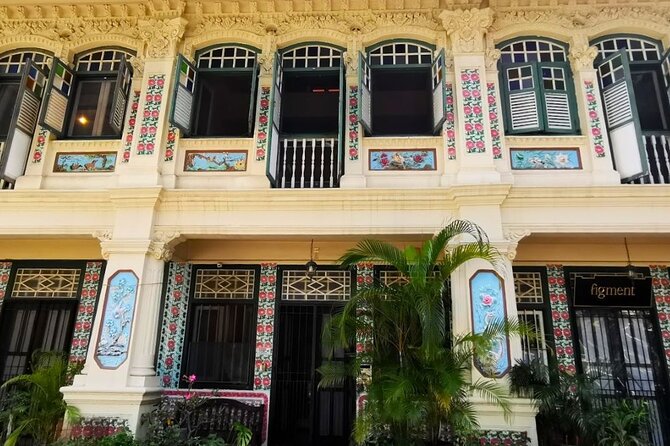
Just a stone’s throw from the red-light area, you reach Petain Road, where the tour points out a row of heritage shophouses described as possibly Singapore’s most beautifully restored. This is where you get to slow down and look at façades as real storytelling surfaces.
The guide also explains who the Peranakans are, which helps the shophouse stop land with more meaning than just “pretty buildings.” You’ll understand the people behind the design rather than treating restoration as an abstract concept.
Practical thought: this is a great photo area, but also a popular type of street for people who like architecture. If your camera roll is already packed, you can still enjoy the stop by focusing on one or two building fronts and walking slowly through the line instead of snapping everything.
Chye Seng Huat Hardware and Tyrwhitt Road: when old streets turn hip
Next is Chye Seng Huat Hardware on Tyrwhitt Road, described as the hipster joints of the area. This stop gives the tour a “today” moment that balances the temple-and-heritage weight.
I find these kinds of stops important on a walking tour. It’s easy to only chase the old stuff in Singapore, but the city’s energy is also in how old spaces get used now. Even without heavy details, you feel the shift from worship spaces to casual meeting points.
If you’re expecting a deep historical lecture here, the time is short, so treat it as a quick snapshot of modern street culture layered onto older urban fabric.
Holy Trinity Church (Anglican): Chinese Renaissance style in Singapore
At Holy Trinity Church (Anglican), you’ll learn about a Chinese Renaissance style church. The guide notes it’s one of two churches built in that style in Singapore.
This stop is brief, but it’s a useful reminder that Singapore’s architectural story isn’t limited to one heritage lane. Religious architecture can reflect cultural blending, and this church is a good case study of how design choices travel.
Because the tour time here is about 5 minutes, don’t expect an extended explanation. Do use the guide’s words to orient your eye: look for how the style signals identity and influences overall façade feel.
Jalan Besar Stadium: soccer origins and Operation Sook Ching
Then you hit Jalan Besar Stadium, described as the birthplace of Singapore soccer. In the same breath, the guide connects it to World War II, including the fact that it was a major inspection site during Operation Sook Ching, where atrocities occurred during the Japanese Occupation.
This is one of the stops that makes the tour feel serious, not just scenic. It’s a hard pairing—sport and suffering—but that’s exactly why it’s valuable. A stadium isn’t only a place for games; it can also be a site that carried terrible realities.
If your tolerance for WWII content is limited, give yourself a moment. The tour keeps this to about 5 minutes, but you’ll want a clean headspace because the topic is heavy.
Former Victoria School grounds via People’s Association: education and civic space
At People’s Association, you lay eyes on the Former Victoria School grounds. This is a quieter stop, but it helps you connect the dots between education and civic life.
I like it because it rounds out the tour’s theme. You’ve seen religious sites, a red-light area, heritage shophouses, and now you’re seeing institutional space. The city’s story includes who taught people, who governed, and how communities organized.
Time is tight here too (about 5 minutes), so keep your curiosity open and let the guide’s framing do most of the work.
Kitchener Road: local food lanes and the amusement park with Charlie Chaplin
The last stretch includes Kitchener Road, where the guide points out locations of locals’ favourite eateries and talks about an amusement park in the area that entertained the likes of Charlie Chaplin.
I like the way this stop shows Singapore as a place where everyday leisure mattered, not just where big events happened. It also gives you a practical takeaway: you get names or pointers for food spots that you can revisit on your own time.
This final stop is about 15 minutes, which gives you breathing room to reset after the heavier WWII material. You leave with a sense that the neighborhood isn’t only for sightseeing; it’s for living.
Price and value: is $31.38 fair for 2.5 hours?
At $31.38 per person for about 2 hours 30 minutes, this tour sits in the “good value for a guided narrative” category. You’re paying for an English-speaking licensed guide, a route that moves efficiently between major stops, and context that you’d otherwise miss if you just wandered around.
The big value is not that every stop is paid (many are admission ticket free). It’s that the guide turns separate locations into a story you can hold in your head: horse racing history, temple symbolism, wartime inspection context, architecture, and modern street life.
If you enjoy guided walking tours where the guide explains what to notice, this price makes sense. If you prefer self-guided wandering with minimal talking, you might feel the cost for the guidance rather than for the sightseeing itself.
Who should book this Farrer Park walking tour
This is a strong choice if you want:
- a compact way to understand Farrer Park and nearby streets without hopping across the city
- a guide to explain temples, architecture, and civic landmarks
- a walk that includes both heritage and real current neighborhoods
- a small-group feel (max 15) that makes it easier to ask questions
It’s less ideal if you’re uncomfortable with the inclusion of a daytime Red Light Area stop or you dislike walking between many sites in one outing.
Should you book this tour?
Book it if you like your Singapore stories straight and location-based—street by street, building by building, with a licensed guide doing the connecting work. The presence of stops like the temple chambers, Petain Road shophouses, and the stadium linked to Operation Sook Ching gives you variety without turning the day into a sprint.
Skip it (or consider another option) if the red-light content is a dealbreaker for your comfort level. Also, if you only want famous, postcard-style attractions, this route is intentionally off the main tourist track.
FAQ
FAQ
How long is the Guided Walking Tour to the Historical Attractions in Farrer Park?
It lasts about 2 hours 30 minutes.
How much does the tour cost?
The price is $31.38 per person.
Where do I meet and where does the tour end?
You meet at lyf Farrer Park Singapore, 2 Perumal Rd, #01-01, Singapore 218773, and the tour ends back at the meeting point.
What time does the tour start?
The start time is 11:00 am.
Is a mobile ticket used?
Yes, the tour includes a mobile ticket.
Does the tour have an English-speaking guide?
Yes. The tour includes an English-speaking licensed tourist guide.
How many people are in a group?
The maximum group size is 15 travelers.
Are there admission fees at the stops?
The itinerary lists admission ticket as free for the stops included in the walk.
Can I cancel for free?
Yes. You can cancel for a full refund up to 24 hours in advance of the experience start time.
Walks That Earn the Humidity
Old Singapore, Retold
Little India and Kampong Glam, Continued

Fresh Reviews from the Little Red Dot
- Night Safari Tickets with Tram Ride
★ 4.5 · 3 reviews - Singapore: Architecture and Food Tour with Tastings
★ 5.0 · 3 reviews - Singapore Private Full-Day Sightseeing Tour
★ 5.0 · 3 reviews - Private Chinatown Heritage Tour with Best 8 Local Tastings
★ 5.0 · 3 reviews
Little India & Kampong Glam Tours, compared.
 ★ 5.0Chinese, Indian & Arabic Quarters, Culture & Food TourFrom $148789 reviews
 ★ 5.0Chinatown, Little India, Kampong Gelam City Highlights TourFrom $80224 reviews
Chinatown, Little India, Arab Street Walking TourFrom $53207 reviews
 ★ 4.8Chinatown and Little India Guided Walking TourFrom $78190 reviews
 ★ 4.5Kampong Glam, Little India & Chinatown with Local Street Food TastingsFrom $17770 reviews
 ★ 5.0#instawalk: Bugis, Waterloo, Kampong GlamFrom $5660 reviews
 ★ 5.0Tasting Trails: Chinatown OR with Kampong Glam, Little IndiaFrom $6759 reviews
 ★ 5.05 hours Little India, Kampong Glam, Chinatown with 9 Food TastingFrom $14158 reviews
Browse the lists this tour appears in