

Reviewed · HISTORY & WARTIME TRAILS
Public Housing – Into the HDB Heartlands
Toa Payoh teaches you Singapore fast. This 3-hour walk through HDB LivingSpace spaces shows how housing, transport, and daily life connect, with a local coffee-stall breakfast thrown in. I like the focus on real-world HDB systems, not vague slogans, and I like that you see both the story and the practical layouts side-by-side. One possible drawback: this is more about public housing and community spaces than classic sightseeing, so you’ll get less postcard variety.
You’ll meet at Toa Payoh MRT Station (NS19) and keep moving at an easy pace in a small group of up to 8. The tour uses a mobile ticket, and you head back to the meeting point when it’s done. If you like asking questions, the guide’s answers are part of the value, especially with personal stories.
If you’re curious about urban planning, design, or how a city houses millions, this one fits. If you want only outdoor views and landmarks, consider pairing it with another Singapore neighborhood tour so you don’t feel like you missed the tourist highlights.
In This Review
- Key things you’ll notice on this HDB heartlands tour
- Why Toa Payoh is the right place to understand HDB life
- Getting started at Toa Payoh MRT: timing, pacing, and breakfast
- HDB LivingSpace Gallery: from transport hub thinking to the bigger HDB story
- Stop 1: Toa Payoh bus interchange and the transport-node mindset
- Stop 3: The updated HDB Gallery that explains the agency’s role
- Practical note on admissions
- My Nice Home Gallery: seeing a typical flat, and why that matters
- HDB Hub and Heartland Mall: decisions, resale activity, and town-center life
- Stop 5: HDB Hub and what it means for prospective owners
- Stop 6: Heartland Mall as the everyday center
- A balanced expectation
- HDB Atrium: community activities and exhibitions in shared space
- The guide experience: small group, real answers, and Jasmine’s role
- Price and value: what you get for $52.31 in about 3 hours
- Who should book this HDB heartlands tour (and who might skip it)
- Booking timeline and what to expect on the day
- FAQ
- How much does the tour cost?
- How long is the Public Housing – Into the HDB Heartlands tour?
- What time does the tour start, and where do I meet?
- What breakfast is included?
- Is this experience ticketed, and is it a mobile ticket?
- How many people are in each group?
- Are there admission fees for the stops?
- Is the meeting point near public transportation?
- Where does the tour end?
- Can I cancel for free?
- Should you book Public Housing – Into the HDB Heartlands?
Key things you’ll notice on this HDB heartlands tour
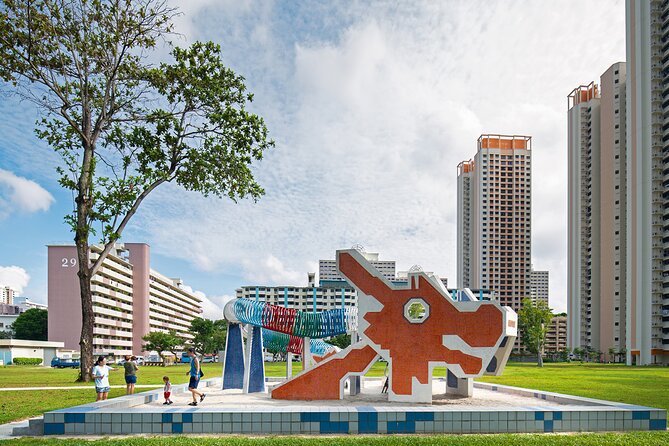
- Integrated transport to everyday living at the Toa Payoh bus interchange stop
- A real breakfast break at a local coffee stall, included in the price
- HDB history you can picture, thanks to the updated LivingSpace gallery exhibits
- Showroom inspiration in the My Nice Home Gallery, built around typical flats
- Where housing decisions happen at the HDB Hub and resale activity context
- Community life beyond apartments in the HDB Atrium and Heartland Mall town center stops
Why Toa Payoh is the right place to understand HDB life
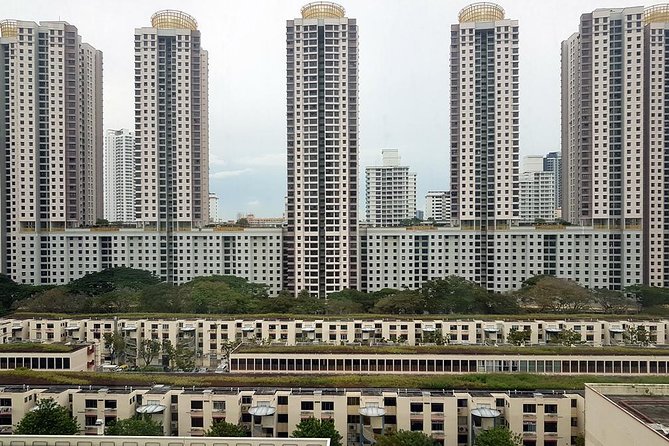
Toa Payoh is a strong choice because it sits at the crossroads of commuting and community life. This tour starts with that idea right away, framing HDB as part of how people move through the city, not just where they sleep. In other words: you’re not only looking at apartments. You’re looking at the system that supports daily routines.
Singapore’s housing story can feel abstract if you only read about it. Here, it becomes physical and organized. You see how the public housing agency’s work connects to transport nodes, town centers, and shared spaces where residents actually gather. That makes the “why” behind HDB easier to understand, and it makes the “how” clearer too.
Getting started at Toa Payoh MRT: timing, pacing, and breakfast
You start at 9:00 am at Toa Payoh MRT Station (NS19), at 510 Lor 6 Toa Payoh, Singapore 319398. The good news for planning is that the meeting point is near public transportation, so you’re not stuck on a long taxi ride or tricky first leg.
This is also a smaller-group tour (up to 8). That matters more than it sounds. With fewer people, the guide can answer follow-up questions instead of rushing through the script. It’s one reason the experience feels more personal in the best way.
Then there’s the breakfast. A light local breakfast at a coffee stall is included, and it’s a smart move because breakfast is where locals slow down enough to talk about real routines. Even if you’re not a breakfast person, the break gives you a reset before you move into the galleries and show areas.
Further back into the island story, war years included
HDB LivingSpace Gallery: from transport hub thinking to the bigger HDB story
This tour centers on the HDB LivingSpace Gallery, and it’s split into several focused stops so you don’t get information overload.
Stop 1: Toa Payoh bus interchange and the transport-node mindset
The tour begins with the Toa Payoh bus interchange, described as a key transport node and an integrated transport hub. This framing is useful. Instead of treating housing as separate from transit, you see it as part of a daily flow—getting to work, school, errands, and community events.
If you’re the type who likes city design details, this is a great early anchor. It also sets context for the rest of the tour: town planning here isn’t only about buildings. It’s about movement, connection, and access.
Stop 3: The updated HDB Gallery that explains the agency’s role
Next comes the larger HDB Gallery (LivingSpace) storytelling stop. This is where the newly updated exhibit explains the government agency tasked with housing millions, reaching back to pre-independence. That broad timeline helps you understand why HDB is not a one-era solution. It’s a long-running approach to housing at scale.
What I like about this stop is that it doesn’t stop at history. It’s designed to give you a framework so the later showrooms make sense. If you walk into the My Nice Home Gallery without that context, the exhibits might feel like styling tips. With the bigger story first, the design choices connect back to policy and planning goals.
- Lion City Bike Tour of Singapore★ 5.0 · 6,211 reviews
- Singapore: Gardens by the Bay Bundle Entry Ticket★ 4.3 · 3,726 reviews
- Singapore: Big Bus Hop-On Hop-Off Tour by Open-Top Bus★ 4.5 · 3,261 reviews
- Singapore: Lion City Highlights Bike Tour★ 4.9 · 2,010 reviews
Practical note on admissions
All the gallery stops listed here show free admission ticket access. That’s a major value driver because you’re getting multiple exhibit entries inside the tour price.
My Nice Home Gallery: seeing a typical flat, and why that matters
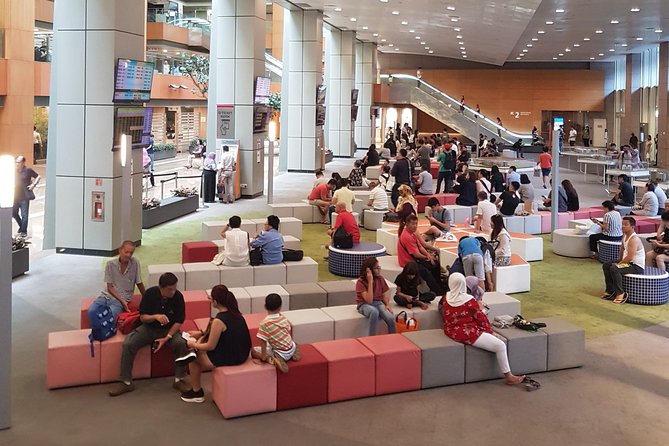
The My Nice Home Gallery is about showrooms for typical HDB flats, aimed at inspiring creative interior design ideas and giving the public a sense of how HDB flats can look and function. The key word here is typical—this isn’t just for decoration fans. It’s for people who want to understand realistic layouts.
When you’re learning about public housing, it’s easy to focus on policy and forget the everyday questions: where do things fit, how do rooms flow, and how do families live with limited square footage. This stop nudges you toward those questions.
From a practical traveler angle, this is also where you can get ideas for your own home. Even if you’re not moving to Singapore, you can learn small layout thinking—how to use space efficiently, how to plan circulation, and how design choices shape comfort.
HDB Hub and Heartland Mall: decisions, resale activity, and town-center life
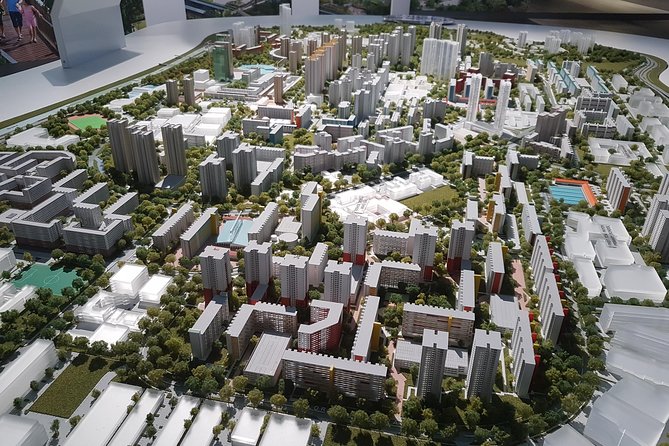
Two stops later, the tour shifts from exhibits into decision-making context and neighborhood life.
Stop 5: HDB Hub and what it means for prospective owners
The HDB Hub is essentially HDB central. It’s where prospective flat owners choose units, and it’s also where resale transactions take place. That matters because it changes how you interpret what you’ve seen so far.
Instead of thinking of housing as a finished product, you start viewing it as a living market and lifecycle: people plan, select, move, and sometimes trade through the resale system. Even if you don’t plan to buy a flat, understanding that flow helps you grasp why HDB isn’t only about construction. It’s about ongoing allocation and community continuity.
If you like real systems thinking, this stop connects policy to a real place with real functions.
Stop 6: Heartland Mall as the everyday center
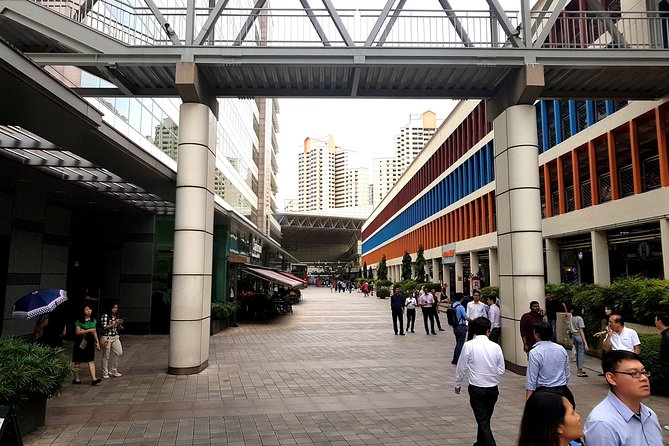
Then you step into Heartland Mall, where you get to see how HDB heartlanders eat, shop, play, and relax in a typical town center. This is important because public housing isn’t just apartments. It’s the social and practical ecosystem around them.
Look at the vibe of the spaces: malls and town centers here are where daily life clusters. When you’ve spent time in galleries, this stop brings it back to human scale. You get a sense of routine—quick errands, casual meet-ups, and the mix of convenience and comfort that keeps a neighborhood functioning.
A balanced expectation
This isn’t a theme park stop. It’s more like a guided orientation to how daily commerce and leisure are built into the town plan. If you expect only big sights, you may feel underwhelmed. If you like understanding how cities really work, it’s a highlight.
HDB Atrium: community activities and exhibitions in shared space
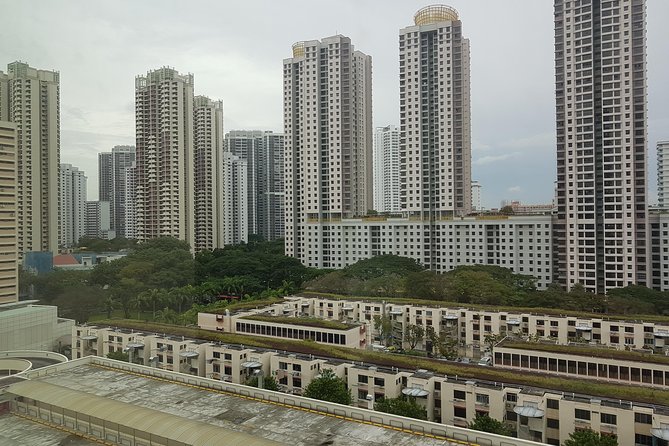
The tour finishes with HDB Atrium, a communal area where community activities and exhibitions are regularly held. This stop gives you the “social infrastructure” angle that most housing tours miss.
Apartments are where people live. Shared spaces are where people connect. When a neighborhood includes a consistent communal hub, residents can find community without needing to travel across the city. That has an effect on belonging and on how quickly newcomers can feel included.
Even if you visit on a day when the schedule looks quiet, the purpose of the space is clear. It’s built for ongoing community use, not just one-time events.
The guide experience: small group, real answers, and Jasmine’s role
The quality of this tour is strongly tied to the guide’s ability to connect facts to real life. One guide name you might hear is Jasmine, and the feedback pattern around her is clear: she’s happy to answer questions and share personal stories that make the HDB system feel more human.
That’s the main thing you should watch for on any design or policy tour: whether the guide can translate details into everyday meaning. Here, that translation is the value. You’re not only watching exhibits. You’re getting explanations for why housing looks and works the way it does.
With a cap of 8 travelers, you can usually keep the conversation moving. If you’re the type who brings thoughtful questions, this format supports that.
Price and value: what you get for $52.31 in about 3 hours
At $52.31 per person for about 3 hours, the price sits in the “worth it if you’re curious” category. Here’s why: you’re paying for structured guidance plus a set of stops that include free admission to multiple galleries and a breakfast.
You’re also not stuck doing one single exhibit. The route covers:
- transport-node context (Toa Payoh bus interchange framing),
- a housing history exhibit (HDB Gallery),
- a practical/visual showroom concept (My Nice Home Gallery),
- a real administrative/transaction context (HDB Hub),
- and then town-center and communal spaces (Heartland Mall and HDB Atrium).
That variety is what makes the time feel efficient. It’s not three hours of reading panels. It’s a guided circuit of places that each answer a different part of the question: how housing works, how it’s chosen, and how community life continues around it.
If you’re on a short trip to Singapore and you want an angle that isn’t the usual skyline routine, this tour gives you a grounded perspective without demanding a full day commitment.
Who should book this HDB heartlands tour (and who might skip it)
I’d point you toward this experience if you:
- like urban planning, design, or city systems,
- want a quieter, real-life Singapore look beyond the central tourist zone,
- enjoy guided explanations and question time,
- or simply want to understand how a big-city housing model actually shows up on the ground.
You might skip it if you mainly want:
- famous landmarks and long scenic photo stops,
- a fast-hit “greatest hits” itinerary,
- or mostly outdoor exploration.
This tour does offer outdoor moments around town-center life, but the heart of it is the HDB-focused experience. Think education with street-level context, not sightseeing sightseeing sightseeing.
Booking timeline and what to expect on the day
This tour is typically booked about 16 days in advance on average. If you’re traveling around popular weekends or peak periods, it’s smart to lock it in early.
You’ll get confirmation at the time of booking, and you’ll use a mobile ticket. The tour ends back at the meeting point, which makes it easy to fold into the rest of your day without worrying about a complicated drop-off.
FAQ
How much does the tour cost?
The price is listed as $52.31 per person.
How long is the Public Housing – Into the HDB Heartlands tour?
It runs for about 3 hours.
What time does the tour start, and where do I meet?
The tour starts at 9:00 am at Toa Payoh MRT Station (NS19), 510 Lor 6 Toa Payoh, Singapore 319398.
What breakfast is included?
A light local breakfast is included at a local coffee stall.
Is this experience ticketed, and is it a mobile ticket?
Yes. It uses a mobile ticket.
How many people are in each group?
The tour has a maximum of 8 travelers.
Are there admission fees for the stops?
The listed stops show admission ticket free for each of them.
Is the meeting point near public transportation?
Yes, the tour notes it is near public transportation.
Where does the tour end?
It ends back at the meeting point.
Can I cancel for free?
Yes, it offers free cancellation up to 24 hours before the start time for a full refund.
Should you book Public Housing – Into the HDB Heartlands?
If you want Singapore with context—how housing shapes daily life—this is a great pick. The combination of HDB LivingSpace galleries, a breakfast stop, and town-community spaces gives you a clear, organized understanding in a short window.
If you’re chasing only iconic sights, you may feel it’s too focused. But if you’re curious, you’ll come away with a much better sense of how this country’s public housing model works at street level.
Old Singapore, Retold




Fresh Reviews from the Little Red Dot
- Night Safari Tickets with Tram Ride
★ 4.5 · 3 reviews - Singapore: Architecture and Food Tour with Tastings
★ 5.0 · 3 reviews - Singapore Private Full-Day Sightseeing Tour
★ 5.0 · 3 reviews - Private Chinatown Heritage Tour with Best 8 Local Tastings
★ 5.0 · 3 reviews
History & Wartime Trails, compared.
 ★ 5.0Historical Singapore Bike Tour on Full-Sized BicyclesFrom $641,421 reviews
 ★ 3.5Nightout at Colonial Charms of the CityFrom $135733 reviews
 ★ 4.8Historical Half-Day Bike TourFrom $63399 reviews
 ★ 5.0Singapore Private Food, Culture and Heritage Tour with 9 tastingsFrom $185394 reviews
 ★ 5.0Singapore Group History & Culture Walking TourFrom $126160 reviews
 ★ 5.0Chinatown Historic Walking Tour with LunchFrom $54134 reviews
 ★ 4.5Disappearing TradesFrom $112126 reviews
 ★ 5.0Of Graves, Guns & Battles™: A Tour of Fort Canning HillFrom $79106 reviews
Browse the lists this tour appears in