
Reviewed · CHINATOWN TOURS & TASTINGS
Singapore: Chinatown Hawkers Food Tour with 7 Food Tastings
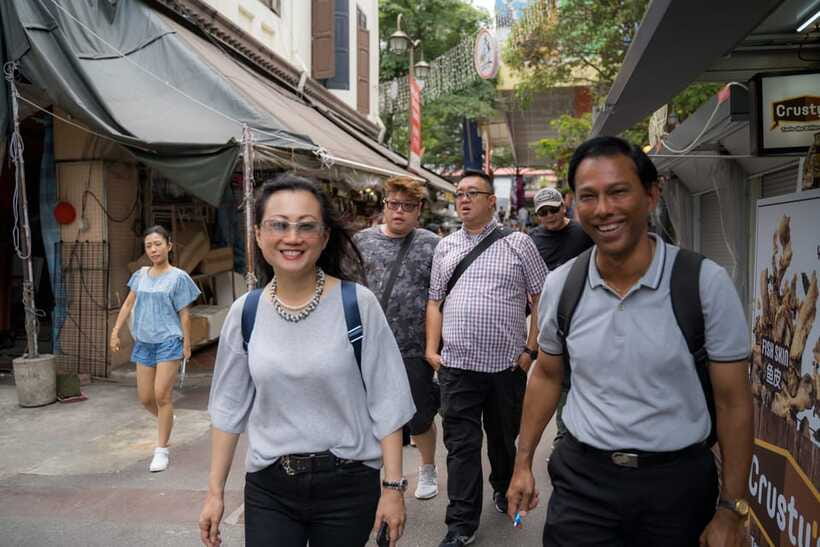
Chinatown smells like dinner, fast. This Singapore Chinatown hawker food tour mixes street-food tastings with stories about the neighborhood, plus a surprise ending. You’ll hop between well-known hawker centers and places locals actually queue for, all at a steady walking pace for about 3.5 hours.
I especially like two things: the variety of Singapore flavors (Chinese, Malay, Indian, and Peranakan influences show up in the menu), and the way the guide ties each plate to what you’re looking at in Chinatown. Even when you’re just trying to decide the next bite, you’ll get the why behind it—dishes, habits, and the role hawker centers play in daily life.
One thing to consider: the tour involves a fair amount of walking, and it’s not suitable if you use a wheelchair or have mobility impairments. Also, plan to bring your own tissues or paper towels for quick hand cleanup, since you may not have everything you want right at the table.
In This Review
- Quick hits you should know
- Where the tour starts: Chinatown MRT Exit A and Bee Cheng Hiang
- Hawker centers as the real Singapore classroom
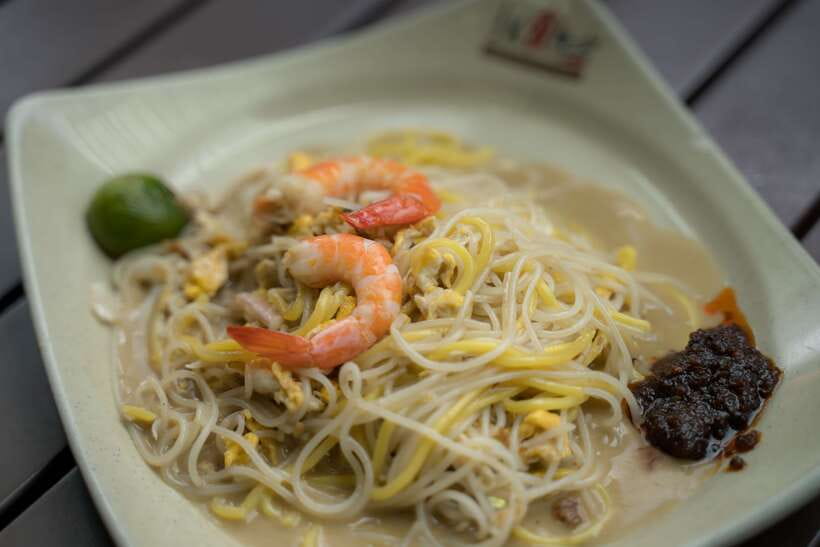
- Your 7 included tastings (and the Secret Dish) explained
- 1) Bak Kwa: smoky-sweet pork to kick things off
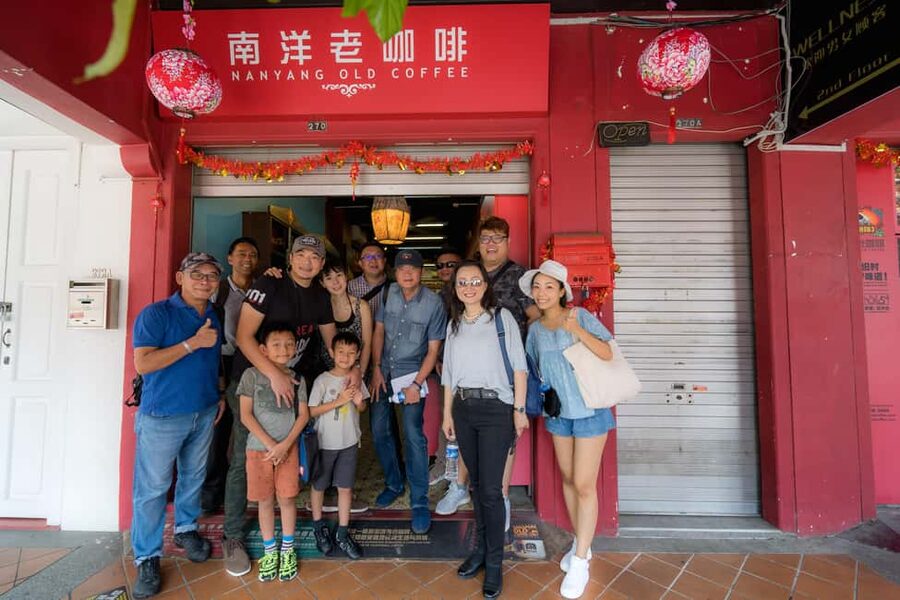
- 2) Nanyang coffee and kaya toast: strong brew, soft comfort
- 3) Popiah oyster cake: crispy, golden, and different
- 4) Chicken rice: Singapore’s iconic national dish
- 5) Prata or thosai: South Indian flatbread and rich dips
- 6) Chwee kueh: steamed rice cakes with preserved radish
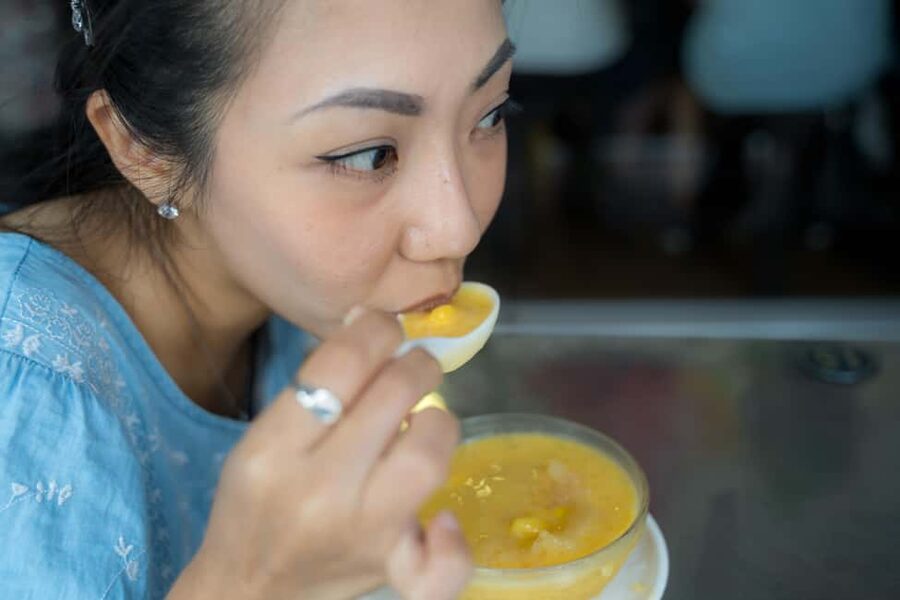
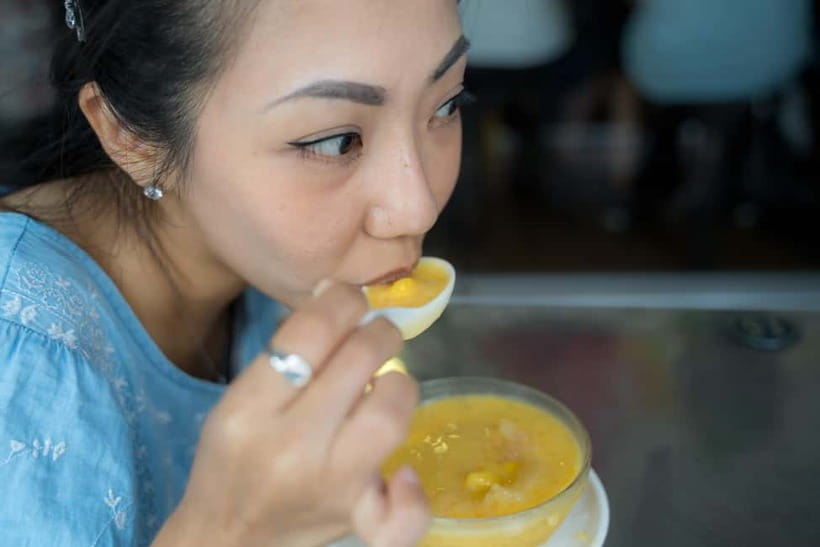
- 7) Chendol: coconut milk, gula melaka, and pandan
- The Secret Dish: the surprise you get only on tour
- Learning history and culture while you walk, eat, and look
- Price and value: what $87 buys you in Singapore terms
- Logistics that matter: timing, walking, and what to bring
- Who this tour is best for (and who might want a different plan)
- Should you book this Singapore Chinatown hawker food tour?
- FAQ
- FAQ
- Where is the meeting point for the Chinatown hawker food tour?
- How long is the tour?
- What food tastings are included?
- Is pickup or drop-off included?
- Is the tour guided, and what language is it in?
- Do I need to bring anything?
- Is the tour suitable for wheelchair users or people with mobility impairments?
- Can I get a refund if my plans change?
Quick hits you should know
- Meet at Chinatown MRT Exit A near Bee Cheng Hiang, and look for the orange umbrella.
- 7 included tastings cover classics and less-expected specialties, ending with a Secret Dish.
- A local English-speaking guide adds history and culture between food stops, not just menu talk.
- Bring comfortable shoes and expect lots of short, frequent food pauses and walking legs.
- Menu can shift based on availability and weather, so stay flexible and hungry.
Where the tour starts: Chinatown MRT Exit A and Bee Cheng Hiang
Start point matters on this one, because the first taste starts quickly. You’ll meet outside the metro station Chinatown (Exit A) near the shop called Bee Cheng Hiang, and your guide will be holding an orange umbrella. This is the kind of meeting point that helps you get oriented fast, since Chinatown is easiest to understand once you’re already in the right lane of street life.
The good news: you’re not left guessing for long. If you’re running late or need route advice, you can ask your guide at the end of the tour (the structure is built around that flow).
Practical note: Chinatown is compact, but it’s still real city walking. I’d wear shoes you can stand in for a while, not just “nice for photos.”
Hawker centers as the real Singapore classroom
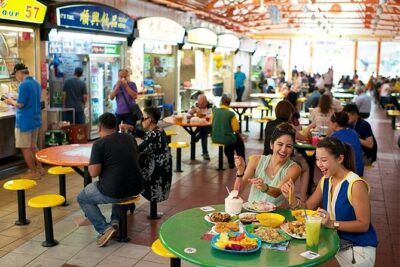
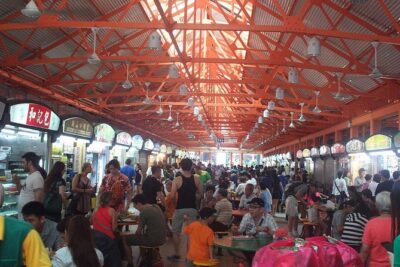
Singapore’s food scene gets talked about a lot, but hawker centers are where it becomes practical. These are communal spaces with lots of small stalls, fast service, and the daily rhythm of people eating because they’re hungry—not because it’s a tourist activity. That’s exactly why this tour works: you’re learning the city through how people actually feed themselves.
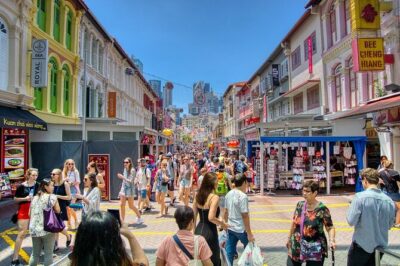
As you move between stops, you’ll also pick up how Chinatown fits into the bigger Singapore story. The tour includes time to notice things like neighborhood layout, shopfront life, and the contrast between older streets and newer parts of the city. Your guide connects that scenery to the food you’re eating, so the bites don’t feel random.
One more reason I like this format: you’re not stuck in one stall. You get variety across multiple hawker centers, plus some market-and-street energy along the way. When you finish, you don’t just have a full stomach—you have a clearer map of how Singapore makes food part of culture.
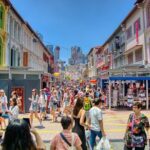
Chinatown holds more lanes than one afternoon
Your 7 included tastings (and the Secret Dish) explained
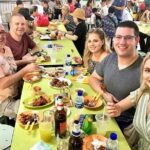
This is the heart of the tour: 6+ carefully selected dishes and a final surprise. You’re also covered with mineral water and ice-cold locally made beer or a soft drink, depending on what you prefer.
Also, the menu can change based on availability and weather. So treat this as a planned set of tastes, not a rigid script. The takeaway is the same: you’ll eat a solid cross-section of Singapore street-food identity.
1) Bak Kwa: smoky-sweet pork to kick things off
Bak kwa is one of those foods that feels familiar instantly: smoky flavor, chewy texture, and a sweet-savory edge. It’s typically barbecued pork that locals grab for snacking, and it works well as an opener because it sets your palate to the kind of bold, concentrated flavors Singapore street food loves.
Why it matters: starting with bak kwa gives you an easy baseline. You can then notice how other dishes shift between sweet, salty, sour, and heat as you go.
2) Nanyang coffee and kaya toast: strong brew, soft comfort
Next up is Nanyang coffee, paired with traditional kaya toast. This isn’t delicate coffee. It’s meant to be aromatic and strong, often balanced by the sweet, coconut-egg jam called kaya.
Kaya toast is a classic breakfast in Singapore, and it’s also a shortcut to understanding how different cultures overlap in everyday food. You’ll taste something that feels comforting and old-school, even while you’re standing in a neighborhood that looks “very modern” around the edges.
Still hungry? The hawker trail keeps going
- Small Group: Michelin and Local Hawker Food Tour with 9 tastings★ 5.0 · 1,890 reviews
- Small Group: Singapore Street Food & Night Tour with 9 tastings★ 5.0 · 1,240 reviews
- The Award-Winning PRIVATE Food Tour: 10 Tastings of 3 Cultures★ 4.5 · 1,017 reviews
- Singapore: Chinese, Indian & Arabic Quarters, Culture & Food Tour★ 5.0 · 789 reviews
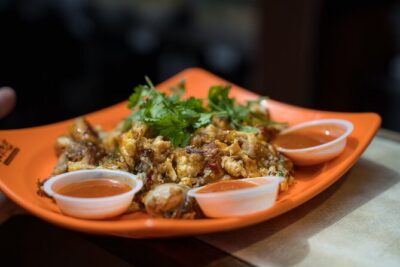
3) Popiah oyster cake: crispy, golden, and different
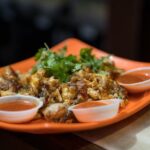
This stop leans into texture. You’ll try popiah oyster cake—a crispy, golden bite with filling that brings savory notes and crunch in the same mouthful. It’s the kind of snack that makes you want to pause and slow down for one second, because the best part is how it changes from bite to bite.
What to expect: fried or pan-cooked crunch, then a softer interior. It’s not just a snack; it’s street-food engineering.
4) Chicken rice: Singapore’s iconic national dish
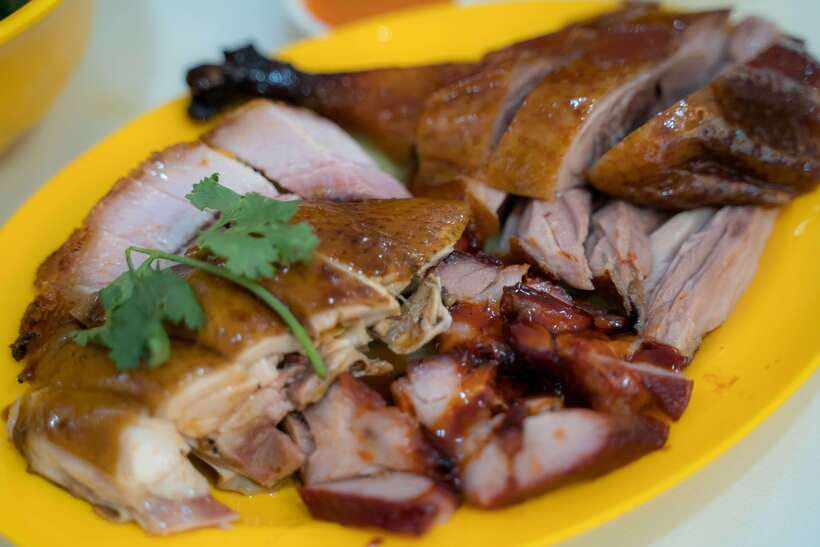
If you only ate one “must try” thing, it would be chicken rice. This tour includes chicken rice—tender meat with fragrant rice that’s all about the balance of aroma and simple seasoning. It’s hard to fake good chicken rice, so this is a strong indicator of how carefully the tour selects stalls.
Why it’s a smart inclusion: chicken rice is Singapore’s familiar comfort food and a perfect anchor for understanding how locals treat food as daily routine, not a once-a-year event.
5) Prata or thosai: South Indian flatbread and rich dips
You’ll get either prata or thosai—South Indian flatbread—served with rich dips. Prata tends to be more layered and can lean crisp at the edges, while thosai is often lighter and thinner depending on how it’s cooked.
Either way, this stop widens the map of Singapore flavors. You’ll notice the shift from Chinese-influenced dishes into South Indian spice rhythms—more tang, more depth, and sauces that demand a second dip.
6) Chwee kueh: steamed rice cakes with preserved radish
This one is savory and slightly surprising: chwee kueh are steamed rice cakes topped with preserved radish. Expect a tender base and a punchy topping that smells like it means business.
It’s not a dessert, but it can feel like comfort food if you like salty, savory bites. The preserved radish brings that sharp, salty edge that cuts through the rest of your meal and keeps your palate awake.
7) Chendol: coconut milk, gula melaka, and pandan
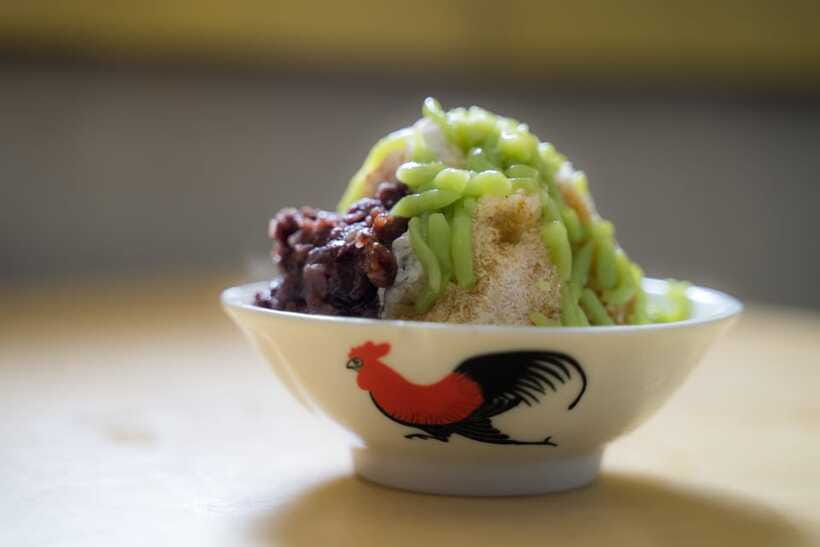
Then you switch gears to something cooling: chendol with coconut milk, gula melaka (palm sugar), and pandan jelly. This is one of those desserts that tastes hot-weather perfect. Sweet, fragrant, and refreshing without being overly complicated.
If you think you won’t want sweets after all the savory food, this is where you change your mind. Chendol cleans up the palate and helps the meal feel complete.
The Secret Dish: the surprise you get only on tour
The end of the tour includes a surprise Secret Dish revealed only on the day of your tour. That matters, because it removes the biggest risk with food tours: guessing the menu in advance and then feeling underwhelmed if it’s not exactly what you expected.
You’ll also end in a hawker center setting, which keeps the experience grounded. By the time you reach the secret bite, you’ll already understand how to order, how hawker centers work, and why this casual style of dining is a big deal in Singapore.
Learning history and culture while you walk, eat, and look
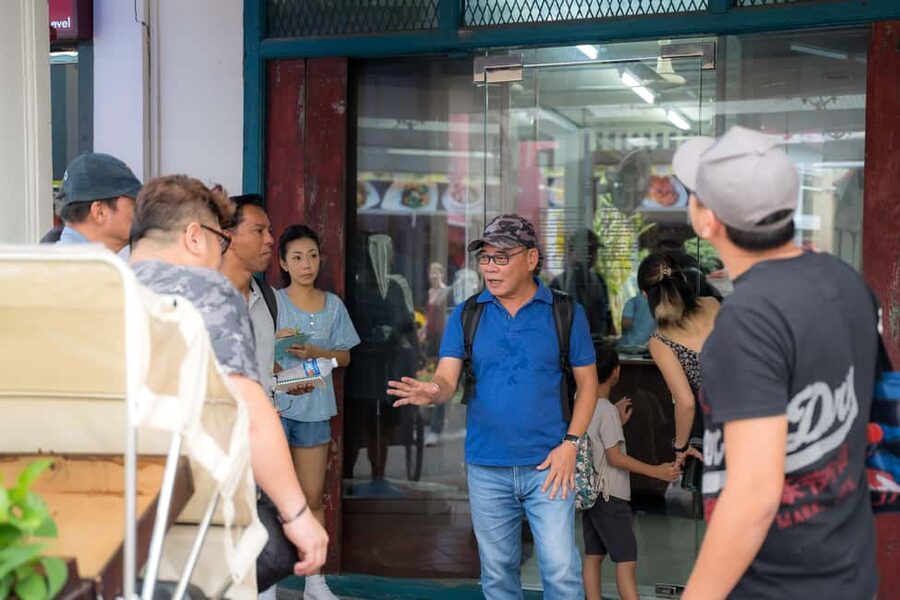
Food tours can go two ways. Some stay stuck on recipes. Others turn every bite into a history lecture.
This one tries to do both without making it exhausting. Your guide shares stories about Singapore’s history, culture, and architecture as you move. That means when you see a streetscape change, it has context. When you taste a dish, it connects to where it likely came from and how different communities shaped it.
If you get a guide like Jeanette, Tang, Edwin, Lee, or Angel, you’ll likely notice a pattern: clear storytelling with practical explanations. The food is the show, but the background makes it easier to remember what you ate and why you cared.
And yes, you’ll still ask questions mid-walk. That’s part of the fun.
Price and value: what $87 buys you in Singapore terms
At $87 per person for a 210-minute tour, you’re paying for three things: a guided route through Chinatown, a curated set of food tastings, and the local expertise that turns eating into understanding.
Seven included items is a solid spread for Singapore street food. You also get drinks (locally made ice-cold beer or soft drink) plus mineral water, which can otherwise add up in hawker centers and nearby shops. For me, the real value is that you’re not wasting time figuring out which stalls are worth it and which are just convenient.
Downside: there’s no pickup or drop-off. So you’ll want to plan your own MRT or walking route to get to Chinatown and to continue afterward.
The menu also isn’t guaranteed to be identical every day. That’s normal for food-based tours where availability changes, but it does mean you should show up ready to adapt.
Logistics that matter: timing, walking, and what to bring
This tour is English language with a live local guide. It’s designed around steady movement between stops, so don’t schedule anything too tight right before or after.
Bring:
- Comfortable shoes
- A light layer if you’re sensitive to indoor air-conditioning
- Your own small tissues or paper towels for hand cleanup
One practical detail: hawker centers are casual, and spills happen. If you’re someone who likes to feel prepared, bring a small pack of wipes. It makes the experience smoother without turning the tour into a chore.
Also note the obvious but important one: the tour isn’t listed as suitable for people with mobility impairments or wheelchair users. This is a walking-forward experience with stop-and-eat pacing that may be tough to navigate.
Who this tour is best for (and who might want a different plan)
This is ideal if you:
- Want a focused introduction to Singapore street food in Chinatown
- Like learning the story behind what you eat
- Prefer a structured route instead of wandering and hoping you pick the right stalls
- Want a mix of savory and sweet, with a finale that keeps things interesting
It’s less ideal if you:
- Have limited mobility and can’t handle a fair amount of walking
- Need pickup or door-to-door transport
- Hate surprises in the menu (the Secret Dish is part of the point)
Should you book this Singapore Chinatown hawker food tour?
I’d book it if you’re in Singapore for a short time and you want real hawker-center culture without spending half your day comparing menus. The mix of iconic dishes (like chicken rice), sweet-savory snacks (bak kwa), and cooling dessert (chendol) gives you a well-rounded Singapore taste profile.
I’d hesitate only if walking is a problem for you, or if you prefer a more self-guided approach where you control every stop. If you’re the kind of person who likes to ask questions and learn while eating, this tour hits the sweet spot.
FAQ
FAQ
Where is the meeting point for the Chinatown hawker food tour?
You meet outside the metro station Chinatown (Exit A) near the shop called Bee Cheng Hiang. Look for the orange umbrella.
How long is the tour?
The tour lasts about 210 minutes.
What food tastings are included?
The included tastings are Bak Kwa, Nanyang Coffee & Toast (kaya toast), Popiah Oyster Cake, Chicken Rice, Prata or Thosai, Chwee Kueh, Chendol, plus a locally made ice-cold beer or soft drink, mineral water, and the surprise Secret Dish.
Is pickup or drop-off included?
No, pickup and drop-off are not included.
Is the tour guided, and what language is it in?
Yes, it’s a live tour with an English-speaking guide.
Do I need to bring anything?
Bring comfortable shoes. The tour involves a fair amount of walking.
Is the tour suitable for wheelchair users or people with mobility impairments?
No. It’s not suitable for people with mobility impairments or wheelchair users.
Can I get a refund if my plans change?
Yes. You can cancel up to 24 hours in advance for a full refund.
Hawker Stalls Left on the List
Chinatown, Lane by Lane
Fresh Reviews from the Little Red Dot
- Night Safari Tickets with Tram Ride
★ 4.5 · 3 reviews - Singapore: Architecture and Food Tour with Tastings
★ 5.0 · 3 reviews - Singapore Private Full-Day Sightseeing Tour
★ 5.0 · 3 reviews - Private Chinatown Heritage Tour with Best 8 Local Tastings
★ 5.0 · 3 reviews
Chinatown Tours & Tastings, compared.
 ★ 5.0Chinatown, Little India, Kampong Gelam City Highlights TourFrom $80224 reviews
 ★ 5.0Chinatown Hawker Market Food Tour with 7 Food TastingsFrom $146213 reviews
Chinatown, Little India, Arab Street Walking TourFrom $53207 reviews
★ 5.0Chinatown Hawker Market Food Tour with 7 Food TastingsFrom $146213 reviews
Chinatown, Little India, Arab Street Walking TourFrom $53207 reviews
 ★ 4.8Chinatown and Little India Guided Walking TourFrom $78190 reviews
 ★ 5.0Chinatown Historic Walking Tour with LunchFrom $54134 reviews
 ★ 5.0Chinatown Hawker Food Tasting TourFrom $8896 reviews
 ★ 4.5Kampong Glam, Little India & Chinatown with Local Street Food TastingsFrom $17770 reviews
 ★ 5.0Chinatown Heritage Centre (Admission Ticket)From $2065 reviews
Browse the lists this tour appears in