
Reviewed · HISTORY & WARTIME TRAILS
Splendour of Colonial Singapore Walking Tour with Lunch
Colonial Singapore feels like a living map. You follow the city’s makeover from early British trading days into the colonial civic core, moving through restored buildings you can actually read in a single walk. I like that you’re not stuck with one museum wall—this route strings together churches, theaters, and civic institutions with real street-level context, then settles you down for lunch by the river.
Two things I really appreciate: first, the tour’s range of building styles, from Georgian and Victorian details to Edwardian and neo-classical facades, all tied to what Singapore became over time. Second, the lunch stop at Boat Quay is timed right for a break, not an afterthought. You’ll also spend a good chunk of time with the guide, often noted as Ping, who keeps the story moving and makes it easy to ask questions without getting lost.
One consideration: it runs rain or shine, and you’ll be on your feet for about 3.5 hours. Bring comfortable shoes and water, and don’t count on the weather being mild—this is Singapore, so plan to dress for heat and humidity.
In This Review
- Key points to know before you go
- Colonial buildings you can read like a story
- City Hall to St. Andrew’s Cathedral: the civic story starts
- National Gallery Singapore: when European art meets Singapore’s core
- The Arts House and Victoria Theatre: public life in neo-classical form
- Asian Civilisations Museum, Cavenagh Bridge, Fullerton: the river edge becomes central
- Lunch at Boat Quay: 3 courses, and why the setting matters
- Old Hill Street Police Station and Central Fire Station: institutions built to run
- St. Gregory the Illuminator: faith near the center of power
- Price check: is $49 worth it for 3.5 hours plus lunch?
- What I think this tour is best for
- Should you book Splendour of Colonial Singapore?
- FAQ
- Where do I meet, and what time?
- How long is the tour?
- How much does it cost?
- Is lunch included?
- Does the tour run in rain?
- What’s included besides the guide and lunch?
- Do I need hotel pickup?
- What should I bring?
- What languages is the tour in?
Key points to know before you go
- Restored colonial-era architecture in the civic district, explained in plain language
- A real timeline walk that connects the story from 1819 to 1965
- Photo stops with guided context so pictures mean something, not just angles
- 3-course lunch at Boat Quay with a riverside setting and a solid food selection
- Short indoor breaks built in through museums and major buildings
Colonial buildings you can read like a story
Singapore’s colonial core can look like pretty architecture until someone points out what you’re actually seeing. This tour does that work for you, walking you through the European Town and Civic District where the British influence shows up in planning, institutions, and building styles.
What makes it feel worthwhile is the way the guide ties each stop to the larger shift in how the city was run—town planning, law and governance, schools, and the infrastructure that helped the place function as it grew. It’s history with footnotes removed. You’ll spend less time memorizing dates and more time noticing why the city looks the way it does.
Also, the pacing helps. It’s designed as a guided walk with short photo stops and guided segments, so you’re not sprinting between landmarks. Reviews repeatedly highlight that the pace feels manageable for average fitness, which matters on a 3.5-hour route.
City Hall to St. Andrew’s Cathedral: the civic story starts
You meet at City Hall MRT Station Exit B at 09:55 (street level). Then you begin in the heart of the civic zone, where Singapore’s older center starts to make sense fast.
Your first major stop is St. Andrew’s Cathedral. You get a photo stop plus a guided visit (about 15 minutes). This is a smart opener because it sets the tone: colonial architecture here isn’t only about power. It’s also about community life—religion, gatherings, and the kind of public spaces that made the colonial city feel organized and permanent.
If you like your sightseeing to come with “what to look for,” this is a good place to start. You’ll learn how to spot the style cues that repeat across the district—then that skill pays off later.
Further back into the island story, war years included
National Gallery Singapore: when European art meets Singapore’s core
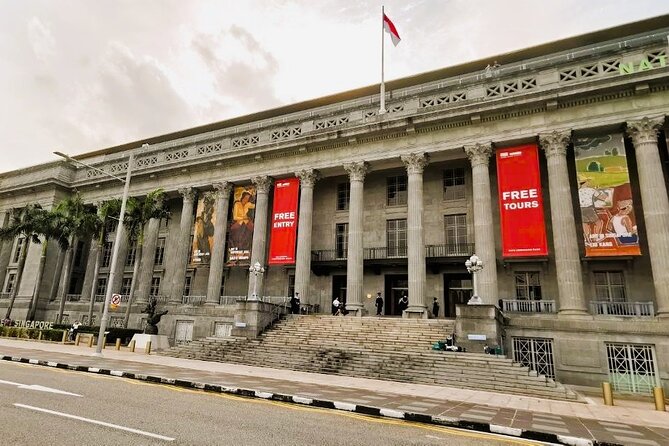
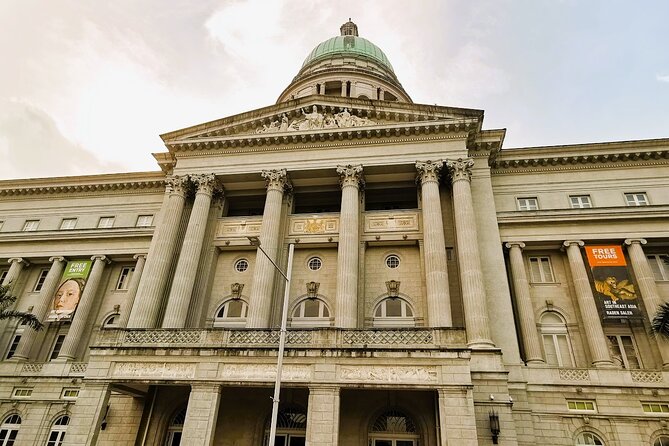
Next is National Gallery Singapore, with a longer guided segment (around 40 minutes) plus a photo stop. This is one of the stops where you’ll feel the tour slow down just enough to take in the details.
Why it’s valuable: a tour like this isn’t only about buildings looking old. It’s about understanding how culture was imported, adapted, and used as part of the civic identity. The National Gallery stop gives you a chance to connect the architecture and the idea of a “public cultural institution” to the city’s wider colonial-era development.
You’ll also get a break from direct street exposure. One theme in feedback is that the route builds in chances to cool off inside major buildings and museums, which is a real comfort factor in Singapore humidity.
The Arts House and Victoria Theatre: public life in neo-classical form
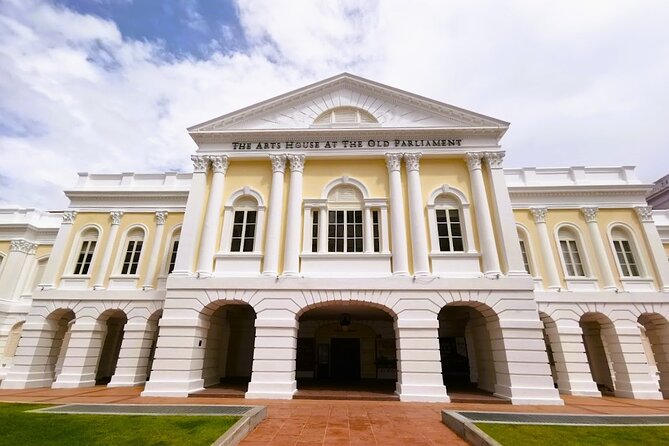
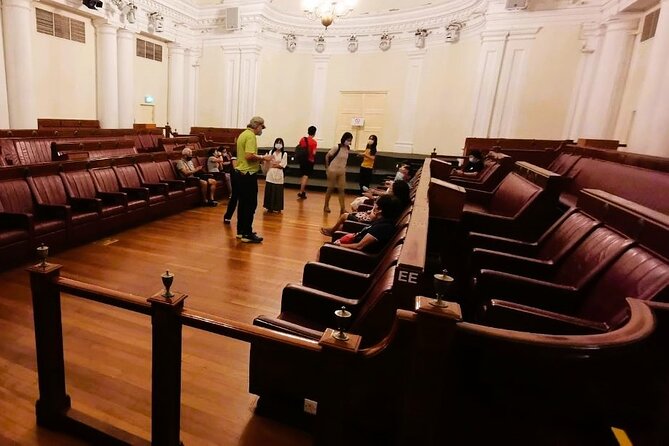
After that, you move to The Arts House (about 20 minutes, photo stop plus guided). Then comes Victoria Theatre and Concert Hall (about 10 minutes). These stops are short, but they matter.
Here’s the practical value: these are the places where colonial civic planning shows up as public entertainment and cultural gathering. If you’ve ever wondered why certain districts feel intentionally laid out, this is where you see the logic. The architecture signals that the city wasn’t just built to trade—it was built to host institutions and events.
On a walking tour, these shorter segments are helpful. They keep momentum without turning every stop into a lecture. You get a few focused ideas, then you move on.
Asian Civilisations Museum, Cavenagh Bridge, Fullerton: the river edge becomes central
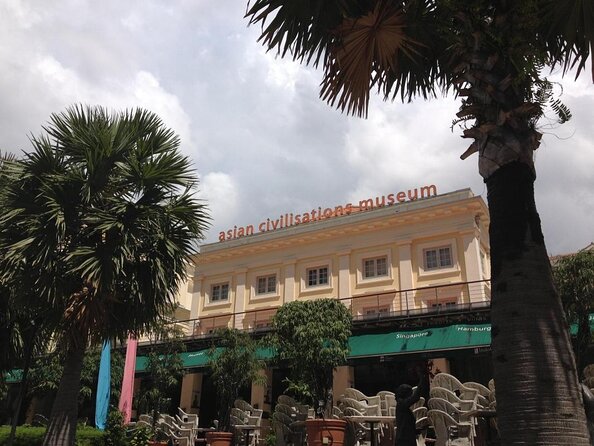
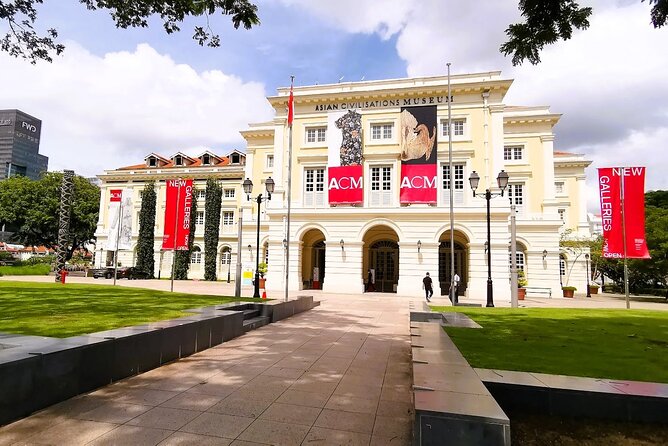
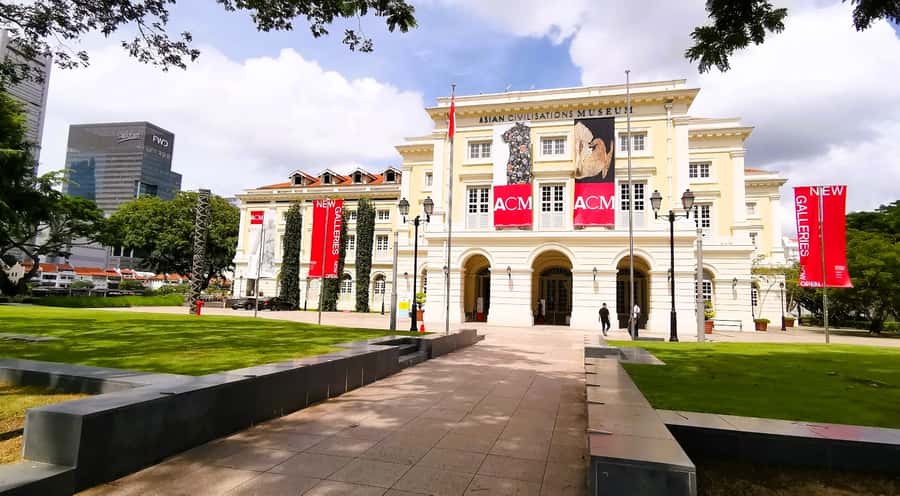
One of the fastest stops is Asian Civilisations Museum—it’s listed as a photo stop with a very brief guided segment (around 1 minute). Don’t let that confuse you. In a route like this, some stops are designed to give you orientation. You’re learning what’s nearby and how the area fits into the broader story.
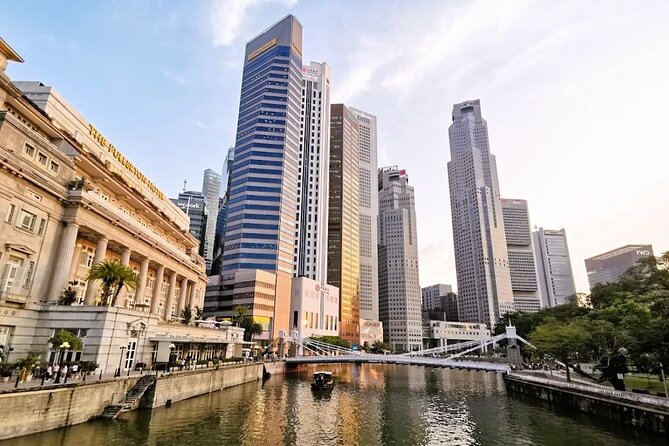
Then you cross Cavenagh Bridge (about 10 minutes, photo stop plus guided). Bridges like this are more than crossing points. They’re visual punctuation. From here, you start thinking of Singapore as a city shaped by waterways and access—exactly why the river lunch later feels so right.
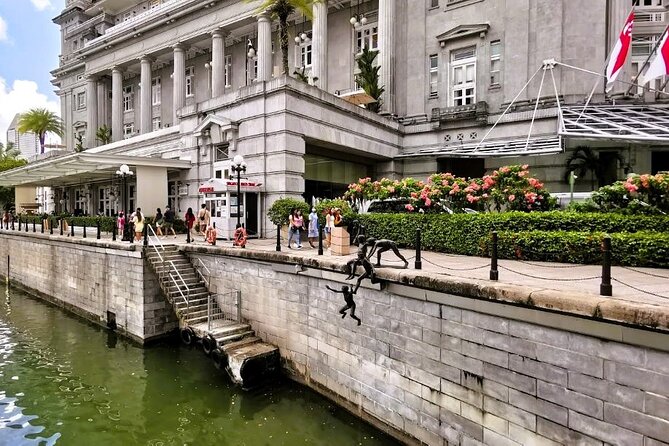
After that is The Fullerton Hotel Singapore (about 15 minutes). This is another stop where the building’s presence tells you how the colonial era wanted the city to feel: orderly, monumental, and designed to last. Even if you’ve seen photos online, being here in person makes the scale and layout click.
Shophouse streets reward slow feet, keep going
- Singapore: Private Walking Tour with a Local★ 4.7 · 410 reviews
- Private Customised Singapore Walking Tour★ 5.0 · 370 reviews
- Singapore: Chinatown, Little India, Arab Street Walking Tour★ 4.9 · 207 reviews
- Singapore: Chinatown and Little India Guided Walking Tour★ 4.8 · 190 reviews
Lunch at Boat Quay: 3 courses, and why the setting matters
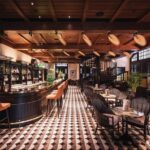
Around midday you head to Boat Quay for lunch at a riverside restaurant (about 40 minutes). This is your break point—when the tour stops being mostly “look up at facades” and becomes “sit, eat, reset.”
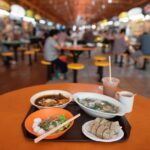
The lunch is described as a 3-course meal, and the food choice is consistently called out as a good selection. That’s important on a group tour: you want a restaurant that can keep a mixed crowd happy without making lunch feel generic or rushed.
Boat Quay also gives you something that a restaurant without a view can’t: the river context. Singapore’s colonial story wasn’t written in boardrooms only—it was written in trade routes and movement along the water. Eating here makes that connection feel real.
One fun note from past guests: you may even catch sight of river otters around the area while you eat. You shouldn’t count on it like a schedule item, but it’s exactly the kind of “Singapore is alive” detail that turns lunch into a memory.
Old Hill Street Police Station and Central Fire Station: institutions built to run
After lunch, you keep walking to Old Hill Street Police Station (about 2 minutes, photo stop plus guided). It’s brief, but it’s a key type of landmark. Colonial-era cities relied on visible systems: policing, regulation, and enforcement.
Then comes Central Fire Station (about 20 minutes). This stop tends to land well because it connects two things: architecture and safety. You get to see how public services were designed as formal civic institutions, not just back-of-house operations.
If you like tours that explain how systems shape daily life, these “function buildings” are your payoff. They show the colonial imprint in the practical stuff—how order and emergency response were organized.
St. Gregory the Illuminator: faith near the center of power
The final stop is St. Gregory the Illuminator (about 15 minutes, photo stop plus guided). This is a good closing chapter. Earlier stops highlight governance and culture; here you end with community and faith within the city center.
It also balances the walk. After police and fire-related architecture, a church stop gives you a different lens—how diverse communities were present in the colonial-era city fabric, even when the planning was shaped by colonial priorities.
By the time you finish, you’ll be able to look at the district and see structure, not just scenery.
Price check: is $49 worth it for 3.5 hours plus lunch?
At $49 per person for roughly 3.5 hours, you’re paying for three things that usually cost separately: a licensed English-speaking guide, a guided walk across multiple major civic landmarks, and a 3-course lunch at Boat Quay.
The value is strongest if you want context, not just photos. At this price, you’re basically buying someone’s ability to connect each building to the wider story—then you get fed at the end of the hardest walking stretch.
Two practical notes that affect value in real life:
- You don’t need hotel pickup, so you can show up under your own steam at City Hall and keep the day flexible.
- The tour includes a disposable poncho. That small inclusion matters in Singapore because rain can switch on fast.
What I think this tour is best for
This is ideal if you:
- Want a fast way to understand colonial Singapore without bouncing between tickets and guidebooks
- Like architecture, but also like the “why” behind it
- Want a built-in break at lunch instead of guessing where to eat
It’s also a solid choice for a first visit to Singapore’s civic core. You’ll finish with enough background to read the city as you explore later on your own.
Should you book Splendour of Colonial Singapore?
If you’re trying to decide between a “pretty walk” and a “real understanding” tour, I’d lean toward this one. The combination of restored landmarks, a guided timeline feel from 1819 to 1965, and a riverside 3-course lunch makes it a good use of half a day.
Book it if you want:
- Guided context you can carry into future sightseeing
- A central route that’s focused and efficient
- A reliable lunch stop that doesn’t derail your afternoon
Skip it only if you hate walking in humid conditions or you want a very slow pace with long museum stays. This tour is structured for movement and short guided segments that add up quickly.
FAQ
Where do I meet, and what time?
Meet at 09:55 at City Hall MRT Station Exit B (street level). The tour ends back at the meeting point.
How long is the tour?
It lasts about 3.5 hours.
How much does it cost?
It’s priced at $49 per person.
Is lunch included?
Yes. Lunch is included at a riverside restaurant at Boat Quay, and it’s described as a 3-course meal.
Does the tour run in rain?
Yes. It runs rain or shine, and you get a disposable poncho if needed.
What’s included besides the guide and lunch?
A licensed tourist guide, lunch at the riverside restaurant, and a disposable poncho.
Do I need hotel pickup?
No hotel pickup and drop-off are included.
What should I bring?
Comfortable shoes and water.
What languages is the tour in?
The tour is conducted in English.
Lunch, Handled

Walks That Earn the Humidity
Old Singapore, Retold
Fresh Reviews from the Little Red Dot
- Night Safari Tickets with Tram Ride
★ 4.5 · 3 reviews - Singapore: Architecture and Food Tour with Tastings
★ 5.0 · 3 reviews - Singapore Private Full-Day Sightseeing Tour
★ 5.0 · 3 reviews - Private Chinatown Heritage Tour with Best 8 Local Tastings
★ 5.0 · 3 reviews
History & Wartime Trails, compared.
 ★ 5.0Historical Singapore Bike Tour on Full-Sized BicyclesFrom $641,421 reviews
 ★ 3.5Nightout at Colonial Charms of the CityFrom $135733 reviews
 ★ 4.8Historical Half-Day Bike TourFrom $63399 reviews
 ★ 5.0Singapore Private Food, Culture and Heritage Tour with 9 tastingsFrom $185394 reviews
 ★ 5.0Singapore Group History & Culture Walking TourFrom $126160 reviews
 ★ 5.0Chinatown Historic Walking Tour with LunchFrom $54134 reviews
 ★ 4.5Disappearing TradesFrom $112126 reviews
 ★ 5.0Of Graves, Guns & Battles™: A Tour of Fort Canning HillFrom $79106 reviews
Browse the lists this tour appears in