
Reviewed · HISTORY & WARTIME TRAILS
The Race & Religion Tour
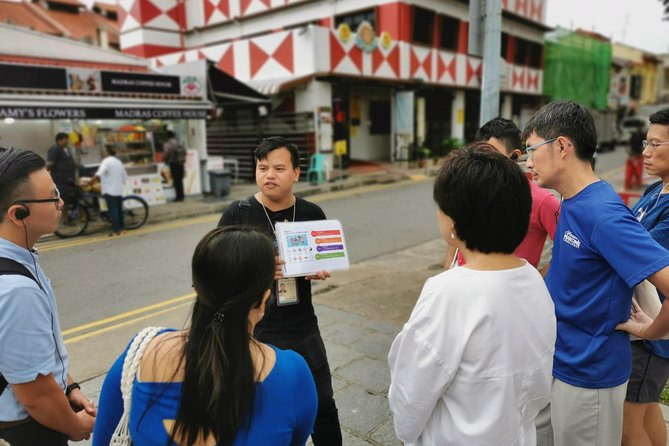
Four neighborhoods, one conversation about faith. This 2.5-hour tour maps Singapore’s race and religion through real places, not museum talk. I love the small group feel because it leaves room for real questions, and I love that private transport keeps the day from turning into a transit scavenger hunt. One watch-out: a few past bookings reported guide no-shows and confusing meeting-point issues, so it’s smart to double-check your details and build in a little patience.
If you’re the type who likes to understand a country by walking its neighborhoods, this works. You’ll start in Little India, move through Kampong Glam, then hit Waterloo Street for that famous harmony vibe, and finish at the Khalsa Dharmak Sabha Gurudwara. Each stop is free to enter, and the guide keeps things practical and human, with a focus on how people coexist.
In This Review
- Key Moments That Make This Tour Worth Your Time
- Race and Religion in Singapore: Why This Tour Makes Sense
- Little India (45 Minutes): Indian Ethnic Quarter With Purpose
- Kampong Glam (30 Minutes): The Malay Quarter and How Culture Lands
- Waterloo Street (45 Minutes): Harmony Street in Real Life
- Khalsa Dharmak Sabha Gurudwara (30 Minutes): Sikh Worship and Temple Etiquette
- Small Group + Private Transport: The Real Value of the Format
- Price and Time: Is $31.78 Actually Good Value?
- Weather, Timing, and What You’ll Want to Bring
- Before You Book: The Service Red Flags You Should Not Ignore
- Who This Tour Is Best For
- Should You Book the Race and Religion Tour?
- FAQ
- What neighborhoods does the tour cover?
- How long is The Race and Religion Tour in Singapore?
- Is admission included for the stops?
- How many people are in the group?
- What’s included in the price?
- What should I plan for that is not included?
- What if the weather is bad?
Key Moments That Make This Tour Worth Your Time
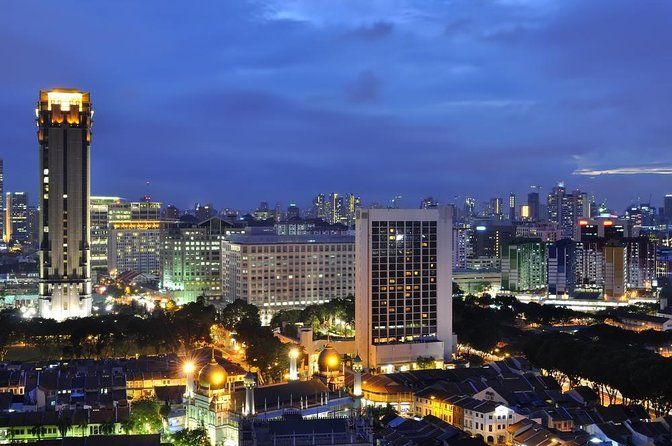
- Four neighborhoods, connected by one theme: race, religion, and everyday coexistence
- Free entry at every stop, so you spend time looking instead of paying admission
- Private transport between locations, which saves energy and time
- Max 12 travelers, which usually means better questions and less standing around
- English-speaking local guide, designed for discussion, not just a lecture
- Mobile ticket, so you check in without hunting for paper
Race and Religion in Singapore: Why This Tour Makes Sense
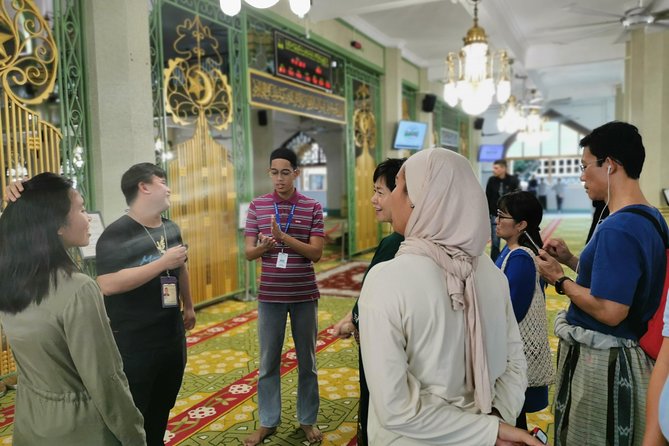
Singapore is small, which means different communities are close enough to bump into each other daily. That’s the point here. Instead of treating religion like a topic that lives behind glass, you see how it shows up in street-level details: shop signs, places of worship, and the rhythm of public life.
What I like most is that the tour doesn’t ask you to agree with anything. It asks you to notice how people live side by side, and then to ask why the city is arranged the way it is. You’ll get a guided frame for questions like: How did these neighborhoods form? How do different groups share space? What does coexistence look like when you’re actually standing in it?
The tour also respects your time. It’s long enough to be meaningful, but short enough that you can still enjoy the rest of the day on your own afterward. And because it includes private transport, you’re not wasting the experience staring at train maps.
Little India (45 Minutes): Indian Ethnic Quarter With Purpose
Your first stop is Little India, where the Indian Ethnic Quarter is the stage for a lot of visible culture. In about 45 minutes, you’re not going to become an expert on everything. But you will get oriented—how the neighborhood communicates identity through daily life.
This is where you’ll notice the basics that matter for understanding: where people gather, what kinds of storefronts and streetscape features signal religious and cultural priorities, and how the area feels different from the rest of the city even though it’s still unmistakably Singapore.
A good part of this stop is that it sets up the rest of the day. You’ll start thinking in categories beyond stereotypes: not just what people believe, but how belief affects community space and behavior. The guide keeps it grounded, so you’re less likely to leave with facts you can’t use.
Practical note: If you want to shop or take photos, this is the stop where you’ll feel the urge. Keep your camera ready, but also leave a little room in your brain for listening. The best moments come when you notice what you would have skipped on your own.
Further back into the island story, war years included
Kampong Glam (30 Minutes): The Malay Quarter and How Culture Lands
Next comes Kampong Glam, Singapore’s Malay Ethnic Quarter. You’ll spend about 30 minutes here, which is a quick hit—so the goal is focus, not completeness.
This stop helps connect the idea of coexistence to something more personal: place. You’ll see how a neighborhood carries identity, and how that identity shapes what you notice as you walk. The guide’s job is to translate street-level impressions into context you can actually understand and remember.
In a shorter time, you won’t cover every detail. But you’ll come away with a clearer sense of how Singapore organizes different cultural communities within the same city plan. That’s the kind of understanding that makes the rest of your trip feel smarter, because you start recognizing patterns instead of just absorbing random sights.
Best use of time: If you have questions about how religion interacts with everyday life—food, community spaces, public celebrations—this is where you’ll get the most payoff.
Waterloo Street (45 Minutes): Harmony Street in Real Life
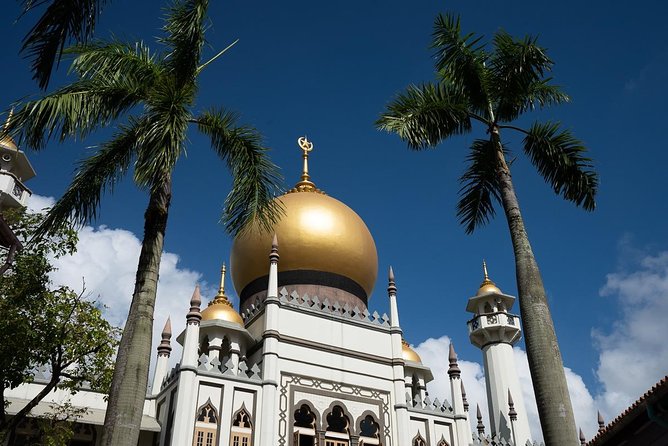
Then you move to Waterloo Street, often described as Harmony Street. You’ll have about 45 minutes here, and that time is perfect because it lets you experience the area at a walking pace rather than a rush.
This is the stop that turns the theme into a visible street scene. You’re thinking about coexistence, and then you’re standing in an area where multiple faith communities are close enough to feel connected. Even if you’re not studying religion formally, you’ll recognize how physical proximity shapes daily interactions—what people share, what they keep distinct, and how the city manages both.
What I like about this segment is that it’s not only about big explanations. It’s about noticing. You’ll probably catch things you wouldn’t have paid attention to before the tour gave you a lens: how people enter spaces, how signage and architecture reflect belief, and how public life keeps moving without turning into conflict.
If you’re the kind of traveler who likes to understand a place beyond postcard views, this is where you’ll feel the tour pay off. It’s not just a viewpoint—it’s lived geography.
Khalsa Dharmak Sabha Gurudwara (30 Minutes): Sikh Worship and Temple Etiquette
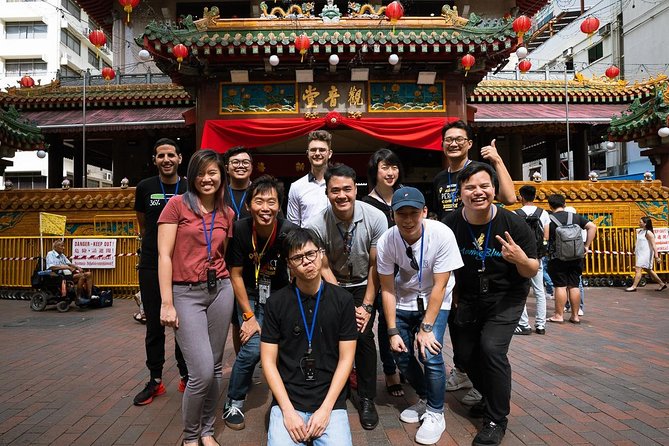
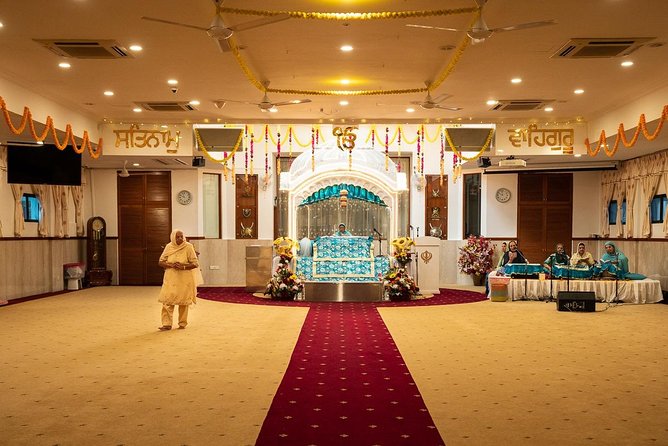
Your final stop is the Khalsa Dharmak Sabha Gurudwara. You’ll spend around 30 minutes there, and it’s a great capstone because it brings the day’s theme into a specific religious setting.
A key part of making a temple visit meaningful is behavior. Even without a long lecture, you’ll learn the basic idea: this is an active place of worship, and your job is to be respectful and observant. You’ll also get a sense of how Sikh communities organize religious life and why that matters for community identity.
This stop has a different energy than the street neighborhoods. Streets tell you how people live around faith. A gurudwara shows you how faith organizes a community space and purpose. It’s a useful contrast, and it makes the whole tour feel more rounded.
Quick tip for your visit: Move slowly, follow the guide’s cues, and keep your questions polite. When people share a sacred space, the best learning comes from a calm, attentive mindset.
- Lion City Bike Tour of Singapore★ 5.0 · 6,211 reviews
- Singapore: Gardens by the Bay Bundle Entry Ticket★ 4.3 · 3,726 reviews
- Singapore: Big Bus Hop-On Hop-Off Tour by Open-Top Bus★ 4.5 · 3,261 reviews
- Singapore: Lion City Highlights Bike Tour★ 4.9 · 2,010 reviews
Small Group + Private Transport: The Real Value of the Format
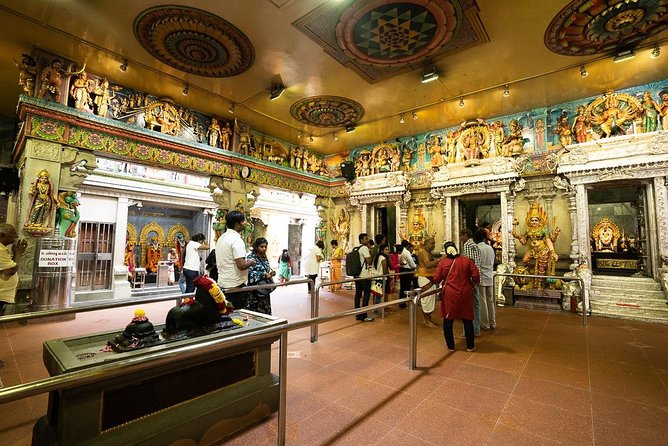
The tour caps at 12 travelers, which is not a throwaway detail. In practice, smaller groups mean the guide can respond to your questions instead of power-walking you through stops. It also means you’re more likely to get moments of back-and-forth rather than just hearing facts while trying to dodge other groups.
The other big value driver is private transport. Singapore’s public transit is excellent, but hopping between areas can still eat time and focus. Here, the transport acts like a time buffer. You spend more of the 2.5 hours seeing the neighborhoods and less time figuring out the next step.
The itinerary itself is compact and evenly paced: 45 minutes in Little India, 30 in Kampong Glam, 45 at Waterloo Street, and 30 at the gurudwara. That adds up to a day that doesn’t feel like a marathon, which is especially helpful if you’re doing other things in Singapore the same week.
Also, the tour is English-speaking and includes all taxes and charges. That matters because it reduces the usual start-of-day stress: you’re not wondering what extras show up at the register.
Price and Time: Is $31.78 Actually Good Value?
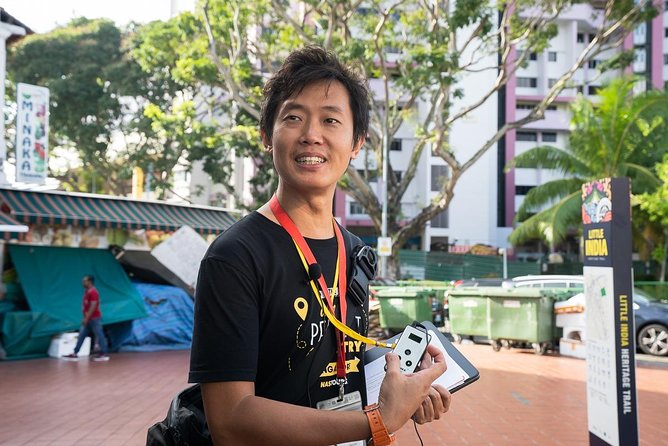
At $31.78 per person for about 2 hours 30 minutes, this sits in an accessible price range for a guided, themed experience. What you’re really paying for is structure plus local context.
If you tried to do this on your own, you’d still spend time traveling between distinct neighborhoods, and you’d likely need to piece together cultural background from apps and guidebooks. Here, the guide handles that connective tissue. You’re getting a planned route, a focused theme, and the benefit of asking questions while you’re physically in the spaces.
Another practical value point: every stop is free to enter, at least for the time you’re spending there. That keeps the experience from turning into a ticket-heavy day and makes the visit feel more flexible.
You do need to factor in one extra cost: personal expenses and guide tipping are not included. Still, that’s normal for tours like this, and it’s often easier to budget than dealing with unpredictable attraction fees.
Weather, Timing, and What You’ll Want to Bring
This experience requires good weather. That matters in Singapore because if the skies turn, walking segments can feel less pleasant. If weather causes cancellation, you should expect a different date or a full refund.
The tour starts at 10:00 am and ends back at the meeting point. That’s helpful because you can plan the rest of your day without worrying about a complicated end location.
It also helps to bring the basics: comfortable shoes, water, and a light layer if you tend to get cold indoors. Since it’s a guided neighborhood route, you’ll likely be walking more than you expect for a “short” tour—especially during the 45-minute street-based stops.
Finally, you’ll use a mobile ticket, which is straightforward. Just make sure your phone battery is healthy for the day.
Before You Book: The Service Red Flags You Should Not Ignore
I’m going to be blunt here, because a tour is only valuable if it happens.
The rating is 3.6 based on 17 reviews, and several reviews point to a serious issue: no-shows and poor customer service when people tried to reach the company. One account also described confusion after a meeting-point change, leading to wasted time chasing the tour.
That doesn’t mean the tour never runs. But it does mean you should treat this like a real appointment. Here’s what I’d do if I were booking:
- Verify the exact meeting point instructions in your confirmation and compare them to what you see on the day.
- Arrive early, not just on time. If the group is small, you don’t want to be the late puzzle piece.
- Save the contact details for the provider and try them before you leave for the meeting point.
- Keep expectations realistic: this is a human-run experience, so a little backup planning protects your day.
If you’re traveling on a tight schedule, I’d be extra cautious. If your plans are flexible and you’d rather spend time in those neighborhoods with or without perfect timing, then this becomes a more comfortable risk.
Who This Tour Is Best For
This is a strong fit if you want to understand Singapore through faith and community space rather than just landmarks.
You’ll likely enjoy it if:
- You like guided context while walking neighborhoods.
- You want a structured way to visit Little India, Kampong Glam, and a gurudwara in a single morning.
- You’re curious about how different groups coexist in the same city.
You might not love it if:
- You need absolute reliability with no chance of last-minute disruptions.
- You dislike walking and prefer long, indoor museum-style activities only.
- You prefer large-group tours with less conversation.
Should You Book the Race and Religion Tour?
I think it can be a worthwhile Singapore morning because the route is focused, the theme is handled in real-world locations, and the format is practical: free entries, a small group, and private transport.
But because there are multiple reported no-show and communication failures, you should book with eyes open. If you can be early, confirm your meeting details, and contact the provider if something feels off, the upside is solid: you’ll leave with a better grasp of how faith and identity shape street life in Singapore.
If you’d rather avoid any risk to your schedule, consider whether you can tolerate a morning that might run differently than planned. For the right kind of traveler—curious, flexible, and respectful—this tour can deliver real understanding fast.
FAQ
What neighborhoods does the tour cover?
The tour includes stops in Little India, Kampong Glam, Waterloo Street, and a visit to the Khalsa Dharmak Sabha Gurudwara.
How long is The Race and Religion Tour in Singapore?
It runs about 2 hours 30 minutes.
Is admission included for the stops?
The tour information shows free admission for the stops.
How many people are in the group?
The maximum group size is 12 travelers.
What’s included in the price?
Included are an English-speaking local guide, private transport for the tour, and all taxes, fees, and handling charges.
What should I plan for that is not included?
Hotel transfers, personal expenses, and guide tipping are not included.
What if the weather is bad?
This experience requires good weather. If it’s canceled due to poor weather, you’ll be offered a different date or a full refund.
Old Singapore, Retold



Fresh Reviews from the Little Red Dot
- Night Safari Tickets with Tram Ride
★ 4.5 · 3 reviews - Singapore: Architecture and Food Tour with Tastings
★ 5.0 · 3 reviews - Singapore Private Full-Day Sightseeing Tour
★ 5.0 · 3 reviews - Private Chinatown Heritage Tour with Best 8 Local Tastings
★ 5.0 · 3 reviews
History & Wartime Trails, compared.
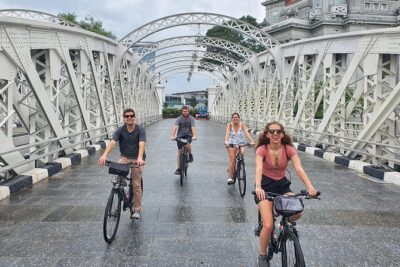 ★ 5.0Historical Singapore Bike Tour on Full-Sized BicyclesFrom $641,421 reviews
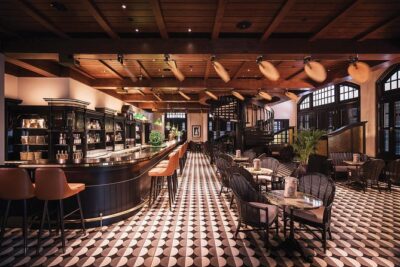 ★ 3.5Nightout at Colonial Charms of the CityFrom $135733 reviews
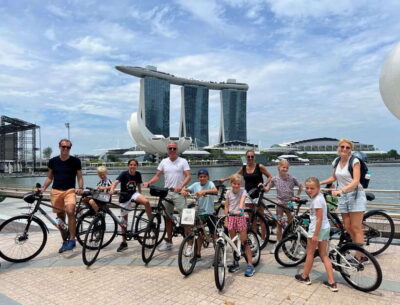 ★ 4.8Historical Half-Day Bike TourFrom $63399 reviews
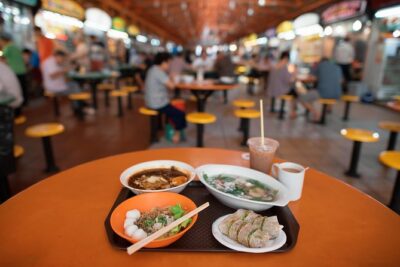 ★ 5.0Singapore Private Food, Culture and Heritage Tour with 9 tastingsFrom $185394 reviews
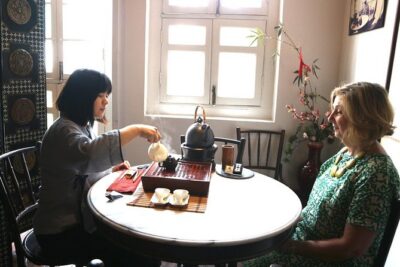 ★ 5.0Singapore Group History & Culture Walking TourFrom $126160 reviews
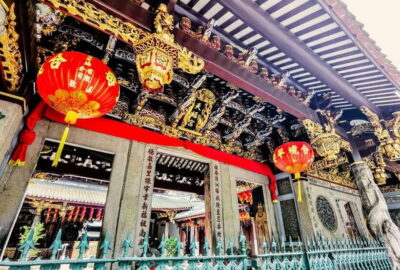 ★ 5.0Chinatown Historic Walking Tour with LunchFrom $54134 reviews
 ★ 4.5Disappearing TradesFrom $112126 reviews
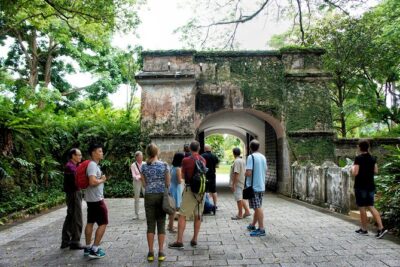 ★ 5.0Of Graves, Guns & Battles™: A Tour of Fort Canning HillFrom $79106 reviews
Browse the lists this tour appears in