
Reviewed · CHINATOWN TOURS & TASTINGS
Singapore’s Historic Chinatown Walking Tour with Lunch
One walk, 200 years of Chinatown. It starts high up for quick orientation, then drops into temples, old school courtyards, and family-run shops. Chinatown stays the theme throughout, with bonus street art along the way.
Two things I really like about this tour are the way the guide ties sights to everyday life, and the fact that food isn’t an afterthought. Snacks plus lunch are included, and the stop for soya sauce chicken rice or noodles lands at a long-running place.
One possible drawback: the 3 hours 30 minutes go fast because there’s a lot packed in. If you want slow wandering and lots of photo time, plan for fewer breaks and quicker stop-and-go moments, especially during the busy outdoor stretches.
In This Review
- Key highlights worth your attention
- First stop: CapitaSpring’s Sky Garden gets your bearings
- Yueh Hai Ching Temple: an older, quieter spiritual stop
- Pekin Street and the boys’ school courtyard from 1854
- Fuk Tak Chi Museum: when a temple becomes a museum
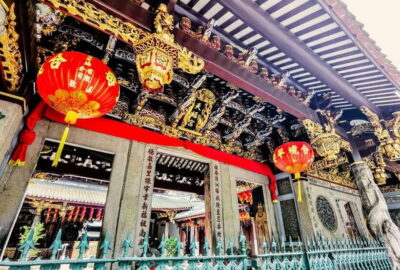
- Thian Hock Keng Temple: architecture you can’t unsee
- Ann Siang Hill and the last water well clue
- Club Street origins: Chinese Weekly Entertainment Club and Goh Loo Club
- Mohamed Ali Lane: street art that points back to heritage
- Lunch at Chiew Kee Noodle House: soya sauce chicken rice or noodles
- Yue Hwa Chinese Products: the “Raffles Hotel of Chinatown” idea
- The Majestic Theatre: how a wealthy merchant shaped the scene
- Lim Chee Guan (1938) and the survival factor through WWII
- Pek Sin Choon tea shop (1925): Nanyang blends and old-school character
- Tai Thong Cake Shop: mooncakes, year-round sweets, and a taste stop
- Lau Choy Seng and the Temple Street kitchenware vibe
- Smith Street murals and Lai Chun Yuen Opera House
- Sago Street, the Street of the Dead, and the name you can’t ignore
- Ending at Fong Moon Kee: ointment shop folklore
- Pace, distance, and how to plan your day
- Is it worth $55.51? My value check
- Should you book this Historic Chinatown walking tour?
- FAQ
- How long is the Singapore Chinatown walking tour?
- What does the tour include?
- Where does the tour start and end?
- What time does it start?
- Is admission required for the stops?
- How big is the group?
- Is tipping included in the price?
Key highlights worth your attention
- CapitaSpring’s Sky Garden view gives you the big-picture layout of the Historic District before you start walking.
- Yueh Hai Ching Temple (possibly dating to 1819) is quieter and often overlooked compared with bigger-name temples.
- Thian Hock Keng Temple (established 1821) is known for its striking architecture, built without a nail being used.
- Street art by Yip Yew Chong shows up on Mohamed Ali Lane, plus more murals on the later route.
- Lunch at Chiew Kee Noodle House is included, with traditional soya sauce chicken noodles/rice from a restaurant dating back to 1949.
- Old Chinatown stores continue the story from tea and cakes to ointments, including shops founded in 1925, 1950, and 1908.
First stop: CapitaSpring’s Sky Garden gets your bearings
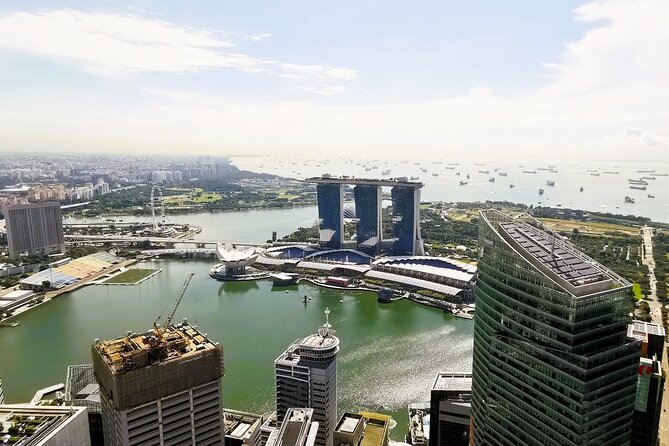
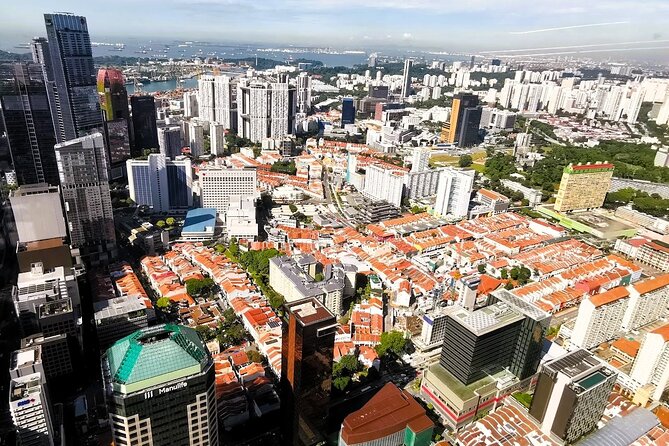
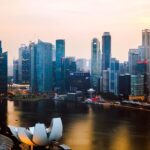
You start near the Whisky Distillery at 1 Raffles Pl and your first “wow” is CapitaSpring’s Sky Garden. It’s free, and you get about 20 minutes to look down over the Historic District of Chinatown. That matters more than it sounds. When you can see the shape of the area from above, the street turns later feel less random and more like a connected maze.
From the skyline view, the walking route stops making you guess where everything is. You’ll understand why the tour moves the way it does—temples, lanes, and shop clusters weren’t placed by luck. They grew where people worked, prayed, traded, and lived. This first stop is a simple trick: it helps you “read” the streets as you go.
Tip: If you’re the type who likes photos, arrive ready. The view is timed, so you can’t spend a whole lunch worth of minutes up there.
Yueh Hai Ching Temple: an older, quieter spiritual stop
Next comes Yueh Hai Ching Temple, with origins possibly as early as 1819—older than Thian Hock Keng Temple. The tour keeps expectations realistic: this one can feel overlooked by locals and tourists. That’s a good thing. You step inside and it feels like a different world from the street noise outside.
What makes this stop work on a walking tour is how it shifts the focus from “cool building” to “how people lived.” The temple setting gives context for the Chinese immigrant communities in Chinatown—beliefs, traditions, and the rhythms of daily life around places of worship.
If you’re sensitive to quiet spaces, this is a nice break. Just remember: you’re entering a sacred environment, so follow your guide’s pace and keep voices down.
Chinatown holds more lanes than one afternoon
Pekin Street and the boys’ school courtyard from 1854
Then you’re not just looking at facades. You step into a courtyard associated with a Chinese boys’ school from 1854. The tour leans on imagination here—picture boys learning to read and write, and then playing traditional games like chapteh after classes.
That kind of detail turns a location into a scene. And it’s exactly what makes a guided walk better than wandering alone. Without a guide, you might notice the courtyard and move on. With one, you get the human scale: education, youth, and everyday play in a part of Singapore that has changed massively since the 1800s.
Fuk Tak Chi Museum: when a temple becomes a museum
A short hop brings you to Fuk Tak Chi Museum. The building used to be a temple built by Cantonese and Hakka worshippers of Tua Pek Kong (God of Prosperity) in the 1820s. Now it houses a museum with displays about what life was like in the area.
This stop is valuable because it shows how Chinatown’s religious buildings didn’t just disappear when Singapore modernized. Some stayed, but their roles changed—heritage turned into education. You’re essentially seeing the same walls used in two different chapters of time.
If you like places that explain “how we got here,” this museum stop gives you that bridge without being a long detour.
Thian Hock Keng Temple: architecture you can’t unsee
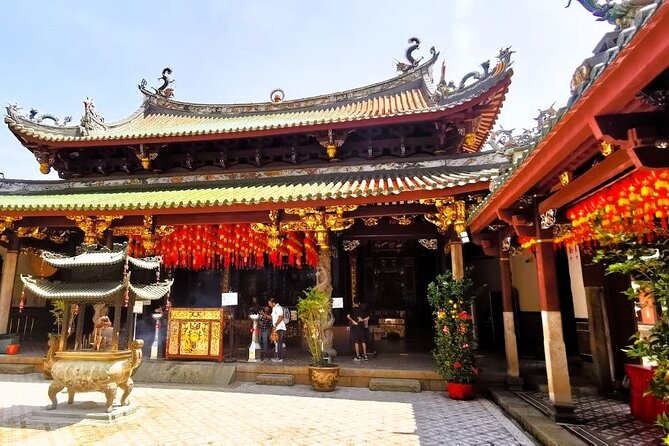
Next is Thian Hock Keng Temple, established in 1821. It’s described as the oldest Hokkien temple and likely the second oldest Chinese temple in Singapore. One highlight is the architecture: it’s known for being built without a nail.
Even if you don’t care about building methods, this is one of those sites where your eyes keep catching details. This is also the kind of stop where your guide’s explanations matter. You’ll hear about traditions and the meaning behind what you’re seeing, not just the date on a sign.
Practical note: the time here is about 25 minutes, so if you want photos, aim for a couple quick angles early, then enjoy the rest of the explanations without rushing.
Further back into the island story, war years included
- Historical Singapore Bike Tour on Full-Sized Bicycles★ 5.0 · 1,421 reviews
- Nightout at Colonial Charms of the City★ 3.5 · 733 reviews
- Singapore: Historical Half-Day Bike Tour★ 4.8 · 399 reviews
- Singapore Group History & Culture Walking Tour★ 5.0 · 160 reviews
Ann Siang Hill and the last water well clue
After temples, the walk shifts into geography and old infrastructure with Ann Siang Hill. Here you’re meant to look for clues like the last water well in Chinatown, plus the idea that hills and plantations used to exist in the area.
This is a sneaky good stop. People often think of old Singapore as “old buildings.” But water access, terrain, and land use shaped where communities settled and how they survived. Ann Siang Hill is where the tour turns Chinatown into a place you can understand, not just a place you can photograph.
Also, you’ll get the story of how Ann Siang Hill got its name—small detail, but it helps the whole area feel less like a collection of stops and more like a neighborhood with logic.
Club Street origins: Chinese Weekly Entertainment Club and Goh Loo Club

The tour then hits a theme that’s fun and slightly surprising: millionaire clubs and social life. You stop at the Chinese Weekly Entertainment Club, where you’ll learn the truth behind how Club Street got its name and hear about high society parties tied to a wealthy club.
A little later you reach Goh Loo Club, and the story centers on its interesting window grills. These details sound “architect-y” on paper, but on the ground they hint at status and design choices for a specific community and era.
Why I like this part of the tour: it keeps Chinatown from becoming only temples and food. You get social history—power, leisure, and the way wealth had its own spaces.
Mohamed Ali Lane: street art that points back to heritage
Now you get out the “colorful ink” portion of the story at Mohamed Ali Lane. The tour highlights local artist Yip Yew Chong and specifically his second mural on this route. The art is described as often interactive and heritage-themed.
This stop is a reminder that Chinatown isn’t stuck in the past. It’s still being explained, painted, and reinterpreted—right in the lanes.
If you’re a photo person, this is one of the best spots to slow down for a minute. The murals are meant to be noticed up close, not just passed by at walking pace.
Lunch at Chiew Kee Noodle House: soya sauce chicken rice or noodles
Time for lunch at Chiew Kee Noodle House, a place dating back to 1949. The tour includes a traditional soya sauce chicken meal in noodle or rice form, plus snacks.
This is where value shows up clearly. You’re not just buying a guided walk. You’re getting a real meal inside the route, at a Chinatown institution that’s been around long enough to have served multiple generations.
Is it a fancy lunch? No clue is needed. It’s positioned as traditional. Expect a simple, satisfying meal that you can eat without worrying about finding the right place mid-tour.
Quick tip: keep your water handy. Even with a timed lunch, you’ll walk a lot before and after this stop.
Yue Hwa Chinese Products: the “Raffles Hotel of Chinatown” idea
Next you learn about Yue Hwa Chinese Products, housed in a 1927 building. The description calls it once the Raffles Hotel of Chinatown, and now it functions as a Chinese emporium.
The “Raffles Hotel of Chinatown” line is useful. It tells you what this area was like when trading, lodging, and prestige were tied together. This isn’t just shopping. It’s a window into how commercial buildings helped define status and convenience.
If you like the story behind what’s for sale, you’ll enjoy this stop more than you’d expect.
The Majestic Theatre: how a wealthy merchant shaped the scene
At The Majestic, you’ll hear how the theatre came into being, including the role of a wealthy Chinese merchant who made it possible. This is one of those stops that changes your view of Chinatown again.
Instead of focusing only on daily essentials (food, temples, trade), you’re seeing entertainment and civic life. A theatre means money, organization, and an audience that wanted culture in their neighborhood.
Lim Chee Guan (1938) and the survival factor through WWII
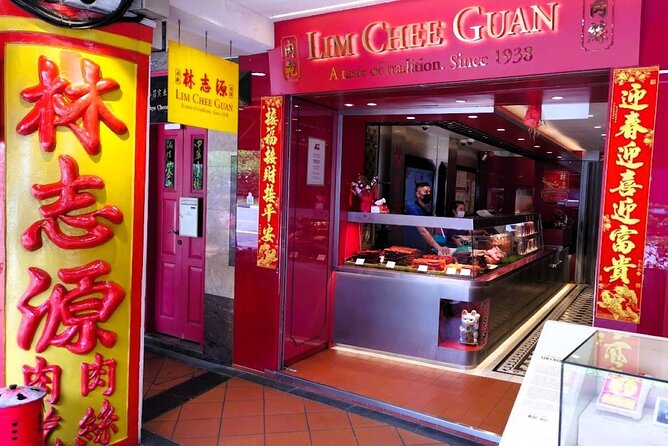
Then it’s Lim Chee Guan New Bridge Road Store, established in 1938. The tour notes it endured the Second World War and remains one of Singapore’s best-loved brands decades later.
That’s the core value here: longevity. You’re walking past businesses that weren’t only fashionable once—they adapted and kept going.
If you’re shopping-minded, this stop can be a good place to see what locals have kept buying for years. If you’re not shopping, it still works as a story stop: the persistence tells you how Chinatown holds onto identity.
Pek Sin Choon tea shop (1925): Nanyang blends and old-school character
Next is Pek Sin Choon Pte Ltd, established in 1925. It’s described as a tea shop with unique Nanyang blends, with close to 100 years of history.
This part of the route is for your senses. Tea is one of those products that sounds ordinary until you realize it carries regional style. Nanyang blends connect Chinatown’s food-and-trade culture to how people tasted the world through imported ingredients and local preferences.
Tai Thong Cake Shop: mooncakes, year-round sweets, and a taste stop
At Tai Thong Cake Shop, established in 1950, you’ll see Cantonese-style mooncakes and other sweet treats sold year round. The tour includes time to drop by and get a taste.
This is a nice pacing change. You’ve been looking at temples and social clubs, then you’re in “snack mode” for a short window. It’s also a practical break if your legs are complaining.
Lau Choy Seng and the Temple Street kitchenware vibe
In the next stretch along Temple Street, you stop at Lau Choy Seng Pte Ltd. It’s a kitchenware store, and the tour notes you’ll also find three more Yip Yew Chong murals nearby.
That combo matters. This isn’t a random shop stop. It’s shop + art + street context, so it feels like part of the Chinatown story rather than a sales opportunity.
If you cook or you love food culture, seeing kitchenware in an old Chinatown store gives you a “how home life looked” perspective.
Smith Street murals and Lai Chun Yuen Opera House
Then you hit Smith Street, where the mural theme continues. The tour describes a Yip Yew Chong mural depicting his own home in Sago Lane more than five decades ago, plus a stop to see Lai Chun Yuen Opera House along Smith Street.
This is another “people and places” moment. You’re looking at how memories get painted into the public space, and how opera house culture fits into Chinatown’s social calendar.
If you like arts and performance history, you’ll probably enjoy this stop more than you expect.
Sago Street, the Street of the Dead, and the name you can’t ignore
Next comes Sago Street, also called the Street of the Dead. The tour explains how Sago Lane became known that way and what it looks like today.
Even if the explanation is brief, the name alone makes you slow down. It turns the walk from “nice sights” into “real historical weight.” That makes the earlier stops—schools, temples, clubs—feel more connected to the stories of the people who lived and worked here.
Ending at Fong Moon Kee: ointment shop folklore
The tour finishes at Fong Moon Kee (冯满记) at 16 Sago St. It’s an ointment shop established in 1908, and the tour frames it as offering answers for aches and pains—linked to coolies and rickshaw pullers who would have needed relief.
This ending is clever because it ties everyday needs to a specific place. Chinatown history isn’t only grand buildings. It’s also the practical shops that supported working lives.
And yes, you’ll end exactly where you’re meant to: in the heart of the lanes, with the store story as your final “note” for the walk.
Pace, distance, and how to plan your day
This tour packs a lot into a 3 hours 30 minutes loop, with max group size 15. That’s a sweet spot. It’s small enough for questions and stories, and structured enough that you don’t spend your energy hunting for the next stop.
The tradeoff is pacing. The tour hits many points along the route, so your photo breaks can feel quick. I’d plan like this:
- wear comfortable shoes,
- keep your phone charged,
- and decide whether you’re in “learn mode” or “photo mode” during the temples.
One more practical plus: you get a disposable poncho in case of rain. And the tour uses a mobile ticket, so you’re not dealing with paper in the humid air.
Is it worth $55.51? My value check
At $55.51 per person, this tour costs about what you’d expect for a guided half-day in Singapore—but it’s more than “just a walk.” You’re getting:
- a licensed tourist guide
- multiple major Chinatown landmarks and lesser-known stops
- snacks plus lunch
- and free admission at all the listed sights (including the Sky Garden stop)
For value, the lunch is the big offset. If you were buying lunch in Chinatown anyway, you’re not paying extra for time. You’re paying for a route with context, plus food included at an established eatery from 1949.
If you’re food-leaning and history-curious, this pricing makes sense. If you only want a quick sightseeing shuffle with zero story, it may feel like you’re spending most of your time listening. But if you like having someone connect the dots, it’s a strong deal.
Should you book this Historic Chinatown walking tour?
Book it if you want a guided route through Chinatown’s key layers—temples, old school sites, clubs, murals, and shopfront history—without needing to research every stop yourself. This is also a good choice if you appreciate a guide who can explain how everyday life worked, not just what buildings look like.
Skip it (or be selective) if your goal is slow wandering, long photo sessions, or avoiding any pace pressure. The route is packed, and the timing suggests you’ll be learning more than lingering.
Bottom line: if you want one Chinatown walk that gives you direction, stories, and included food, this one is a solid pick.
FAQ
How long is the Singapore Chinatown walking tour?
It runs for about 3 hours 30 minutes.
What does the tour include?
It includes snacks and a traditional soya sauce chicken noodle or rice lunch, plus a licensed tourist guide and a disposable poncho in case of rain.
Where does the tour start and end?
It starts at The Whisky Distillery, 1 Raffles Pl #01-07/08, Singapore 048616, and ends at Fong Moon Kee (冯满记), 16 Sago St, Singapore 059016.
What time does it start?
The start time is 10:00 am.
Is admission required for the stops?
The listed stops show admission tickets as free, including the Sky Garden at CapitaSpring and the temple and museum stops on the route.
How big is the group?
The tour has a maximum of 15 participants.
Is tipping included in the price?
No. Gratuities are not included.
Walks That Earn the Humidity
Old Singapore, Retold
Chinatown, Lane by Lane
Fresh Reviews from the Little Red Dot
- Night Safari Tickets with Tram Ride
★ 4.5 · 3 reviews - Singapore: Architecture and Food Tour with Tastings
★ 5.0 · 3 reviews - Singapore Private Full-Day Sightseeing Tour
★ 5.0 · 3 reviews - Private Chinatown Heritage Tour with Best 8 Local Tastings
★ 5.0 · 3 reviews
Chinatown Tours & Tastings, compared.
 ★ 5.0Chinatown, Little India, Kampong Gelam City Highlights TourFrom $80224 reviews
 ★ 5.0Chinatown Hawker Market Food Tour with 7 Food TastingsFrom $146213 reviews
Chinatown, Little India, Arab Street Walking TourFrom $53207 reviews
★ 5.0Chinatown Hawker Market Food Tour with 7 Food TastingsFrom $146213 reviews
Chinatown, Little India, Arab Street Walking TourFrom $53207 reviews
 ★ 4.8Chinatown and Little India Guided Walking TourFrom $78190 reviews
 ★ 5.0Chinatown Historic Walking Tour with LunchFrom $54134 reviews
 ★ 5.0Chinatown Hawker Food Tasting TourFrom $8896 reviews
 ★ 4.5Kampong Glam, Little India & Chinatown with Local Street Food TastingsFrom $17770 reviews
 ★ 5.0Chinatown Heritage Centre (Admission Ticket)From $2065 reviews
Browse the lists this tour appears in