
Reviewed · CHINATOWN TOURS & TASTINGS
Tasting Trails: Chinatown, Little India & Kampong Glam, Haji Lane
One street name can tell a whole story. This private Singapore food tour links Little India, Kampong Glam, and Chinatown into one steady, not-too-long 4-hour wander. What I love is the local-guide storytelling (I’ve heard guides like Kelvin and Dawn turn history into street-level sense) and the pace that doesn’t feel like a food sprint. The one thing to plan for is the walking: it’s a lot of ground for 4 hours, so it’s not the best match if you’re dealing with mobility limits.
You also get a nice mix of food stops and visual anchors. You’re not just eating; you’re learning why these neighborhoods look and taste the way they do. At the end, you land at Maxwell MRT, which makes it easier to roll into your next plan.
Here’s the trade-off: two attractions along the way list admission not included (Sultan Mosque and Chinatown Heritage Centre). Most other stops are free-entry on the day, so it’s usually manageable, but it’s worth knowing upfront so you’re not surprised.
In This Review
- Key reasons this tasting trail works
- Route Overview: from Little India to Maxwell MRT in about 4 hours
- Little India stops: a Chinese villa, restored shophouses, and Tekka market energy
- Kampong Glam: Sultan Mosque color, Arab Street shops, and Haji Lane street art
- Chinatown Heritage Centre and Smith Street murals: learning without a lecture
- Pagoda Street and Nanyang Old Coffee: coolie-era edges and a second-floor time machine
- Buddha Tooth Relic Temple and Chinatown Complex: finish with icons and everyday food stalls
- The tastings: 8 to 10 samples at a pace that doesn’t chew up your whole day
- Local guides who actually connect dots: Kelvin, Dawn, and neighborhood memory
- Price and logistics: what $100.89 buys you, and what you’ll still pay
- Who this Singapore tasting trail is best for
- Should you book this Tasting Trails route?
- FAQ
- How long is the Tasting Trails tour?
- Where do you start and where do you end?
- What does the tour include?
- Are there any admissions included in the price?
- Is this a private tour?
- Do I get a mobile ticket?
- Do I need to use public transport during the tour?
- Is tipping included?
- Who is the tour not recommended for?
- What is the cancellation policy?
Key reasons this tasting trail works
- Private group only: it’s just your group, so the pace stays comfortable and questions don’t get lost.
- Guides with neighborhood memory: people like Kelvin and Dawn are highlighted for history-to-life storytelling.
- 8 to 10 tastings: enough food to be satisfying without turning the whole trip into nonstop eating.
- A smart neighborhood flow: you move logically across Singapore’s key cultural districts.
- Plenty of photo-and-story stops: murals, temples, shophouses, and markets keep it interesting between bites.
- Mobile ticket and water included: small things that make the start easy.
Route Overview: from Little India to Maxwell MRT in about 4 hours
This is built for travelers who hate two extremes: the all-day marathon and the rushed food dash. The timing is tight but not frantic. You’ll spend about 15 minutes per stop, and the route is planned to keep momentum without rushing you through every corner.
You start in Little India and finish at Maxwell MRT Station (TE18). That end point is handy because Maxwell sits right in the city center. In practical terms, it means you can finish the tour and still have lots of options nearby for dinner, dessert, or a late snack.
One more practical note: it’s listed as not recommended if you have challenging walking. That matters here because the schedule includes multiple districts and repeated short transitions. If you’re the type who likes to stop and stare at shopfronts (you will), you’ll feel the walking. If you’re good on your feet, the payoff is worth it.
Little India stops: a Chinese villa, restored shophouses, and Tekka market energy
Your route kicks off where Singapore’s Indian community history is visible in everyday streets. You begin at the House of Tan Teng Niah, a former Chinese villa built in 1900. The façade is colorful and the building is one of the last surviving Chinese villas in the Little India area. What I like about this kind of stop is how quickly it corrects your mental map. Singapore’s neighborhoods overlap in real time, not as separate postcards.
Next comes the Little India Arcade, a restored 1913 shopping complex with shophouses designed for trades and daily life. This is a good moment to slow down and notice the mix: textiles, traditional goods, and food sit side by side. For your taste buds, it also sets up the idea that Singapore shopping is not separate from eating. They’re part of the same street rhythm.
From there, you’ll walk along Buffalo Road. The name points to the area’s past when buffalo rearing and cattle trade shaped the neighborhood’s early function. Even if you don’t know the details beforehand, the street name becomes a shortcut to understanding how land use changes over time while people keep re-inventing the place.
Then you hit Tekka Place, known for fresh produce, meats, seafood, and hawker-style food. Markets like this are where you learn what locals mean by practical variety: you can eat across different flavors in one stop, and you can also understand how ingredients travel through neighborhoods. If you like markets, this part is where the tour’s food side starts feeling real rather than theoretical.
What to watch for here: if you’re sensitive to strong smells or busy market crowds, Tekka Place can feel intense. Give yourself permission to pause, look, and breathe before you taste.
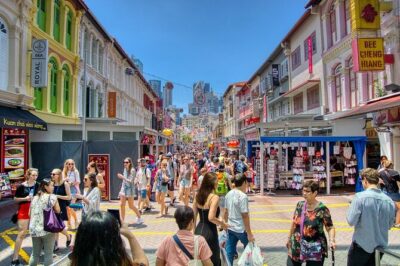
Chinatown holds more lanes than one afternoon
Kampong Glam: Sultan Mosque color, Arab Street shops, and Haji Lane street art
The tour shifts from Little India’s layered streets into Kampong Glam, a neighborhood tied closely to Malay-Muslim heritage. The first anchor is the Sultan Mosque, famous for its golden dome and Islamic significance dating to 1824. Even if you’re not visiting as a religious participant, it’s a landmark that helps you understand why this district became a magnet for commerce and community life around it.
One heads-up: Sultan Mosque admission is listed as not included. The architecture and setting are the reason many people want this stop, so if you’re budgeting tightly, it’s worth factoring in entry for the day.
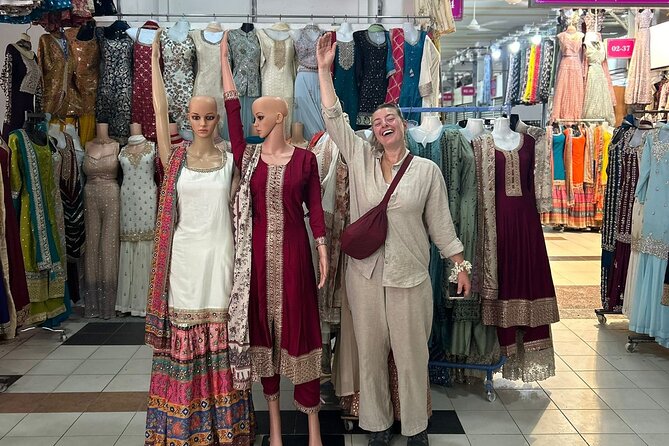
After that, the route moves through Kampong Glam itself and then onto Arab Street. Arab Street is known for textile shops and Middle Eastern cafés, with a strong sense of Islamic heritage shaping the shopfronts and street layout. This stop is useful because it gives you a shopping-and-snacking logic: it’s not random. It’s clustered because the area historically served specific needs.
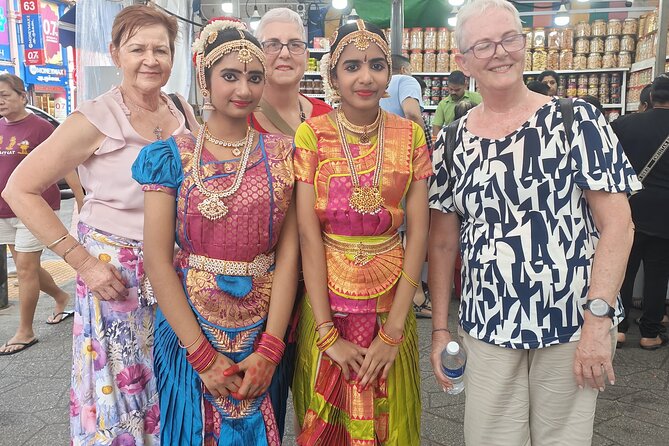
Finally, you reach Haji Lane, a narrow lane famous for an eclectic mix of boutiques, street art, and cafés. This is the part that often makes people smile with relief. You’ve been reading history through buildings and names; now you’re seeing how people make the scene playful and modern.
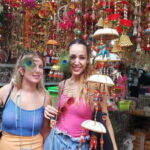
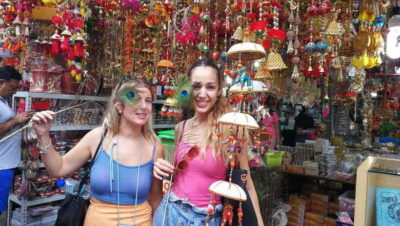
In one highlight from past participants, Haji Lane stops included time to enjoy things like henna tattoo and a perfume shop experience. That doesn’t mean you’ll do a treatment or buy anything for sure, but it does suggest the lane is treated as more than a photo stop. It’s a place for small, sensory choices.
Chinatown Heritage Centre and Smith Street murals: learning without a lecture
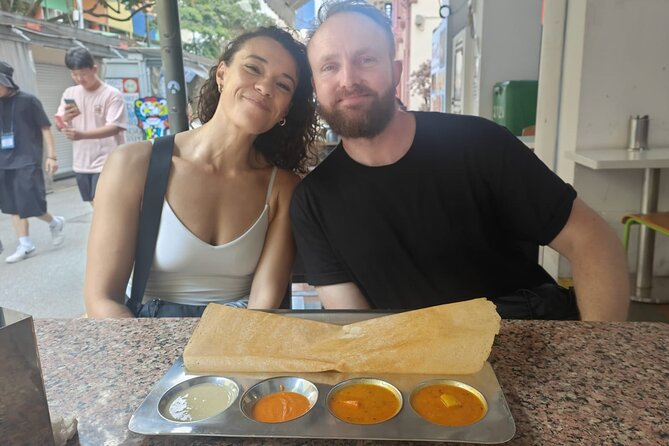
Chinatown is where the tour leans hardest into storytelling. You visit the Chinatown Heritage Centre, where the focus is early Chinese immigrant life—struggles, hopes, and resilience—using recreated 1950s-style homes. The tone here is more reflective. The idea is that you understand the neighborhood as something people built under pressure, not just a place for souvenirs.
Admission for the Heritage Centre is listed as not included, so again, plan for that if you want it as part of your day.
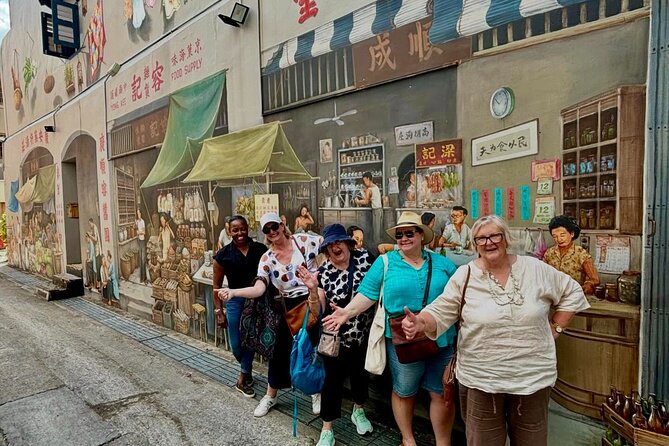
Next you stop at Smith Street, known for murals by Yip Yew Chong. The tour highlights pieces like My Chinatown Home and The Letter Writer. What I like about mural stops is that they slow the group down naturally. You don’t have to force attention; your eyes do the work. It’s also a reminder that Chinatown’s story isn’t only in old buildings. It’s in how artists record everyday life.
Pagoda Street and Nanyang Old Coffee: coolie-era edges and a second-floor time machine
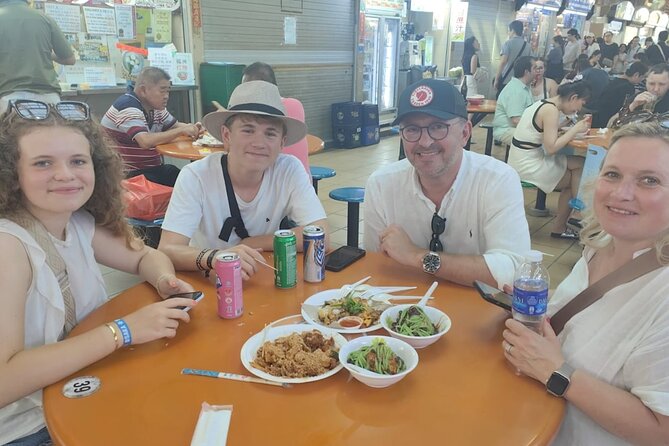
From there, you head to Pagoda Street, a street tied to Chinese immigrant life in the 19th century. It was described as housing coolie lodgings and also opium dens in that era, alongside shops such as Kwong Hup Yuen, a prominent coolie firm. This is the kind of stop that might feel heavier than the others, but it’s part of why a tour like this is more than a snack run.
What I value here is balance. If you only see bright religious or shopping spots, you miss how harsh urban life could be. And if you only see the harsh parts, you miss how communities keep going. The tour keeps shifting moods so you get the full human scale of the neighborhood.
Then you visit Nanyang Old Coffee, a nostalgic coffee stop with red walls, vintage signage, and traditional décor. The second floor includes a mini-museum with antique coffee-making equipment. This is one of those stops that’s both practical and atmospheric. You can reset your energy before the tour’s temple-and-market finale.
From Tekka to the Sultan Mosque, more quarter time
- Singapore: Chinese, Indian & Arabic Quarters, Culture & Food Tour★ 5.0 · 789 reviews
- Singapore: Chinatown and Little India Guided Walking Tour★ 4.8 · 190 reviews
- #instawalk: Bugis, Waterloo, Kampong Glam★ 5.0 · 60 reviews
- Tasting Trails: Chinatown OR with Kampong Glam, Little India★ 5.0 · 59 reviews
Buddha Tooth Relic Temple and Chinatown Complex: finish with icons and everyday food stalls
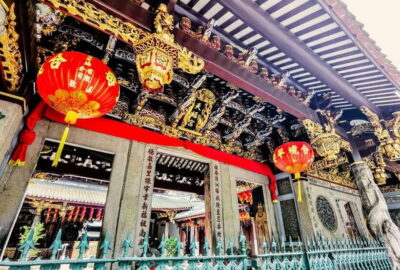
You close Chinatown with the Buddha Tooth Relic Temple and Museum, known for Tang Dynasty–inspired architecture. You’ll see multi-tiered roofs, wood carvings, and symbolic elements like dragons, phoenixes, and lotus flowers. The visuals are the draw, but the practical value is that it grounds the tour in the living spiritual side of the city. This isn’t just old stone. It’s a place that still shapes community rhythms.
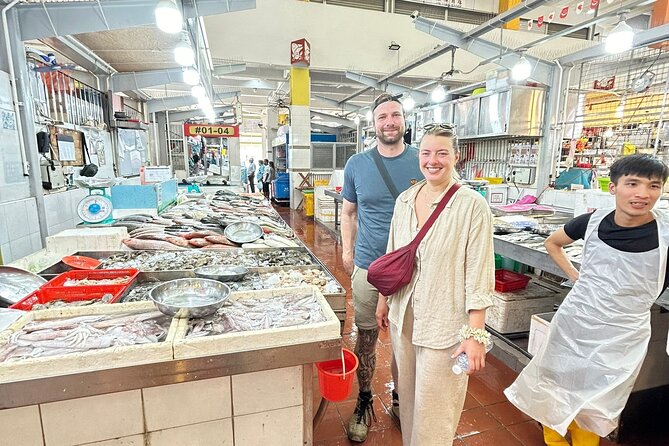
Right after that, you finish at Chinatown Complex, famous for a wet market and many local food stalls. If you’ve been thinking about food as an experience rather than just a meal, this is where the tour makes that idea concrete. Wet markets show ingredients in their real form—produce, meats, seafood—while the stalls show how those ingredients become quick comfort dishes.
This is also a smart end point because it’s a local food hub rather than a single attraction. After your last tasting, you can still keep eating at your own pace, grab a drink, and explore without feeling like you’re abandoning the tour mid-story.
The tastings: 8 to 10 samples at a pace that doesn’t chew up your whole day
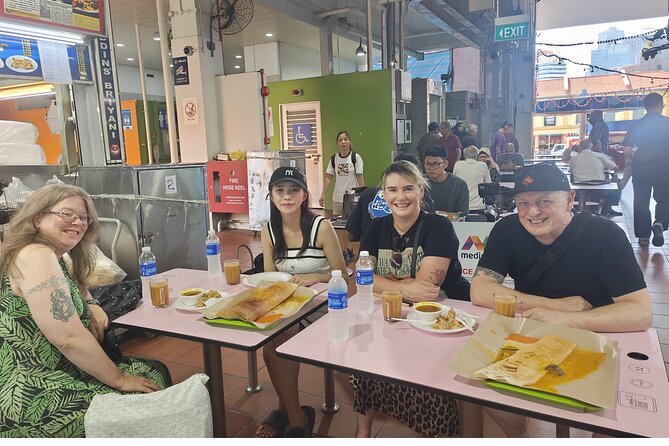
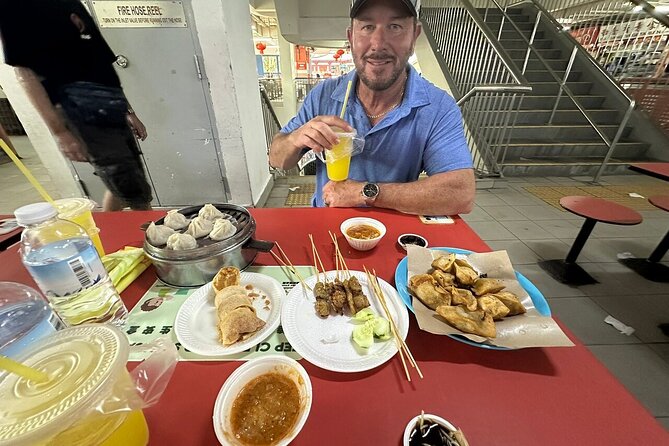
The tour includes 8 to 10 food tastings plus one complementary water bottle. In a good food tour, tastings are more than portion sizes. They’re a way to understand how different communities share space and influence.
Here, the tastings are woven between cultural stops, so you’re not always tasting back-to-back. That reduces the chance you’ll feel like you’re on a food treadmill. The tour also aims for a “just right” balance, which is exactly what I’d want if I’m sightseeing all day already.
Come hungry, but don’t come starving. If you arrive with an empty stomach, you’ll do fine at the early Little India stops. If you arrive overly full, you might find the mid-day pacing a bit too much in the market sections.
One more practical tip: bring a small water habit. You’ll get one water bottle included, but you’re walking through markets and lanes where you’ll want more than one drink depending on weather and your pace.
Local guides who actually connect dots: Kelvin, Dawn, and neighborhood memory
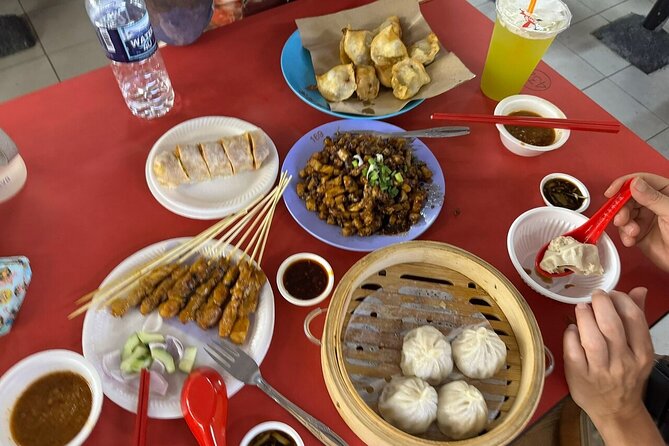
A huge part of this tour’s reputation is the guides. People highlighted guides like Kelvin for having a mind full of interesting information and for answering questions based on your interests. Another guide, Dawn, was praised for explaining Singapore’s history, culture, and food in a way that made the route feel coherent rather than random.
That matters because Singapore’s neighborhoods can look similar at street level while their histories are very different. A strong local guide helps you understand why a street name exists, why a temple sits where it does, and why a market design evolved the way it did.
It’s also clear from feedback that guides interact with merchants and focus on human stories, not just facts. If you like tours where someone notices your curiosity and adjusts, this one is built for that.
Price and logistics: what $100.89 buys you, and what you’ll still pay
At $100.89 per person, you’re paying for a private tour model, an English-speaking guide, 8 to 10 tastings, and an included water bottle, plus a mobile ticket. You’re also paying for the time-saver effect: the route is organized so you move through multiple districts efficiently without having to plan each stop yourself.
For value, the key question is whether you’ll use the main ingredients: private pacing and food volume. If you want a guided way to cover Chinatown, Little India, and Kampong Glam without turning the day into transit research, the price looks fair.
What you’ll likely still pay for:
- Any tips/gratitudes (appreciated, not included)
- Public transport (bus/MRT/taxi) since it’s listed as not included
- Admission where not included: Sultan Mosque and Chinatown Heritage Centre
Most other stops are listed as free-entry, which helps keep the total cost under control.
Who this Singapore tasting trail is best for
This tour fits best if you:
- Want culture plus food, not just a meal parade
- Prefer private-group pacing where you can ask questions
- Like walking between districts but still want a structured route
- Are okay with a day that includes markets, temples, and history-focused stops
It may not fit if:
- You have challenging mobility and can’t handle sustained walking
- You strongly dislike market environments
- You want a tour with minimal cultural and museum time (this one is balanced, not purely food)
Should you book this Tasting Trails route?
If you’re visiting Singapore for the first time, this route is a strong way to connect three major neighborhoods into one coherent story. The best reason to book is the mix: tastings plus real neighborhood context with guides like Kelvin or Dawn bringing it together. If you’re the type who gets annoyed by either too much walking or too little meaning, this one aims for the middle path.
If the idea of walking for about 4 hours makes you nervous, or if you already know you’ll skip paid admissions, you can still consider it. Just go in with the right expectations: plan your comfort, and budget for Sultan Mosque and Chinatown Heritage Centre if you want them fully.
FAQ
How long is the Tasting Trails tour?
The tour lasts about 4 hours.
Where do you start and where do you end?
You start in Little India, Singapore and end at Maxwell MRT Station (TE18) on S Bridge Rd.
What does the tour include?
It includes 8 to 10 food tastings, an English speaking guide, and 1 complementary water bottle.
Are there any admissions included in the price?
Most stops list free admission, but Sultan Mosque and Chinatown Heritage Centre list admission not included.
Is this a private tour?
Yes. It’s listed as a private tour/activity, meaning only your group participates.
Do I get a mobile ticket?
Yes. The tour includes a mobile ticket.
Do I need to use public transport during the tour?
Public transport is listed as not included, but the tour is described as near public transportation.
Is tipping included?
No. Tips or gratitudes are not included, but they’re appreciated.
Who is the tour not recommended for?
It’s not recommended for travelers with challenging walking.
What is the cancellation policy?
There is free cancellation. You can cancel up to 24 hours in advance for a full refund.
Hawker Stalls Left on the List
Little India and Kampong Glam, Continued
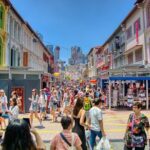
Chinatown, Lane by Lane
Fresh Reviews from the Little Red Dot
- Night Safari Tickets with Tram Ride
★ 4.5 · 3 reviews - Singapore: Architecture and Food Tour with Tastings
★ 5.0 · 3 reviews - Singapore Private Full-Day Sightseeing Tour
★ 5.0 · 3 reviews - Private Chinatown Heritage Tour with Best 8 Local Tastings
★ 5.0 · 3 reviews
Chinatown Tours & Tastings, compared.
 ★ 5.0Chinatown, Little India, Kampong Gelam City Highlights TourFrom $80224 reviews
 ★ 5.0Chinatown Hawker Market Food Tour with 7 Food TastingsFrom $146213 reviews
Chinatown, Little India, Arab Street Walking TourFrom $53207 reviews
★ 5.0Chinatown Hawker Market Food Tour with 7 Food TastingsFrom $146213 reviews
Chinatown, Little India, Arab Street Walking TourFrom $53207 reviews
 ★ 4.8Chinatown and Little India Guided Walking TourFrom $78190 reviews
 ★ 5.0Chinatown Historic Walking Tour with LunchFrom $54134 reviews
 ★ 5.0Chinatown Hawker Food Tasting TourFrom $8896 reviews
 ★ 4.5Kampong Glam, Little India & Chinatown with Local Street Food TastingsFrom $17770 reviews
 ★ 5.0Chinatown Heritage Centre (Admission Ticket)From $2065 reviews
Browse the lists this tour appears in