
Reviewed · HISTORY & WARTIME TRAILS
Splendour of Colonial Singapore Walking Tour with Lunch
Colonial Singapore has a way of making power feel visible. This walking tour strings together British-era streetscapes, court buildings, churches, and bridges into one easy, logical route. You’ll see how Georgian, Victorian, and Edwardian architecture helped shape the downtown city you recognize today, then slow down for a riverside lunch at Boat Quay.
I love two things most: a well-paced guided storyline through major sites and lesser-visited corners, and that included Boat Quay 3-course lunch that turns the tour into more than just standing in front of facades. A guide like Ping also keeps the group moving with clear safety habits and great English.
One consideration: you’re on your feet for about 3.5 hours, and the route is mostly downtown walking. If you’re heat-sensitive, plan on taking the indoor breaks where you can and go in with good walking shoes.
In This Review
- Key highlights you’ll feel right away
- A 3.5-hour walking tour that explains colonial Singapore in plain terms
- City Hall to St Andrew’s Cathedral: where the British trading post story starts
- National Gallery Singapore: when civic buildings become museums
- The Arts House (1827): the oldest surviving building’s quieter message
- Victoria Theatre & Concert Hall: a merged legacy you can still read
- Government Offices of Colonial Singapore: the formal in-between stop
- Cavenagh Bridge: the Singapore River viewpoint you’ll remember
- Fullerton Shop (formerly the General Post Office): heritage plus a modern hotel
- Supreme Court: justice, maximum security, and that unusual rooftop shape
- Central Fire Station: the practical side of colonial services
- Boat Quay lunch: 3 courses by the river, with veg and non-veg options
- Armenian Apostolic Church of St Gregory the Illuminator: the last stop that feels personal
- What you actually get for $55.61: value beyond the sightseeing
- Logistics that matter: start time, walking comfort, and indoor breaks
- Who should book this colonial Singapore tour with lunch
- Should you book Splendour of Colonial Singapore Walking Tour with Lunch?
- FAQ
- FAQ
- How long is the walking tour?
- What is the meeting point and where does the tour end?
- What time does the tour start?
- Is lunch included, and where is it served?
- Do they offer vegetarian options for lunch?
- What’s included besides lunch?
- Do I need to pay separate entrance fees for the stops?
- What group size should I expect?
- How do I get the ticket?
- What is the cancellation policy?
Key highlights you’ll feel right away
- A tight route through the Civic District and Old European Town without wasting time backtracking
- Stops in major government and justice buildings, including the Supreme Court
- Boat Quay lunch included, with both non-vegetarian and vegetarian options
- Air-con breaks in indoor monuments like the National Gallery and theatre/civic buildings
- Photo-friendly guide rhythm, with group photo support (Ping is known for it)
- Old Singapore River infrastructure, including Cavenagh Bridge and the heritage post-office building
A 3.5-hour walking tour that explains colonial Singapore in plain terms
This is the kind of downtown tour that helps you see the city instead of just sightseeing it. The theme stays consistent: how British colonial priorities showed up in street planning, administration, courts, education, churches, and even basic services like fire safety. You’re not just reading plaques—you’re walking between buildings that were built to function, govern, and reassure.
The pacing also matters. With a group capped at 15 travelers and a start time of 10:00 am, the tour feels small and manageable. You’ll get frequent short stops—some outside, some inside—so you’re not stuck doing one long stretch with no shade.
And then there’s lunch. At about midday, you head to Boat Quay for a 3-course meal by the river. That’s a smart choice because it gives you a reset point in the middle of the story, before you continue into the remaining civic sites.
City Hall to St Andrew’s Cathedral: where the British trading post story starts
Your tour begins near City Hall MRT, at 150 N Bridge Rd. From there, the first big anchor is St Andrew’s Cathedral, connected to the early British settlement phase. The focus here is how the British trading post (started in 1819) grew into a settled European community, complete with institutions like an Anglican church.
St Andrew’s Cathedral matters because churches weren’t only spiritual landmarks. In colonial cities, they signaled stability and permanence. When you look at the timeline—construction of the Anglican church in 1836—it helps you understand why some colonial areas feel so “finished” even today.
Practical tip: this is a great place to pay attention to scale. Many of the buildings you’ll see later are big and formal, but the streets around them are what make the architecture land.
Further back into the island story, war years included
National Gallery Singapore: when civic buildings become museums
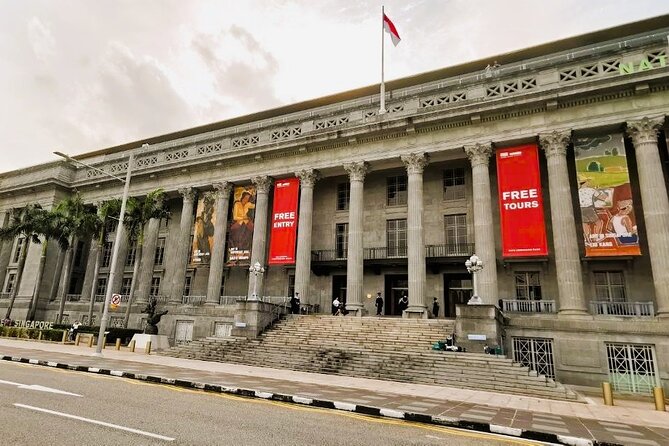
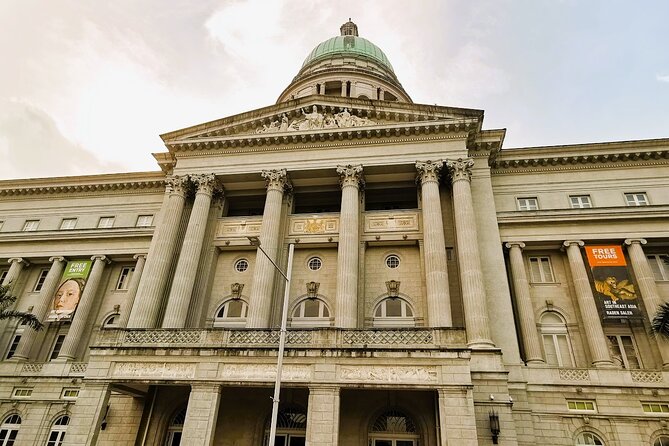
Next up is National Gallery Singapore, which is formed by two colonial buildings: the Former Municipal Building (later renamed the City Hall Building) and the Former Supreme Court Building. This is one of the stops where the tour’s storyline clicks for first-timers.
You’re essentially watching the city reuse its power structures. A municipal building becomes a cultural space; a court building becomes part of a museum complex. That shift is more than clever branding. It shows how Singapore kept the physical evidence of colonial governance while redirecting the purpose of those spaces toward education and public culture.
You’ll typically have around 40 minutes here. That’s enough time to walk the interior spaces calmly rather than rushing. If you want the best value, use this stop as your “architecture read”—look at symmetry, formal entrances, and how the buildings relate to the street.
The Arts House (1827): the oldest surviving building’s quieter message
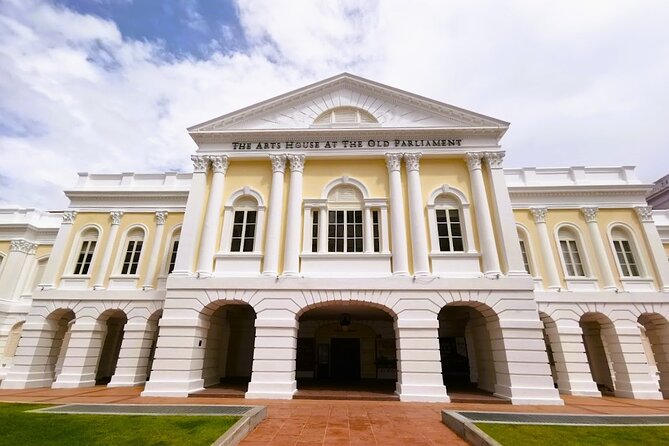
Then you move to The Arts House, described as the oldest surviving building in Singapore dating from 1827. It’s a short stop (about 20 minutes), and it works because it gives the tour a different tempo.
This is where you see that colonial-era Singapore wasn’t only about big government blocks. It also had cultural and community spaces, and the building’s survival lets you stand in front of something with long continuity.
If you like history that feels lived-in rather than grand-sounding, this stop often becomes a personal favorite. It’s the kind of place where you notice small details because you’re not racing through a checklist.
Victoria Theatre & Concert Hall: a merged legacy you can still read
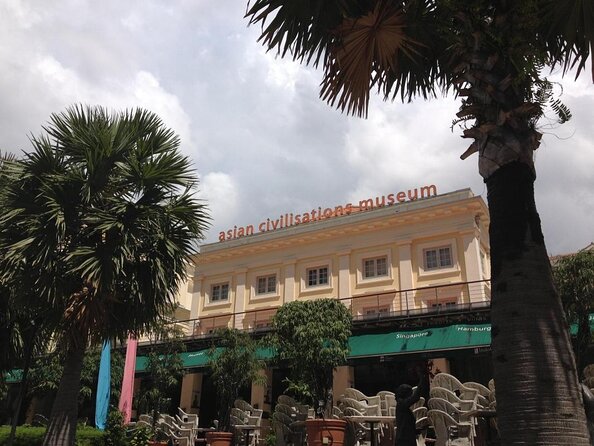
The tour then heads to Victoria Theatre & Victoria Concert Hall for an about 10-minute look. The key story: two buildings were built more than 40 years apart, then amalgamated into one—one tied to the Town Hall, and the other connected to the Memorial Hall for Queen Victoria.
That alone is interesting, but the practical value is how it teaches you to “date” architecture by purpose. You learn to recognize what a civic building wanted to communicate at the time: local administration, loyalty, ceremony, and public gathering.
Quick consideration: this stop is brief. If you’re the type who likes to soak up interiors, you might wish you had more time. The good news is it’s followed by other significant sites where you’ll slow down again.
Shophouse streets reward slow feet, keep going
- Singapore: Private Walking Tour with a Local★ 4.7 · 410 reviews
- Private Customised Singapore Walking Tour★ 5.0 · 370 reviews
- Singapore: Chinatown, Little India, Arab Street Walking Tour★ 4.9 · 207 reviews
- Singapore: Chinatown and Little India Guided Walking Tour★ 4.8 · 190 reviews
Government Offices of Colonial Singapore: the formal in-between stop
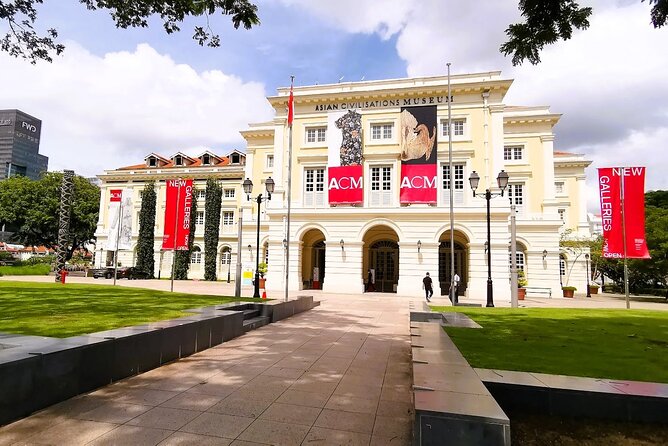
There’s also a stop for the Former Government Offices of Colonial Singapore. You’ll see how the tour keeps returning to administration—the day-to-day machinery of colonial rule.
Even if the details here aren’t your top interest, the location fills an important gap in the story between courts, culture, and the riverfront.
Cavenagh Bridge: the Singapore River viewpoint you’ll remember
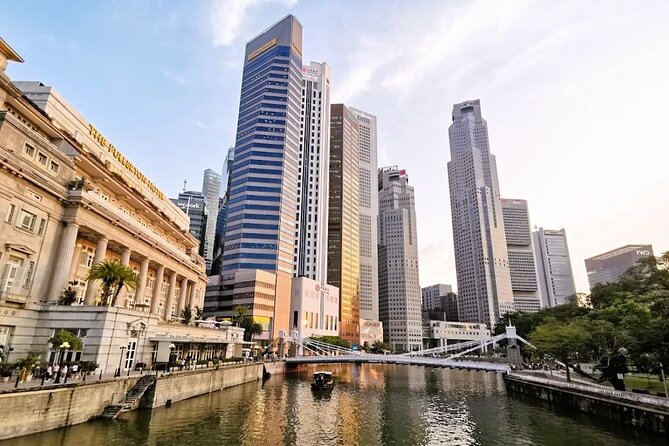
One of the most atmospheric moments is Cavenagh Bridge. The tour frames it as the oldest surviving suspension bridge in Singapore, and the idea isn’t just that it’s old—it’s that it connects you to what life along the Singapore River was like roughly 200 years ago.
Crossing the bridge gives you a new perspective on the river corridor. It’s also a natural pause point. After several civic buildings, the river opens up your mental map.
Practical tip: hold your phone camera ready, but don’t rush the crossing. The best photos come when you look both directions—toward downtown planning and toward the historic river edge.
Fullerton Shop (formerly the General Post Office): heritage plus a modern hotel
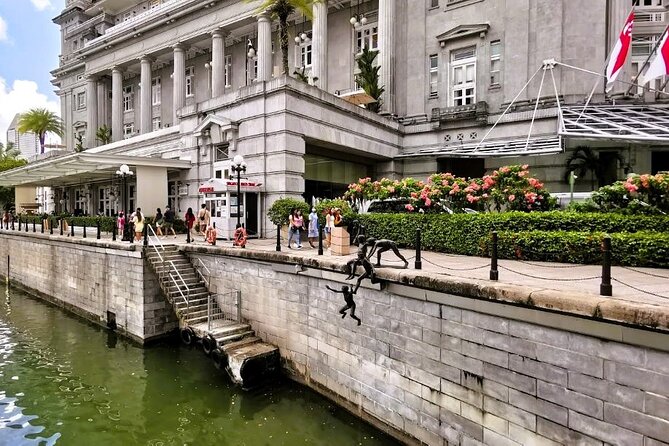
Then you arrive at the Fullerton Shop, formerly the General Post Office. Today it’s part of The Fullerton Hotel and includes a heritage gallery that’s worth visiting.
This stop is valuable because postal infrastructure was a backbone of colonial administration—communications, logistics, and connections across the region. Seeing how an old post office becomes retail and gallery space tells you how Singapore keeps recycling useful structures into experiences.
The tour gives you about 15 minutes here, which is enough to spot the heritage feel without feeling trapped in a showroom. If you’re planning to continue exploring afterward, this stop is a good bridge between a guided narrative and your own wanderings.
Supreme Court: justice, maximum security, and that unusual rooftop shape
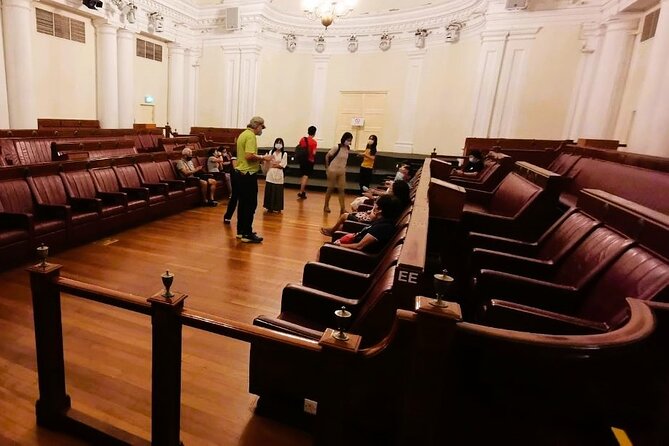
The tour moves into the Supreme Court next, with about 25 minutes allocated. The description highlights it as a maximum security building with a spaceship-like structure on top.
This is a smart contrast after the river and post office. You’re moving from communication to enforcement and rule-of-law. The building’s exterior presence makes it easy to understand why civic power has to be visible in some cities.
What I like about this kind of stop: it gives you a sense of how governance is designed. It’s not only about politics or dates—it’s about the physical form of authority.
Central Fire Station: the practical side of colonial services
If you’ve ever thought colonial history was all palaces and courts, Central Fire Station corrects that. It’s the oldest surviving fire station in Singapore, and the tour brings it to life by focusing on equipment and service.
You’ll see an antique horse-drawn fire truck, and you can climb aboard a vintage fire engine. That hands-on element is one of the best “value-per-minute” moments in the entire route.
Even though this is still a history-focused tour, this stop feels more like a living museum experience. You walk away with a clearer idea of daily risk and daily solutions.
Boat Quay lunch: 3 courses by the river, with veg and non-veg options
At midday, you stop at Boat Quay for lunch: a 3-course meal at a riverside restaurant. The tour offers both non-vegetarian and vegetarian options, which is genuinely useful when you don’t want to guess.
About 40 minutes is reserved for the meal. That’s long enough to eat without rushing, but short enough that you don’t lose the thread of the afternoon’s civic stops.
How to get the most out of lunch: treat it as a pause to connect dots. Before you sit down, glance back at what you just saw—churches, courts, municipal buildings, and old infrastructure. Then after lunch, you’ll continue with a cleaner sense of how the city functioned.
One small tip: because it’s by the river, the breeze can help, but it won’t replace good walking-shoes support.
Armenian Apostolic Church of St Gregory the Illuminator: the last stop that feels personal
The tour ends at Armenian Apostolic Church of St Gregory the Illuminator, at 60 Hill St. The tour highlights it as the oldest church in Singapore, dating back to 1835, and points out the iconic neoclassical style with rainbow-coloured windows.
Ending here is a nice choice because the story widens beyond British institutions. You’re reminded that colonial Singapore wasn’t controlled by one community’s architecture alone. The Armenians brought their own religious presence and cultural footprint that’s still visible.
The stop is about 15 minutes, and it’s structured for a calm inside look.
From a practical standpoint, the ending location is close to where you’ll naturally keep exploring downtown. You start at City Hall and finish at the Armenian church, which is a satisfying arc.
What you actually get for $55.61: value beyond the sightseeing
The price is $55.61 per person, and the value comes from more than just a route through famous buildings.
You’re paying for:
- A licensed tourist guide who connects the buildings into one story
- A 3-course lunch by the river (including vegetarian and non-vegetarian choices)
- Added weather support: a disposable poncho if rain shows up
- A manageable group size—maximum 15 travelers—so the pace doesn’t feel chaotic
- A route designed around major civic landmarks rather than random photo stops
Is it a bargain if you only want quick exterior photos? Maybe not. But if you want the “how and why” behind the buildings, the included lunch and guided structure make the cost easier to justify.
Also, your time is limited. With about 3 hours 30 minutes, you can fit it into a short stay while still seeing enough to feel like you learned something real.
Logistics that matter: start time, walking comfort, and indoor breaks
The tour runs for around 3 hours 30 minutes with a 10:00 am start and finishes near the Armenian church. It’s designed to be near public transportation, and you’ll get a mobile ticket for entry.
The route includes both outside and inside stops—good news when Singapore weather gets intense. I also like that the stops are spaced enough to help you avoid feeling like you’re sprinting from one landmark to the next.
My practical checklist for you:
- Wear comfortable walking shoes you trust for uneven city sidewalks
- Bring a light layer, even if it’s warm out, because indoor air conditioning can change how you feel
- Use the poncho if rain starts; it’s included, so you don’t have to improvise
- If you care about photos, note that the guide (Ping, in particular) is known for taking group pictures and sending them afterward
Who should book this colonial Singapore tour with lunch
This is a strong fit if you:
- Want to understand Singapore’s downtown without memorizing a textbook
- Like government, architecture, and the logic of city planning
- Prefer a small group experience rather than a big bus tour
- Appreciate built-in downtime thanks to lunch at Boat Quay
It can be less ideal if:
- You want a mostly outside, photography-only walk with minimal narration
- You can’t do 3.5 hours of walking, even with indoor stops
If you’re traveling solo, this tour’s format works well. A guide who stays attentive to the group flow helps solo travelers feel included.
Should you book Splendour of Colonial Singapore Walking Tour with Lunch?
I’d book it if your goal is to understand colonial Singapore fast, using architecture and institutions as your map. The included 3-course lunch by Boat Quay is a real perk, not a token add-on, and the route centers on buildings that make the story easy to visualize.
If you hate long walking loops or you’re very heat-sensitive, consider timing your day carefully and be ready to use indoor stops. But for most people who want a smart, structured look at the city’s civic core, this is a solid choice.
FAQ
FAQ
How long is the walking tour?
It runs for about 3 hours 30 minutes.
What is the meeting point and where does the tour end?
It starts at City Hall, 150 N Bridge Rd, Singapore 179100, and ends at the Armenian Apostolic Church of St Gregory the Illuminator, 60 Hill St, Singapore 179366.
What time does the tour start?
The start time is 10:00 am.
Is lunch included, and where is it served?
Yes. Lunch is a 3-course meal served by the Singapore River at Boat Quay.
Do they offer vegetarian options for lunch?
Yes. The lunch includes both vegetarian and non-vegetarian options.
What’s included besides lunch?
A licensed tourist guide and a disposable poncho in case of rain.
Do I need to pay separate entrance fees for the stops?
The stops listed for the tour indicate admission ticket free.
What group size should I expect?
The tour has a maximum of 15 travelers.
How do I get the ticket?
You use a mobile ticket.
What is the cancellation policy?
Free cancellation is available up to 24 hours in advance for a full refund. If you cancel less than 24 hours before the experience starts, the amount paid is not refunded. Cut-off times are based on the experience’s local time.
Lunch, Handled

Walks That Earn the Humidity

Old Singapore, Retold
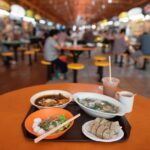
Fresh Reviews from the Little Red Dot
- Night Safari Tickets with Tram Ride
★ 4.5 · 3 reviews - Singapore: Architecture and Food Tour with Tastings
★ 5.0 · 3 reviews - Singapore Private Full-Day Sightseeing Tour
★ 5.0 · 3 reviews - Private Chinatown Heritage Tour with Best 8 Local Tastings
★ 5.0 · 3 reviews
History & Wartime Trails, compared.
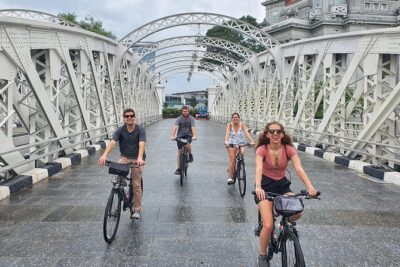 ★ 5.0Historical Singapore Bike Tour on Full-Sized BicyclesFrom $641,421 reviews
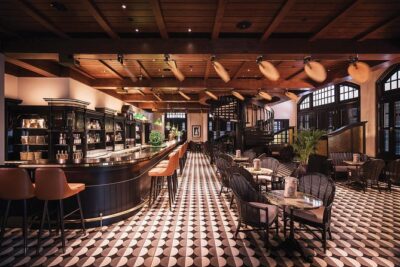 ★ 3.5Nightout at Colonial Charms of the CityFrom $135733 reviews
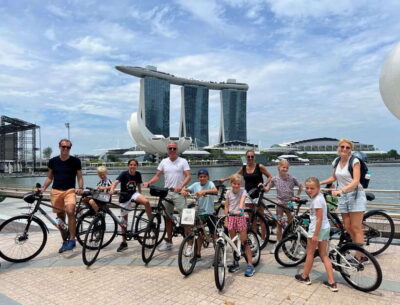 ★ 4.8Historical Half-Day Bike TourFrom $63399 reviews
 ★ 5.0Singapore Private Food, Culture and Heritage Tour with 9 tastingsFrom $185394 reviews
 ★ 5.0Singapore Group History & Culture Walking TourFrom $126160 reviews
 ★ 5.0Chinatown Historic Walking Tour with LunchFrom $54134 reviews
 ★ 4.5Disappearing TradesFrom $112126 reviews
 ★ 5.0Of Graves, Guns & Battles™: A Tour of Fort Canning HillFrom $79106 reviews
Browse the lists this tour appears in